
Europe Delivers First Ever Tank with Active Protection System Due to Israeli Support
Military Watch Magazine Editorial Staff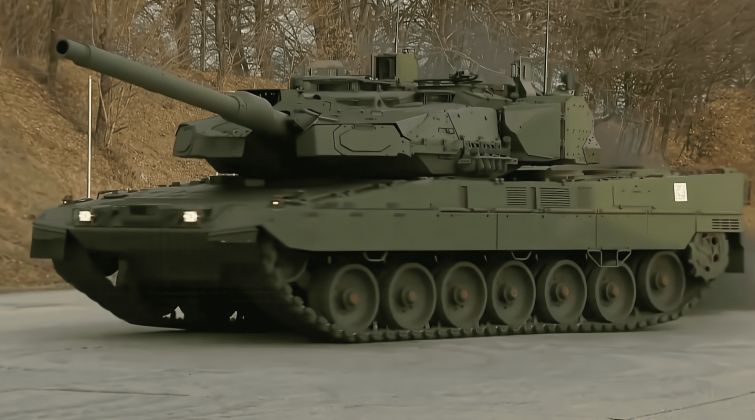
Leopard 2A8 Tank
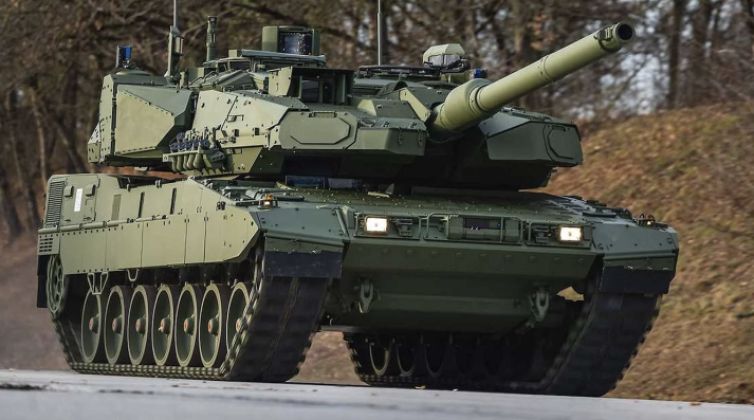
The first two Leopard 2A8 battle tanks have been delivered from German production lines, arriving at Rena camp on April 30 to equip the Norwegian Army. The tank’s delivery marks a significant landmark as the first European tank type with an active protection system (APS), namely the Israeli Trophy system, as European industry has fallen increasingly behind in tank modernisation. The system detects, classifies, and neutralises incoming threats before they reach the vehicle, providing an outer layer of protection that complements that provided by passive armour alone. The Trophy was first integrated onto Israeli main battle tanks in 2009, with both European and U.S. industries having failed to develop a comparable system, and relying on Israeli support as a result.
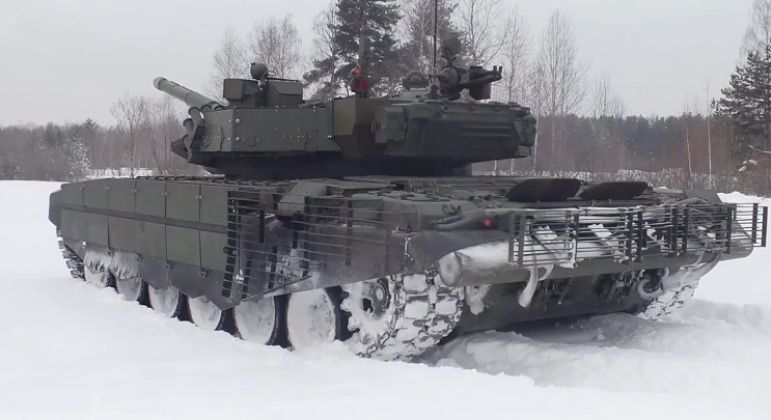
The Leopard 2A8 is notably not the first type of main battle tank fielded in Europe with an active protection system, with the South Korean K2 having been exported to both Poland and Turkey integrating an indigenous equivalent system. Russia has brought its own equivalent system, the Arena-M, into service, with its integration onto T-90M and T-72B3M tanks having been confirmed in late 2024, while in January 2026 it was confirmed that a new variant of the system of intercepting single use drone and loitering munition attacks had completed development. Active protection systems have been attributed greater value as loitering munitions and top attack missiles have played more central roles in armoured warfare in the Ukrainian theatre, with the potentials of these new kinds of armaments having been demonstrated consistently over more than four years.
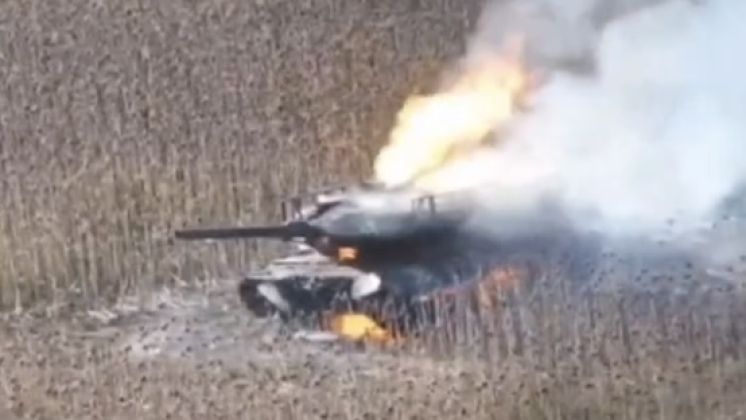
The Leopard 2A8 has significantly greater survivability than the Leopard 2A6, with the older tank having been extensively tested by the Ukrainian Army and taken very high losses in combat against Russian forces, while several of the tanks have been captured and analysed in detail at Russian facilities. The new tank type integrates a new 20 kW auxiliary power unit, and a new combat management and information system, among other conservative upgrades. The German tank’s viability for modern warfare has been widely questioned, as has those of other very large Western main battle tanks with similar design philosophies such as the British Challenger 2, as their emphasis on heavy armour protection is considered far from optimal in an era of drone warfare.
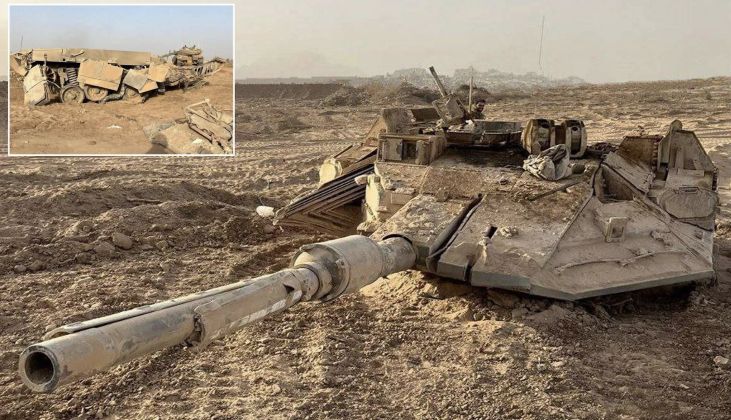
European defence sectors have remained considerably behind the world in developing active protection systems, with Israel, China, and both North and South Korea having developed their own highly sophisticated systems, followed by Russia. Chinese systems in particular are widely assessed to have led the world in performance. The large scale exports of Trophy systems to all future operators of the Leopard 2, as well as to many existing operators such as Germany which are expanding their fleets by ordering the Leopard 2A8, are expected to provide significant revenues to the Israeli defence sector. Nevertheless, questions have been raised regarding its effectiveness as Merkav IV and Merkava V tanks with the systems have taken heavy losses in Gaza and Southern Lebanon.
Multiple reports indicate that the Norwegian Defence Ministry strongly favoured the U.S. M1A2 Abrams, and moreso the South Korean K2, over the Leopard 2A8 during testing, but selected the German tank due to a combination of both political pressure from Berlin, and the interoperability benefits of fielding a tank type that widely serves in the armies of other European states. The tank is nevertheless prized for its real-time data sharing capabilities, with the ability to share and receive targeting information, and to provide commanders with complete formation pictures in real time, considered a game changer relative to older types of tanks. The German Defence Ministry is expected to order over 100 of the tanks to equip new units, including a brigade forward based in the former Soviet Union on Lithuania soil, placing it close to Moscow.
