
New Mobile Launcher with Zircon Hypersonic Missiles Could Change How Russia Wages War: Service Entry By Year’s End Expected
Military Watch Magazine Editorial Staff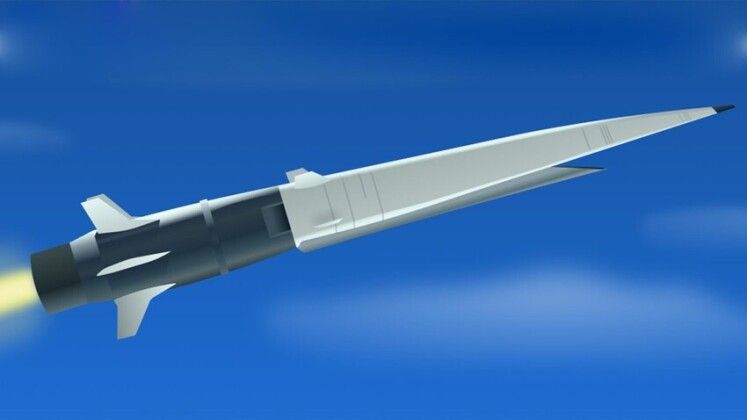
Zircon Hypersonic Cruise Missile (artwork)
The Russian Zircon hypersonic cruise missile was first delivered to the Russian Navy in late 2019, and has since begun to equip warships ranging from modernised Cold War era Udaloy Class destroyers to very light but modern Gremyashchiy Class stealth corvettes. Having also been tested from Russian attack submarines, and set to form a primary armament of the country’s Kirov Class nuclear powered cruisers and possibly even its Kuznetsov Class aircraft carrier after refurbishment, the next steps expected for the Zircon program have long been integration onto aircraft and ground based launchers. While the Intermediate Range Nuclear Forced treaty previously prevented Russia and the United States from deploying ground based tactical missile systems with ranges exceeding 500km, where the Zircon’s range is close to double this, the U.S. withdrawal from the treaty has made the missile’s integration into coastal defence systems a highly viable prospect. Current Russian Bastion coastal defence systems deploy the Zircon’s predecessor the shorter ranged and significantly slower P-800, which is still considered one of the world’s most capable anti ship cruise missiles and has a Mach 3 speed. Much as the Bastion has proven highly potent in a land attack role since the outbreak of the Russian-Ukrainian War in February, so too is it possible that the Zircon could be used for precision strikes against land targets with a reach considerably further and faster than its predecessor. The missile’s speed is approximately Mach 9, and it was reported to have begun mass production in December 2021. It was designed with similar dimensions to the P-800 and Kalibr cruise missiles to allow it to be easily integrated into existing vertical launch cells across a range of Russian warship classes.
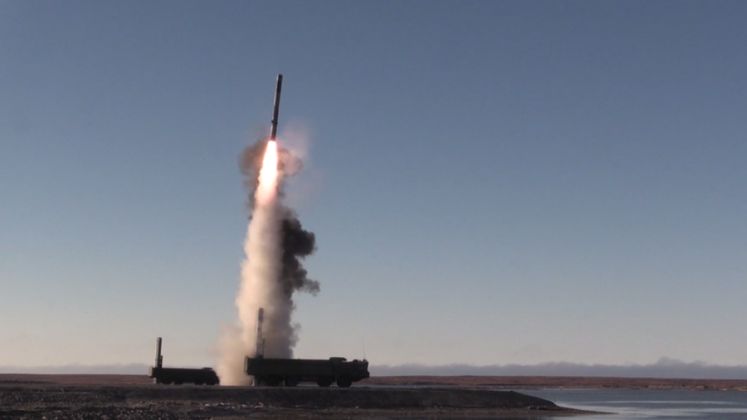
In the final week of May Russian state media outlet TASS reported citing defence ministry sources that a coastal defence system based on the Zircon was set to enter service by the end of 2022, and was under development at NPO Mashinostroyeniya in the town of Reutov near Moscow. The sources further highlighted that the missile would be capable of attacking ground targets. The Zircon provides Russia with an asymmetric means of denying adversaries access to large areas of sea or ocean, with its sheer speed considered sufficient to disable even larger warships with a single well placed impact due to the amount of kinetic energy imparted even excluding the destructive force of its warhead. It is currently considered without peer among anti ship cruise missiles, although both Russia and the United States have made progress towards developing hypersonic cruise missiles of their own. The Zircon has the potential to form a core part of Russia’s defences in future, with the ability to deploy from low cost mobile launch vehicles and strike targets very far and fast allowing it to complement the shorter ranged Iskander ballistic missiles currently relied on heavily by the Russian Army, and the larger Kh-47M2 hypersonic ballistic missiles launched by Russian MiG-31K strike fighters and Tu-22M3 bombers.
