
Russia Unveils New Missile Configuration For Su-35 Air Superiority Fighters During Frontline Operations
Military Watch Magazine Editorial Staff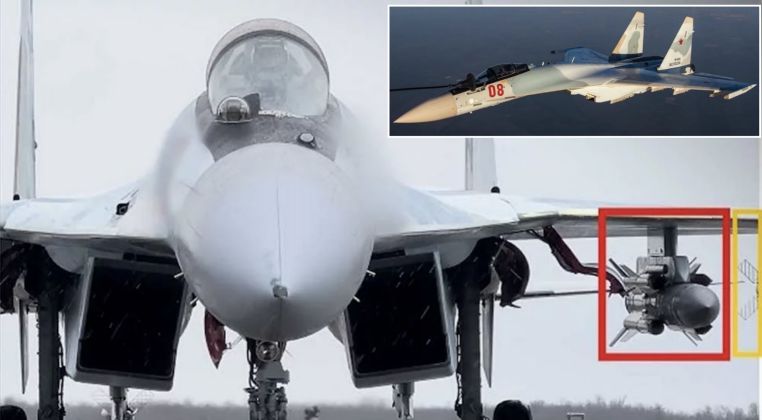
Su-35 with New Weapons Configuration and Su-35
Footage released by Russian state media has shown a Su-35 long range air superiority fighter in a new configuration launching a night mission over the southern theatre of the current frontlines between Russian and Ukrainian forces. The aircraft’s loadout includes two heavier and larger missiles, namely one R-37M long range air-to-air missile mounted centrally between the engines, and one Kh-31PM anti-radiation missile. It also carries three R-77-1 medium-range air-to-air missiles, and three R-73/74 short-range air-to-air missiles, for a total of eight missiles. The aircraft further integrates wingtip electronic-warfare pods for improved survivability, which are relied on heavily by the Russian Aerospace Forces when engaging adversaries with advanced anti-aircraft capabilities. The Su-35 is one of the heaviest fighter types in the world, and has a particularly high weapons carrying capacity.
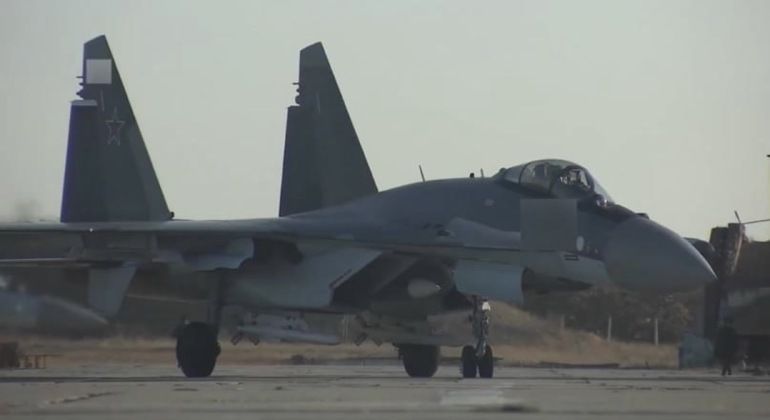
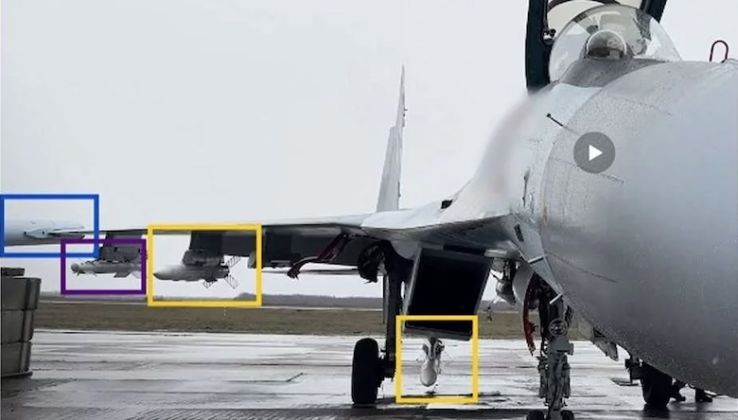
The Su-35 in the early 2020s began to integrate the R-37, an oversized missile type developed for the much larger MiG-31 interceptor which combines a long range, a large 61 kilogram warhead, and a very high Mach 6 speed. The fighter’s radar, however is less powerful than that of the MiG-31, meaning it requires support from MiG-31s, ground-based radars, or AEW&C systems like the A-50U, to be able to fire the missile at its full range. Russian Su-35s were in late July confirmed to have integrated the new R-77M air-to-air missile, revolutionising their beyond visual range combat capabilities and bridged the gap with the latest AIM-120D missiles integrated onto U.S. Air Force F-35s. The R-77M is estimated to be much more costly than the older R-77-1, and has not been seen in widespread use.
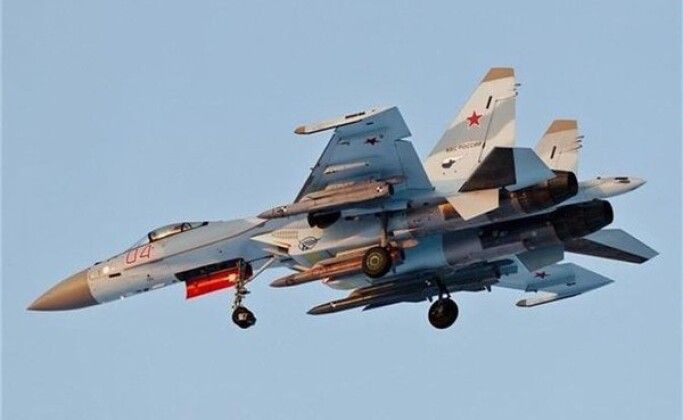
The Su-35 has been more intensively combat tested in air-to-air engagements than any post-Cold War era fighter type, with reports from November 2025 having indicated that fighters had forced the Ukrainian Air Force’s newly delivered F-16 and Mirage 2000 fighters to operate exclusively at low altitudes and far behind the frontlines. Ukrainian sources have consistently warned that new F-16 and Mirage 2000 fighters supplied by the country’s European supporters are wholly incapable of matching the Su-35’s capabilities. The Russian defence sector has significantly increased the scale of Su-35 production from 2025, in part due to the unprecedented export successes that were achieved that year. Deliveries in 2025 were reported in December, early November, late September, mid-August, late June, mid-May, and late March. The ‘4+ generation’ fighter’s capabilities have nevertheless fallen increasingly behind the cutting edge, as China and the United States bring their fifth generation fighters closer to ‘5+ generation’ standards, and are poised to begin operationalising sixth generation fighters in the early and mid 2030s.
