
Musudan Missiles in Caracas? U.S. Fears Iran Could Give Venezuela a Powerful Strategic Deterrent
Military Watch Magazine Editorial Staff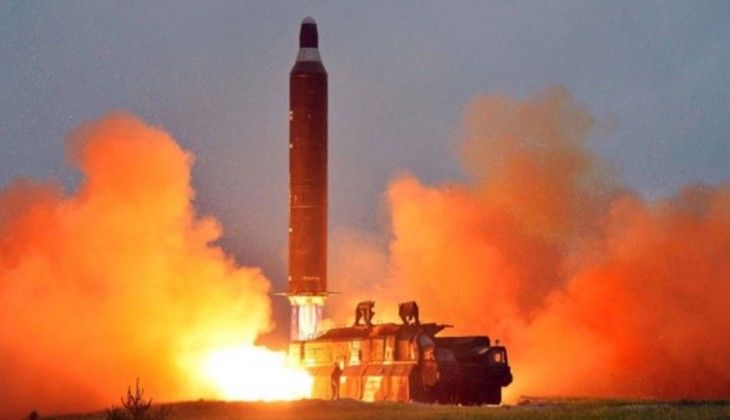
Korean Musudan Ballistic Missile
Amid growing ties between Iran and Venezuela, and provision of considerable Iranian support in fields ranging from consumer goods to energy and security to the South American state, the U.S. has shown growing concerns that the partnership is undermining its interests and undercutting its efforts force a change in government in Caracas. In particular, the U.S. is concerned by the possibility that Iran could transfer strategic ballistic missiles to the Venezuelan military, which could potentially provide it with the ability to strike the United States mainland and thus deter a potential American attack. The U.S. State Department Special Representative for Iran and Venezuela, Elliott Abrams, stated regarding this possibility: "The transfer of long-range missiles from Iran to Venezuela is not acceptable to the United States and will not be tolerated or permitted," highlighting that the U.S. could take military action to prevent such a transfer. "We will make every effort to stop shipments of long-range missiles, and if somehow they get to Venezuela they will be eliminated there," a senior administration official was cited as saying. The sale of such weapons would be entirely legal, however, with neither customary international law nor any treaties the two states are parties to preventing them from buying or selling conventionally armed missiles.
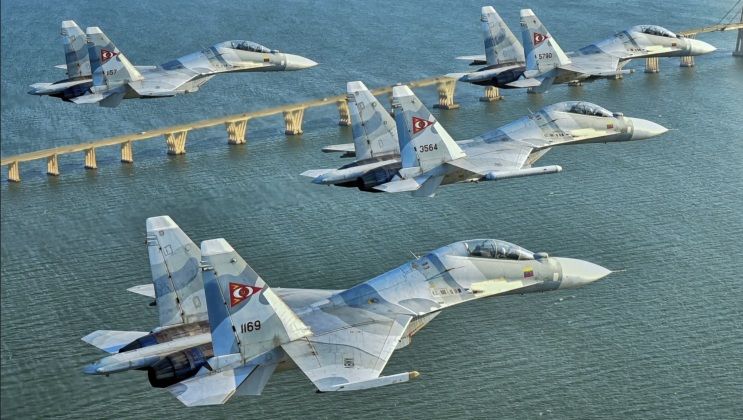
Iran fields a range of advanced ballistic missile designs which could potentially strike the United States if deployed o Venezuelan territory. These almost all have North Korean origins or Korean components, meaning Pyongyang’s participation in such a deal remains a possibility at least to license Iran to sell its missile technologies on to third parties. Venezuela notably opened an embassy in Pyongyang in 2019 - another country it has sought to improve ties to to balance against U.S. and broader Western pressure. Most notable among the Iranian missiles which could be transferred are the Musudan and Sejil platforms. The Korean Musudan design is currently in service in Iran, providing the capability to strike targets across Europe, and is produced under license as the Khorramshahr platform. The Musudan has a 4000km range, while the Khorramshahr variant has a range of 2,500km. The Sejil is an Iranian design which uses sourced Korean technologies and components, and has a range sufficient to reach U.S. territory. Venezuela’s military inventory is overall considered much more modern than that of Iran, including its fighter aircraft, artillery systems and air defences, although its lack of a strategic deterrent has left in it a poor position to counter growing threats both from the U.S. and from American regional allies such a Brazil and Colombia.
