
Moscow, Beijing and Pyongyang in the F-35’s Crosshairs? USAF Chief of Staff Emphasises New Stealth Fighters' Central Role in Penetrating Airspace of Near Peer Adversaries
Military Watch Magazine Editorial Staff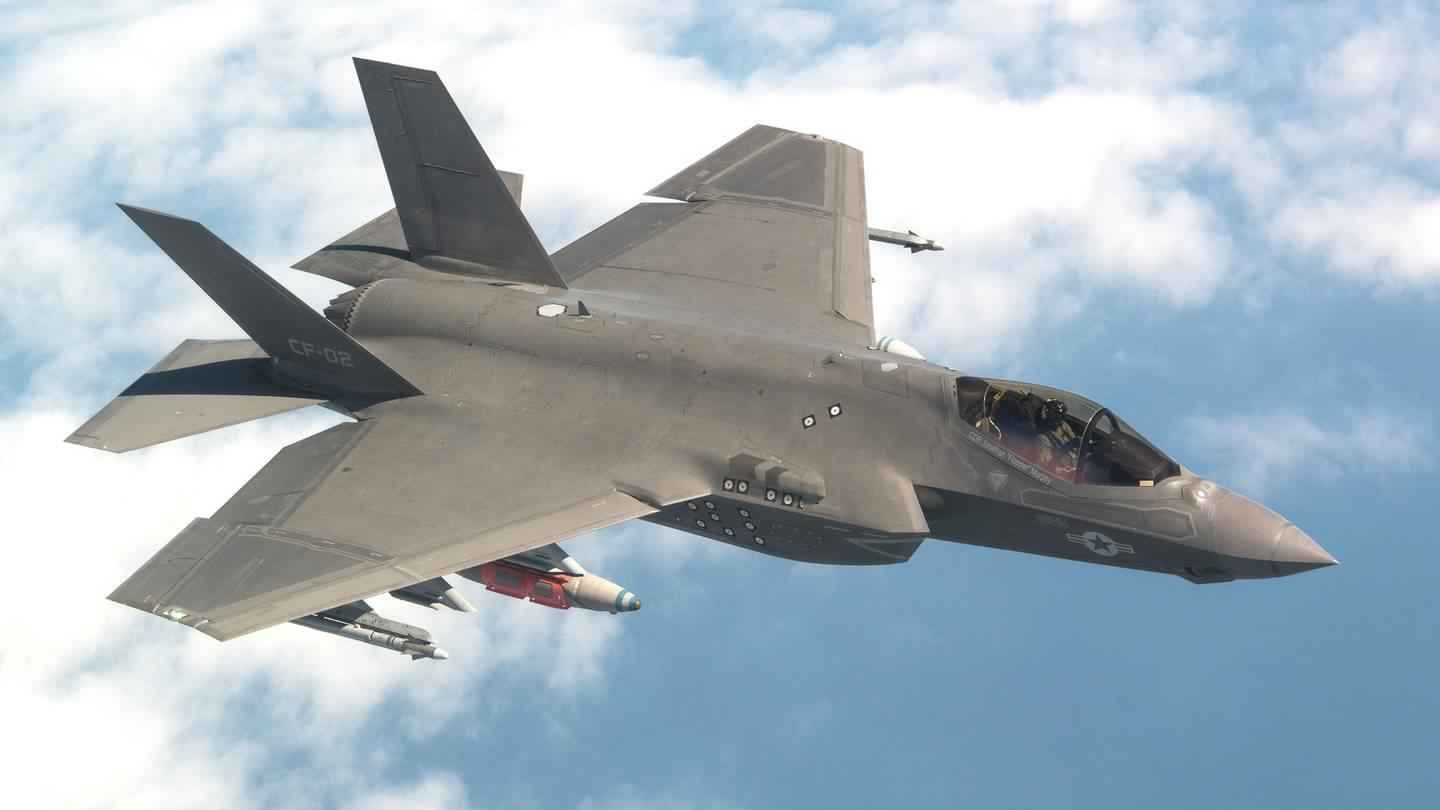
F-35 Single Engine Stealth Fighter
U.S. Air Force Chief of Staff General David Goldfein recently elaborated on the new "concept of operations" under which he laid out plans for the waging of a potential ‘great power war’ with high end adversaries such as Russia, China and North Korea. These three countries were singled out by the General as potential targets for this new strategy, which he heavily emphasised required the U.S. Military to “attack an enemy's weaknesses as opposed to attacking their strengths." The strategy entailed and heavily relied on "stealth and joint penetration," in particular the use of the U.S. Air Force and Navy’s F-35 single engine light stealth fighters - as well as the heavier twin engine F-22 Raptors to a lesser extent. These two high end combat jets are the only fighters of the fifth generation in service anywhere in the world other than the Chinese Chengdu J-20 - another twin engine platform with capabilities analogous to those of the F-22. The unique capabilities of these jets, including their high end sensors, radar evading capabilities, access to high end munitions and the advanced data processing potential of the F-35 in particular, made them best suited among the American combat fleet for penetrating a dense and high tech air defence network such as those deployed by Russia, China and North Korea - as well as weathering attacks by high end enemy aircraft.
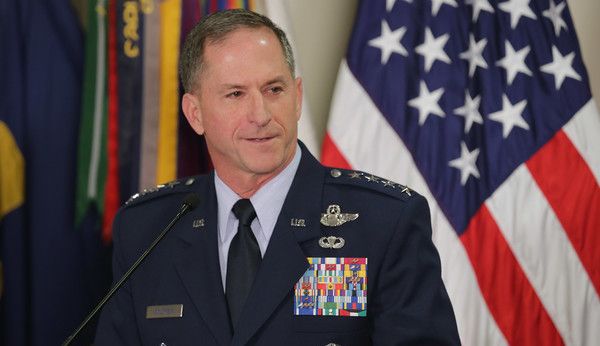
U.S. Air Force Chief of Staff David Goldfein
General Goldfein stated regarding his plans for the F-35 in such an attack: "If a China or Russia or another adversary on the globe ever were to see an F-35 inside their airspace, I would love to send them all messages with two words — ‘we're here’… It's not ‘I'm here,'" he said. "An F-35 will never be alone." According to Air Force Magazine, the Chief of Staff “went out of his way to mention the F-35 in his remarks," referring to the new fighter as the "quarterback" of an air campaign against a near peer power. He emphasised that the stealthy design of the F-35 made it difficult to detect and even more challenging to target and lock onto with radar guided missiles. The F-22 meanwhile is relied on in a key complementary role to the lighter platform, which based on the statements from a number of leading Air Force officials is essential given the F-35’s far more limited air to air combat capabilities. The far faster, higher flying, more manoeuvrable and better armed Raptor is thus tasked with shielding the F-35 from enemy fighters such as Chinese J-20s, Russian Su-30s or Korean MiG-29s. The presence of the Raptor also allows the F-35 to devote more of its payload to air to ground munitions - as its extremely limited internal storage allows for the carriage of just four missiles - or a single heavy guided bomb.
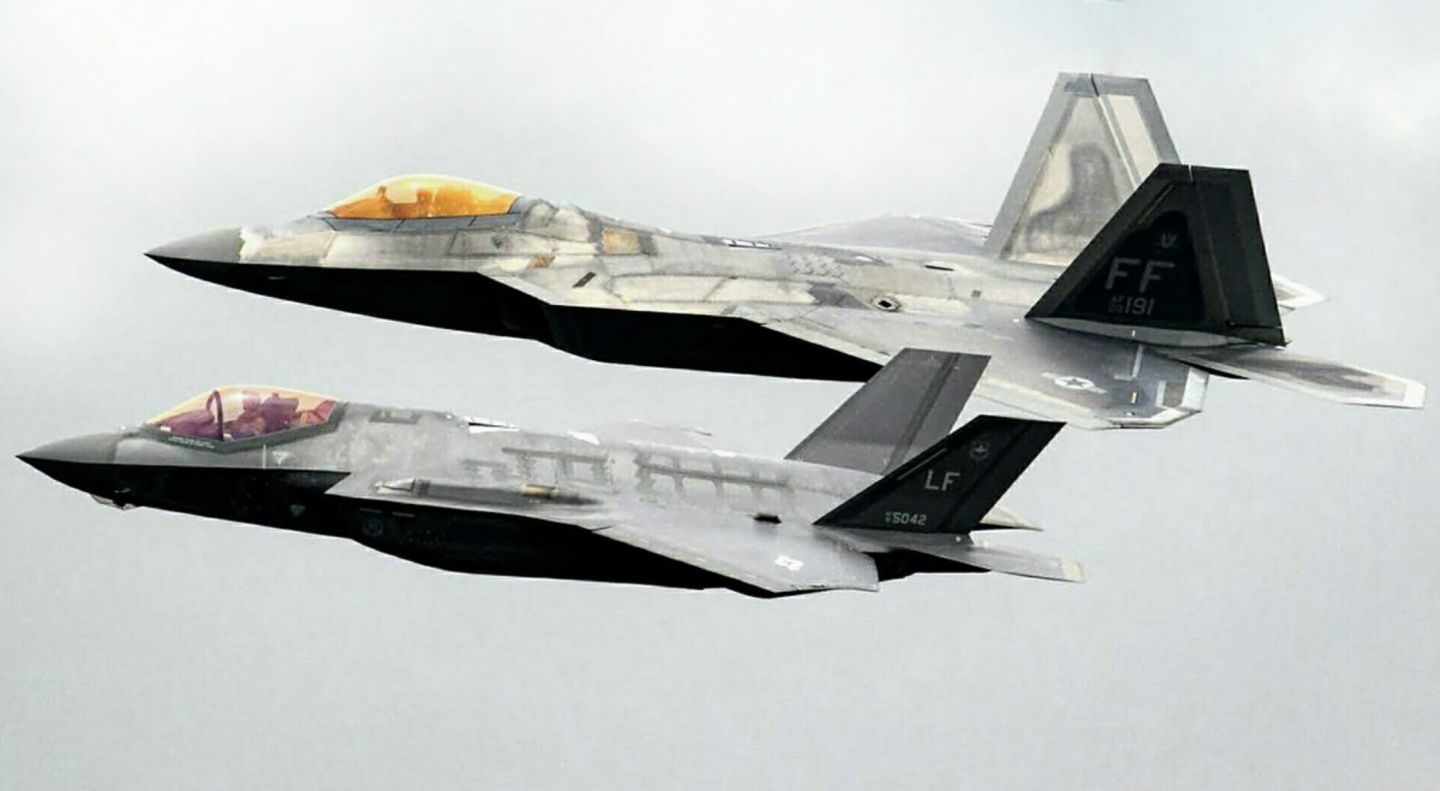
U.S. Air Force F-22 Raptor and F-35 Lightning II
Advanced air defence systems such as the S-300PMU (deployed by all three high end adversaries) or the more recent S-400 deployed by Russia and China and KN-06 deployed by North Korea have made penetration of enemy airspace extremely challenging for legacy U.S. fighters such as the F-18, F-16 or F-15E which make up the vast majority of the country’s combat fleet. While low tier adversaries such as Libya, and even middle powers such as Syria and Iran, can potentially be tackled without the use of stealth fighters, the importance of these costly cutting edge systems is particularly critical against the three high end adversaries mentioned by the Air Force Chief of Staff cannot be understated.
