
U.S. Marines Train For F-35B Carrier Assaults in the Pacific
Military Watch Magazine Editorial Staff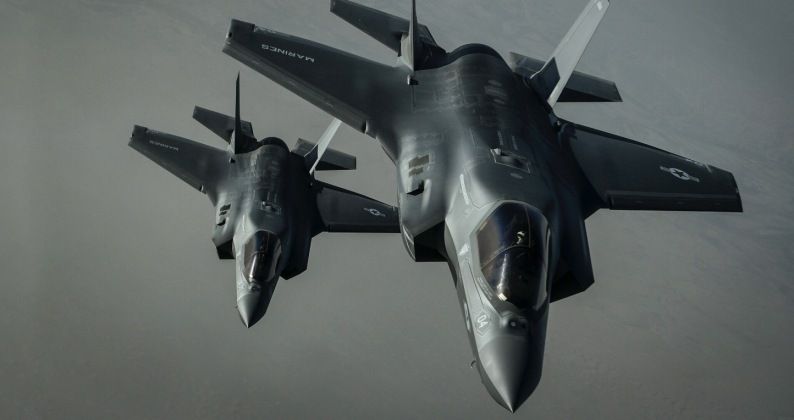
U.S. Marine Corps F-35B Fighters
Marine Corps
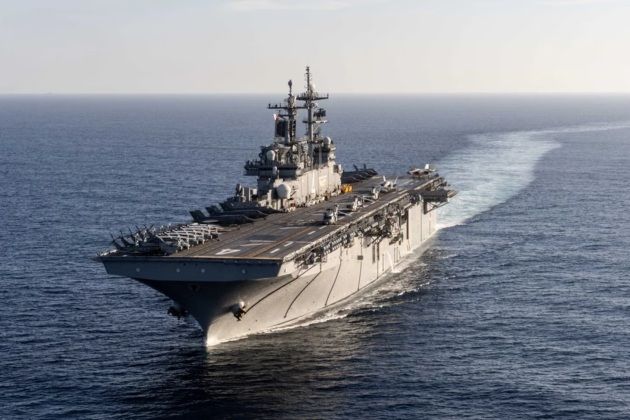
U.S. Marine Corps pilots and deck crews from the 11th Marine Expeditionary Unit have conducted new fighter jet deck landing qualifications on the Wasp class amphibious assault ship USS Boxer, as the warship prepares for intensive operations in the Western Pacific. The Boxer’s flight deck team carried concurrent safety checks, recovery drills, and readiness assessments, simulating the pace of forward-deployed operations. F-35B fifth generation fighter with specialised short takeoff and vertical landing (STOVL) capabilities operated by Marine Fighter Attack Squadron 122 were at the centre of these exercises, and conducted multiple launch-and-recovery cycles. Exercises were reportedly intended to strengthen coordination between pilots, deck crews, and the ship’s aviation department, validating flight deck procedures, communications protocols, and emergency response readiness.
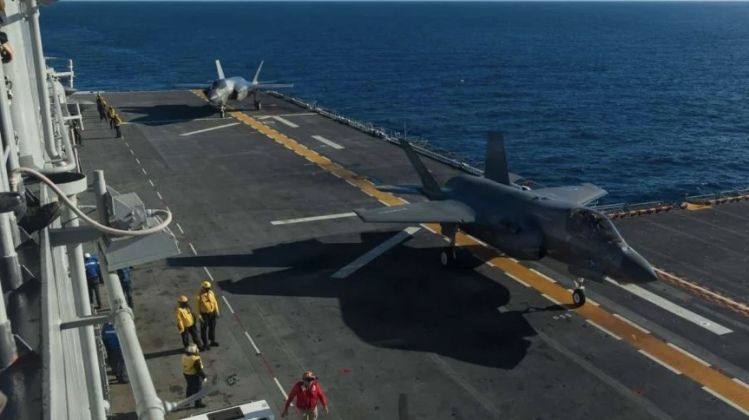
The Marine Corps was the first service in the world to operationalise the F-35B, the specialised takeoff and landing capabilities of which have allowed for the conversion of Wasp class and newer America class amphibious assault ships to function as small aircraft carriers. The Corps in November used full scale mockups of air defence systems closely resembling the Russian-designed S-300 during exercises at Naval Air Station Fallon, indicating that the drills were intended to simulate engagements with these widely deployed systems. The F-35B provides a tremendous improvement in air defence suppression capabilities over fourth generation fighter types, primarily due to its stealth, electronic warfare suite, and unique passive sensor array, revolutionising ability of the air wings amphibious assault ships to launch offensives into well defended adversary airspace. S-300 systems are widely deployed by China, Russia and Vietnam in the region, while China and North Korea have operationalised much more advanced indigenous systems designed for the same roles.
The U.S. Marine Corps in late January announced plans to reduce procurement of the F-35B to 280 aircraft, down from a previously planned fleet of 353, with the intention of reallocating funds to more than double its planned fleet of F-35C fighters from 67 to 140. While the F-35B was designed for short takeoffs and vertical landings to deploy from amphibious assault ships, the F-35C was developed to deploy from the Navy’s Nimitz class and Gerald Ford class nuclear powered supercarriers. Although the F-35B is considerably more costly and has a far shorter range and more limited combat potential, the much greater versatility of locations form which it can deploy, with its ability to fly from very small air strips set up by advancing units, known as Expeditionary Advanced Base Operations (EABO), were previously considered vital to the Corps’ plans for operations in the Pacific theatre. Deep cuts to orders for the F-35B have fuelled speculation that the Marines have encountered difficulties in employing the aircraft for such operations.
