
U.S. Marines Train to Tackle Russian S-300 Air Defence Systems: Which Country is Their Primary Target?
Military Watch Magazine Editorial Staff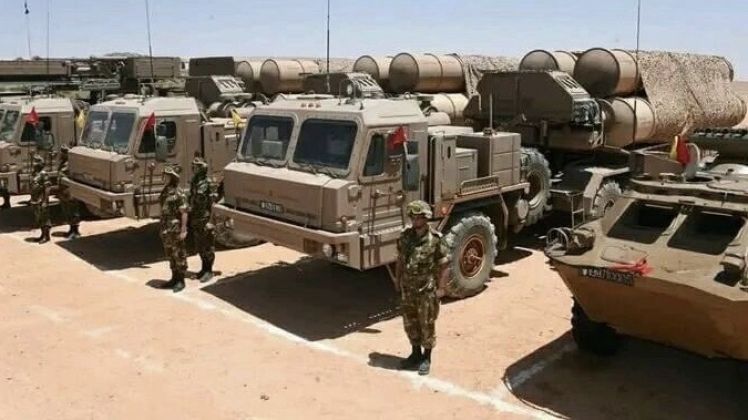
Algerian Army S-300 Launchers
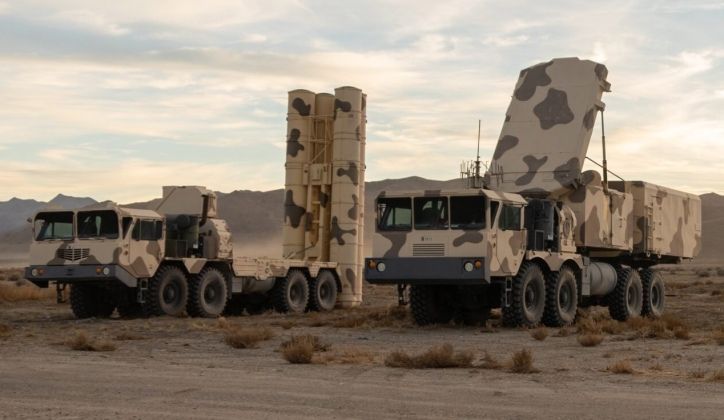
The U.S. Marine Corps has used full scale mockups of air defence systems closely resembling the Russian S-300 in the Resolute Hunter 26-1 exercise at Naval Air Station Fallon, indicating that the drills were intended to simulate engagements with these widely deployed systems. Mockups provide units with a way to rehearse detection, targeting, and engagement workflows, and often simulate the radar, visual, and electromagnetic patterns of the real systems. The S-300 plays significant roles in the defences of multiple potential adversaries, including Russia, Venezuela, Algeria and Iran, while China and North Korea have locally developed the closely related HQ-9 and Pyongae-6 systems respectively. The Corps did little to elaborate on the mockups’ use, stating regarding the exercises: “During Resolute Hunter, 1st Radio Battalion, I Marine Expeditionary Force Information Group, certified Marines in the performance of mission-essential tasks, tested emerging capabilities and concepts, and collaborated with joint and allied partners.”
The U.S. Armed Forces gained access to early variants of the S-300 from the early 1990s through procurements from Ukraine and former Warsaw Pact members, although their capabilities are significantly inferior to those currently fielded by potential targets of American attacks such as Venezuela’s S-300VM or Iran’s S-300PM-2. Although the U.S. Armed Forces have not been involved in any kinetic engagements with S-300s or similarly advanced systems, F-35 fifth generation fighters have been involved in electronic engagements in the Ukrainain theatre. After Air Force F-35As were forward deployed to Germany’s Spangdahlem Air Base from February 16, 2022 shortly before hostilities in Ukraine broke out, the aircraft used their long ranged electronic intelligence capabilities to collect intelligence from over friendly skies in Eastern Europe, building up a picture of the battlefield in Ukraine.
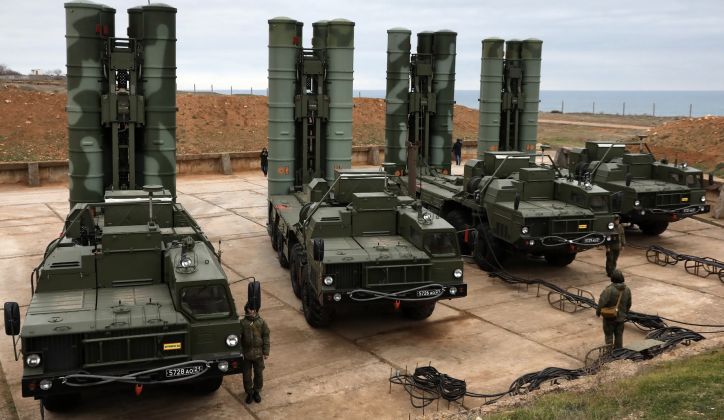
Regarding F-35 encounters with Russian long range air defence systems, 388th Fighter Wing Commander Colonel Craig Andrle observed: “We weren’t crossing the border. We’re not shooting anything or dropping anything. But the jet is always sensing, gathering information. And it was doing that very, very well… We had all hoped it was going to work like it’s supposed to, but then to see it actually perform very, very well in that role was great.” He added that the F-35s faced challenges when encountering the Russian systems, noting: “We’re looking at an SA-20. I know it’s an SA-20. Intel says there’s an SA-20 there, but now my jet doesn’t ID it as such, because that SA-20 is operating, potentially, in a war reserve mode that we haven’t seen before.” The SA-20 is a NATO reporting name for advanced variants of the S-300 air defence system, namely the S-300PM-1 and PM-2 variants, which were produced in the 1990s and 2000s preceding the more advanced S-400 which is designated SA-21.
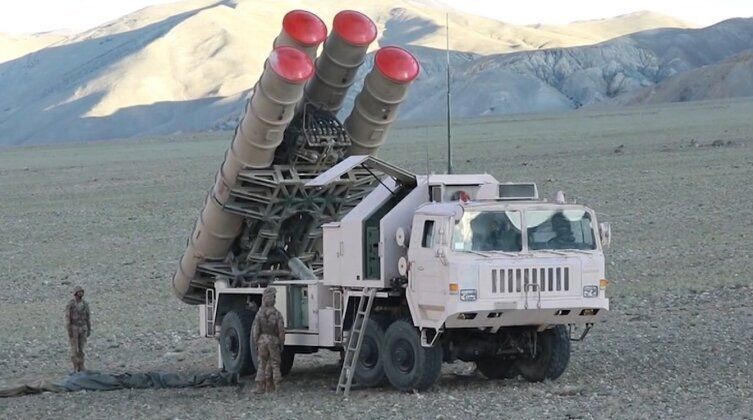
The S-300s involved in the Resolute Hunter exercises were notably painted in desert camouflage, which may indicate which countries the drills are focused on preparing forces to engage. Desert camouflage is used by Iranian S-300PM-2 systems, by Algerian S-300PM-2 and S-400 systems, and by Chinese HQ-9 systems in the country’s desert regions. Unconfirmed reports of Chinese HQ-9 deliveries to Iran from July would also likely seen the systems use desert camouflage. Following an intensive Western air assault against Libya in 2011, the possibility of a similar campaign being launched by Western Bloc states against Algeria has been raised repeatedly by analysts. Major U.S.-led military exercises in North Africa from June 2021 carried out on an unprecedented scale simulated fighting against an adversary geographically matching Algeria’s location, and with air defence capabilities very closely resembling those fielded by Algeria including Russian built S-400 missile systems. Algeria is also reported to operate the HQ-9 alongside its Russian-sourced systems, and is considered to have by far the most formidable air defences in the Arab world or among Muslim-majority countries.
