
Footage Captures Largest Ever Chinese Nuclear Submarine Formation as Fleet Expansion and Modernisation Accelerates
Military Watch Magazine Editorial Staff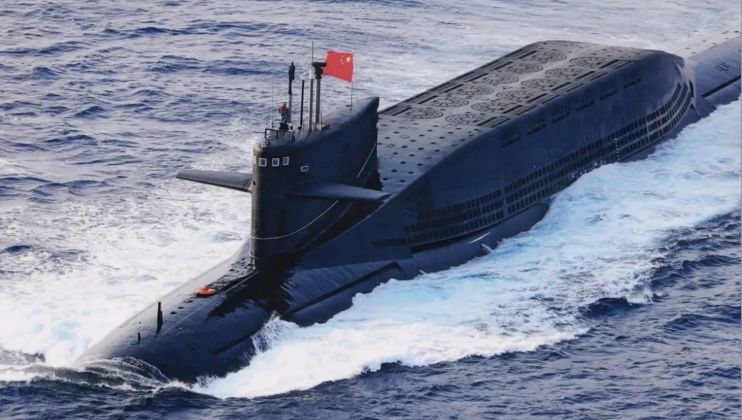
Chinese Type 094 Class Nuclear Powered Ballistic Missile Submarine
Footage released on Chinese social media has shown the latest ever known grouping of Chinese nuclear powered submarines, including four Type 094A ballistic missile submarines and five Type 093B attack submarines. The image was published shortly after confirmation that China now has three shipyards producing nuclear powered submarines, with the second and third facilities, the Wuchang Shipbuilding Industry Group facility and the Jiangnan Shipyard in Shanghai, effectively tripling productive capacity, while the original facility in Huludao, Liaoning Province, has been expanded. The Type 093 and Type 094 class ships both represented a decisive technological leap over the earlier Type 091 and Type 092 class vessels submarines, which were primarily intended to establish the industry rather than to provide a viable or competitive warfighting capability.
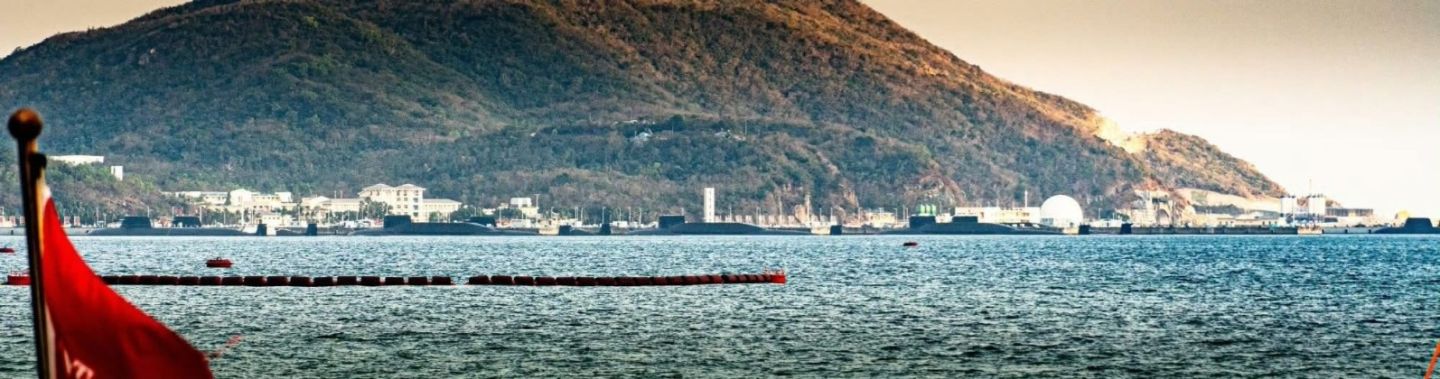
The latest estimates for the size of the Chinese People’s Liberation Army Navy’s nuclear powered submarine fleet indicate that it overtook that of the Russian Navy in size in 2025 or earlier, making it the second largest only to that of the United States Navy. A primary driver of this trend has been the large scale production of the Type 093B class attack submarine, of which 16 are estimated to have begun construction. The Navy is currently estimated to field 32 active nuclear powered submarines, compared to an estimated 25-28 in the Russian Navy, including nine older Type 093/093A class attack submarines, 14 newer Type 093B class attack submarines, and nine Type 094/094A ballistic missile submarines. The U.S. Navy has perceived China’s submarine fleet to pose a fast growing challenge to its forces, with the service entry of new generations of vessels and associated armaments having occurred at an unparalleled rate.
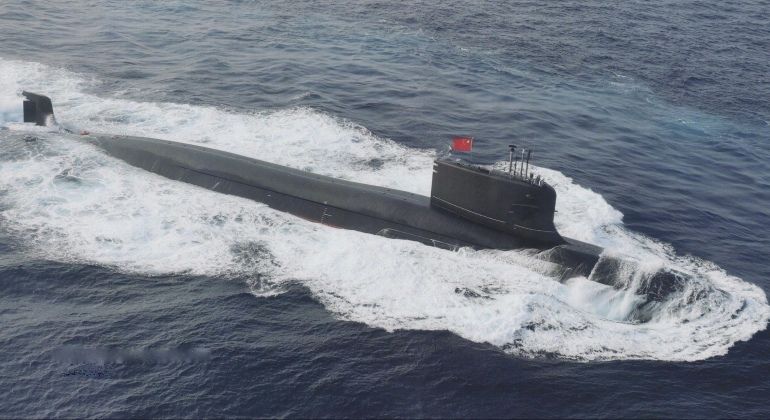
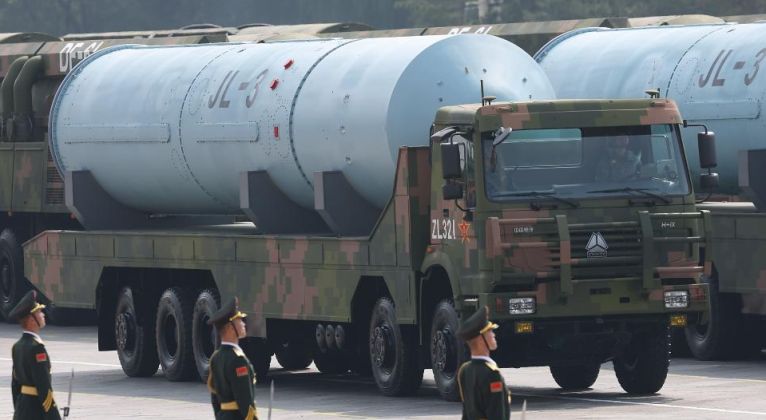
The most important improvement achieved in developing the Type 093 and Type 094 was noise reduction, as the preceding Type 091 and Type 092 class ships were widely assessed to be exceptionally noisy due to machinery vibration, older propulsion systems, and limited acoustic isolation, which limited their survivability. The newer vessels’ nuclear propulsion plants were also substantially modernised, with more efficient reactor designs offering greater reliability, longer patrol endurance, and improved sustained underwater speeds. Better engineering standards also reduced maintenance requirements and increased crew confidence during extended deployments, making these submarines practical frontline assets rather than experimental platforms. Sensor technology underwent an equally significant transformation. Armaments were also revolutionised, with the Type 093 integrating cutting edge cruise missiles, and more recently the YJ-21 hypersonic anti-ship ballistic missile, while the Type 094 has recently been modernised with the JL-3 intercontinental range ballistic missile, which has been assessed to be one of the most sophisticated strategic missile designs in the world.
Incremental modernisation has further improved the performances of the Type 093 and Type 094 class ships, with later Type 093A submarine variant having more streamlined sails and further acoustic improvements, while the newest Type 093B variant reportedly introduces pump-jet propulsion, a technology aimed at reducing cavitation noise and improving stealth at higher speeds. The Type 093B variant further incorporates extensive acoustic dampening measures, improved machinery mounts, redesigned sails, and better hydrodynamic shaping, providing a level of survivability that is competitive with those of modern Russian and U.S. designs. It is the first Chinese nuclear powered attack submarine to achieve this.
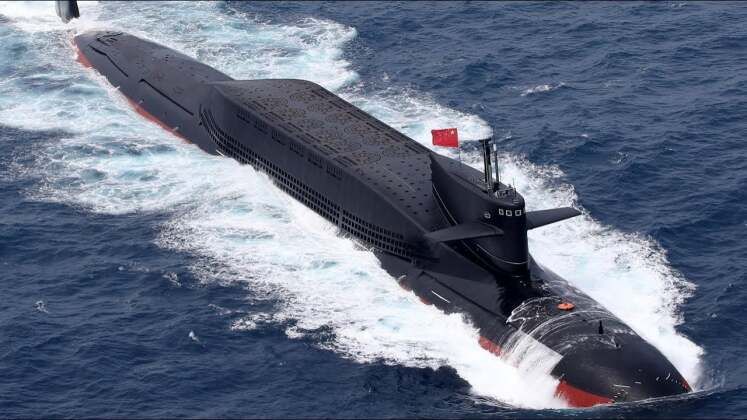
In parallel to incremental modernisation of the Type 093 class, Type 094 class ships from later production batches have similarly incorporated hull refinements and reduced numbers of limber holes to decrease hydrodynamic noise, reflecting China’s adoption of an evolutionary development philosophy. Operationally, these improvements have allowed the People’s Liberation Army Navy to employ its nuclear submarines much more actively than those from the preceding generation, with the Type 094 fleet routinely undertaking strategic patrols as part of China’s nuclear posture, while the Type 093 has become a regular participant in blue-water deployments, escort operations, and exercises extending into the western Pacific and Indian Ocean. Production of both submarine classes is assessed to have likely ceased, as shipyards transition to the production of the much more advanced Type 095 and Type 096 next generation vessels.
