
China Triples Nuclear Submarine Production Capacity to Lead the World in Output: Next Generation Ships Shift Power Balance at Sea
Military Watch Magazine Editorial Staff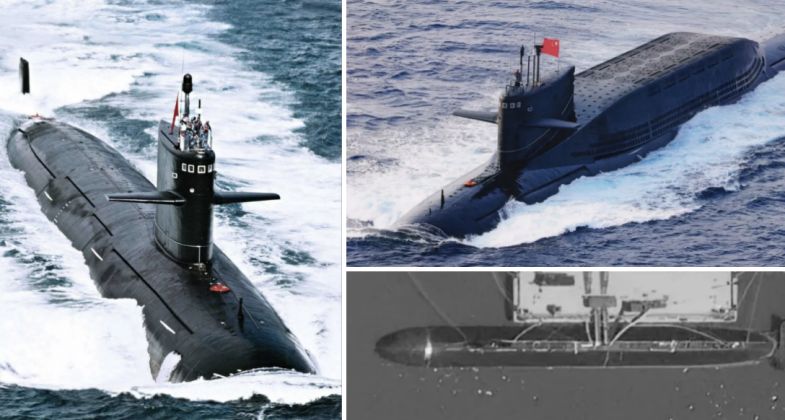
Chinese Type 093, Type 094 and New Sailless Design Nuclear Submarines
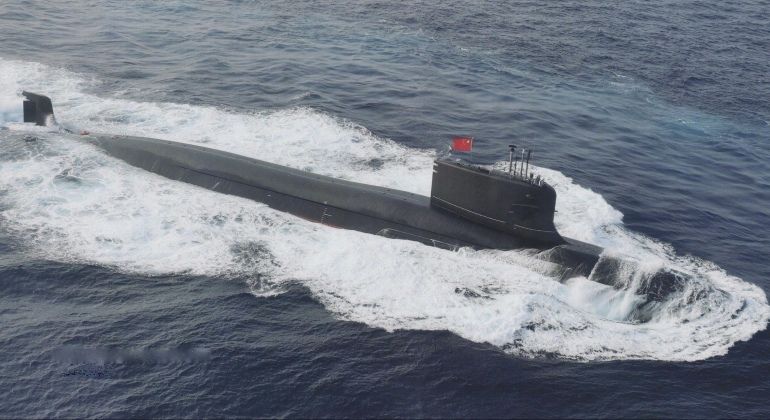
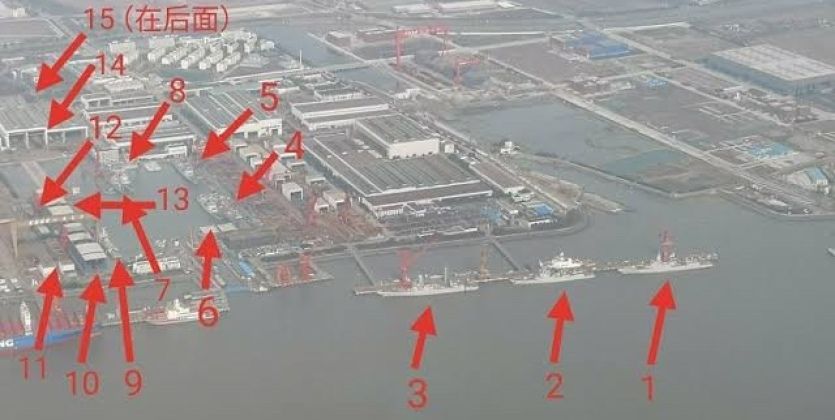
China’s nuclear submarine industrial base has undergone one of the world’s most significant expansions over the past two decades, with a major landmark reached in early June when it was confirmed that the Jiangnan Shipyard in Shanghai had launched its first nuclear powered submarine. Historically, almost all Chinese nuclear submarines were built at the Bohai Shipbuilding Heavy Industry Corporation shipyard in Huludao, Liaoning Province, which produced the first-generation Type 091 and Type 092 class ships, followed by the Type 093 attack submarines and Type 094 ballistic missile submarines. Concentrating construction at a single shipyard simplified security and oversight, but limited the number of submarines that could be built at once, since attack submarines and ballistic missile submarines competed for the same assembly halls and workforce. The gradual expansion to three facilities has been a game changer that has provided China with the greatest production capacity in the world for nuclear powered ships.
To place the scale of Chinese capacity in perspective, only eight countries have shipyards that produce nuclear powered submarines, with France, the United Kingdom, North Korea and India all producing ships slowly and at very limited scales. Russia’s sole shipyard has a higher production rate, while the U.S. which fields by far the largest nuclear powered submarine fleet in the world has two shipyards in Connecticut and Virginia. In China, not only was the facility at Huludao significantly enlarged, but a second major nuclear submarine production capability was established at the Wuchang Shipbuilding Industry Group in Wuhan. The facility, although historically associated with diesel-electric submarines and auxiliary vessels, began launching attack submarines after extensive modernisation and the building of new construction halls. The inland location on the Yangtze River provides the facility with additional security from surveillance.
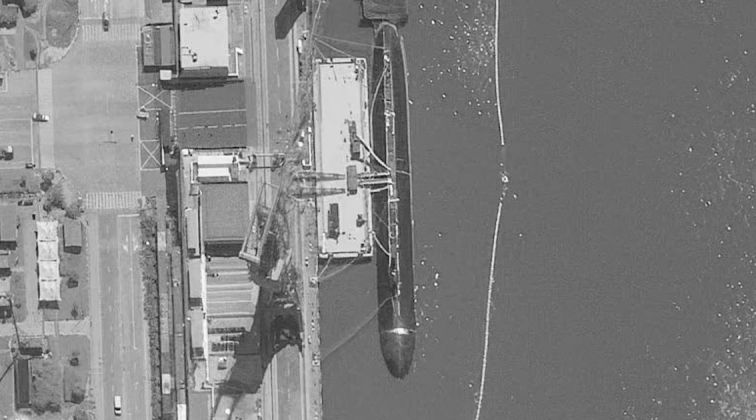
At Huludao, satellite imagery revealed the construction of very large new covered assembly halls, modular fabrication buildings, and expanded fitting-out berths capable of accommodating several submarines simultaneously. These changes reflect a shift toward modular construction, in which large hull sections are built separately before final assembly, shortening production times and allowing multiple boats to be under construction in parallel. This is expected to provide the facility with the largest production capacity in the world. The Jiangnan Shipyard, meanwhile, which is traditionally known for building destroyers, amphibious assault ships, and aircraft carriers, also possesses some of the world’s most advanced modular shipbuilding infrastructure, and has long shown signs of manufacturing large pressure-hull sections and other complex components for nuclear powered submarines. This preceded the commencement of assembly and launches at the facility itself. The transition from one to three production sites for nuclear powered submarines offers several strategic advantages, significantly increasing annual output, reducing bottlenecks, and making the industrial base more resilient against accidents, natural disasters, or wartime disruption.
China’s emergence as the world’s fastest builder of nuclear submarines mirrors its rise to lead the world by a tremendous margin in commercial shipbuilding, accounting for more than half of global merchant ship production, as well as its rise in the mid-late 2010s to produce more than half of all destroyers globally. The country’s unrivalled industrial base provides millions of tons of steel processing capacity, advanced modular construction techniques, thousands of skilled welders and engineers, and a supply chain that can be leveraged for military production. Nuclear submarines require specialised technologies unavailable in commercial shipbuilding, but many manufacturing processes, such as precision fabrication, heavy lifting, and modular assembly, benefit from this broader industrial ecosystem. The U.S. industrial base has itself shrunk significantly since the end of the Cold War, with its nuclear submarine production capacity having slowed dramatically, while efforts to rebuild it have struggled considerably. Rather than cycling between periods of rapid growth and decline, as countries in the Western world have, Chinese shipyards have benefited from continuous investment, enabling workers and suppliers to gain experience through uninterrupted production, with this steady workload improving efficiency, reducing delays, and allowing lessons learned from one class to be incorporated into the next without lengthy production gaps.
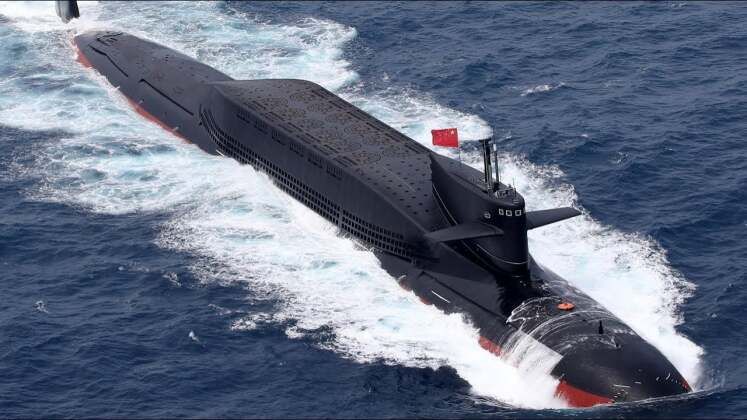
China’s global lead in its nuclear submarine production capacity has very significant implications for the balance of power at sea across multiple theatres, most immediately in the Pacific. These include the revolutionising of the third arm of its nuclear triad as the new Type 096 class ballistic missile submarines are expected to be produced in far greater numbers than the preceding Type 094 class, and the rapid expansion of hunter-killer and long range strike capabilities as the new Type 095 class attack submarines begin to enter service. While the Untied States and its strategic partners in the Western world have long been able to threaten targets in China using bases in East Asia, the ranges of nuclear powered submarines allow them to similarly hold targets in the West, including on the U.S. mainland, at risk of both tactical and strategic strikes.
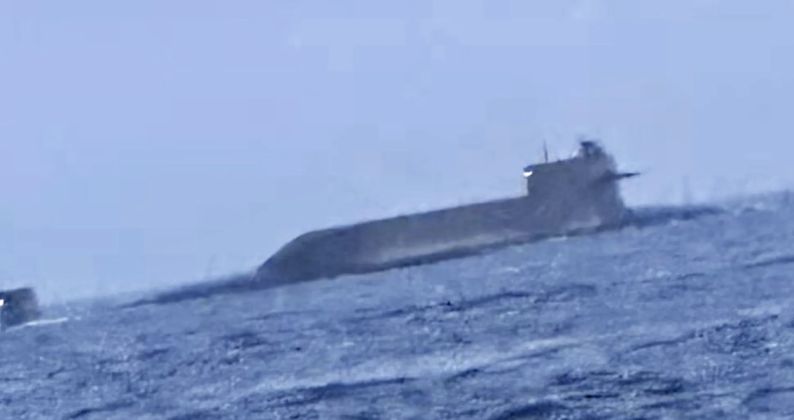
After the Bohai Shipyard was in early 2026 was reported to have launched the first Type 095 class submarine, while the Jiangnan Shipyard in early June launched an entirely unknown new submarine design that appears to be an attack platform with enhanced stealth capabilities. The first Type 096 class submarine is expected to be launched before 2030, bringing a total of three next generation nuclear powered submarine designs into service. Following major improvements to the capabilities of the currently operation Type 093 and Type 094 class ships, which have caused considerable concerns in the Western world, the next generation of submarines is expected to introduce a significant qualitative advantage, while also being brought into service far faster. While China has long since established major leads in its production capacities for most types of complex military equipment, nuclear submarines had long remained a field where the U.S. retained an advantage. The diminishing of this will further shift the balance of power between the world’s two leading forces in favour of Beijing.
