
Why Russia is Sending its Aircraft Carrier Specialists to the Frontlines: Explaining the New Naval Infantry Battalion in Kharkov
Military Watch Magazine Editorial Staff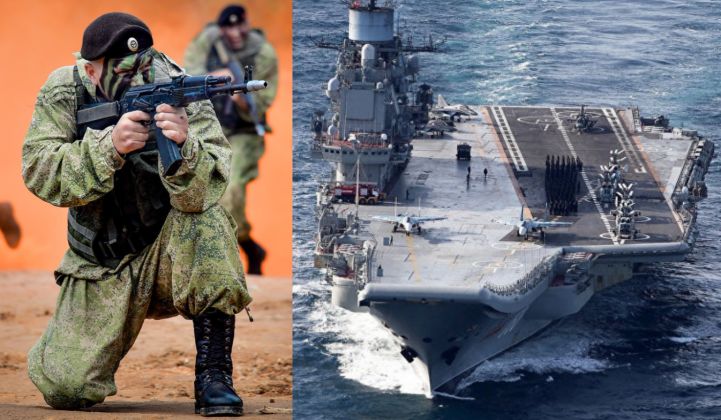
Naval Infantry and Admiral Kuznetsov
The Russian Navy has reportedly formed a new naval infantry battalion from the crew of the aircraft carrier Admiral Kuznetsov, with these set to be deployed to the disputed Kharkov region on the frontlines of the Russian-Ukrainian War. The decision appears highly unusual due to the high levels of specialised training required for aircraft carrier crews, which makes putting them in harm’s way in frontline operations a serious risk. The decision has been widely interpreted by analysts as a step towards the abandonment of the country’s carrier ambitious following years of issues with the Admiral Kuznetsov, which has been undergoing repairs and a refitting for the past seven years. Serving as Russia’s sole aircraft carrier, the ship has seen funds for its refurbishment cut significantly, with its capabilities expected to remain well below those of rival vessels such as the Chinese carrier Liaoning. The 65,000 ton ship first became operational in the 1990s, and deploys an air wing of Su-33 and MiG-29K fighters, Ka-31 airborne early warning and control helicopters, and a range of other rotary wing aircraft for transport and anti submarine warfare missions.
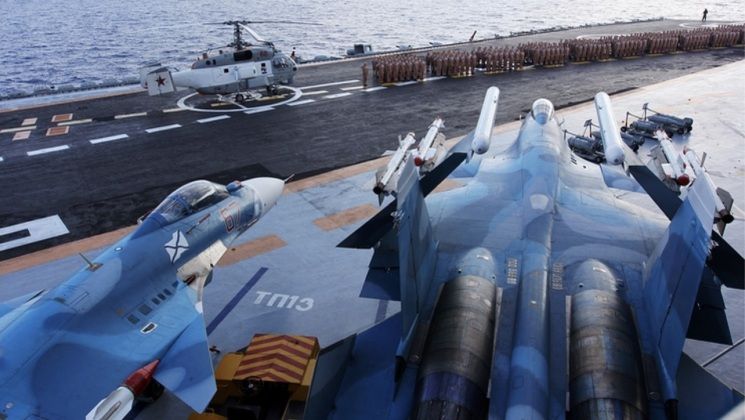
With Russian sources having claimed that the Navy was set to return the carrier to service in 2024, and with the ship having belatedly departed from dry dock in February 2023, the possibility remains significant that the formation of a Naval Infantry battalion with the Admiral Kuznetsov’s crew will not delay the ship’s return to service. A likely explanation for the battalion’s formation is the major increase in levels of automation on the carrier as a result of its refurbishment, which has facilitated a contraction in required crew numbers from around 1900 to just 1500 personnel. This leaves around 400 personnel available for other duties such as deployments to Kharkov. With Russia having made considerable investments in refurbishing the carrier, placing the ship’s future at risk to gain an additional naval infantry unit would otherwise appear a highly unusual decision. The decision has widely been re-reported by Western media outlets and interpreted to indicate an end to Russian carrier ambitions, although despite multiple delays and accidents during refurbishment, the Admiral Kuznetsov does appear set to return to service, and to do so with the ability to operate with a much smaller crew and with far more reliable and relatively smoke free engines. While the Admiral Kuznetsov has been inoperable, fighter units from ship’s air wing have notably remained active, with a pair of its MiG-29K fighters having had a close encounter with German Eurofighters over the Baltic Sea on July 11.
