
Russia’s Rare Top MiG-29 Variant Encounters German Eurofighters Over Baltic Sea
Military Watch Magazine Editorial Staff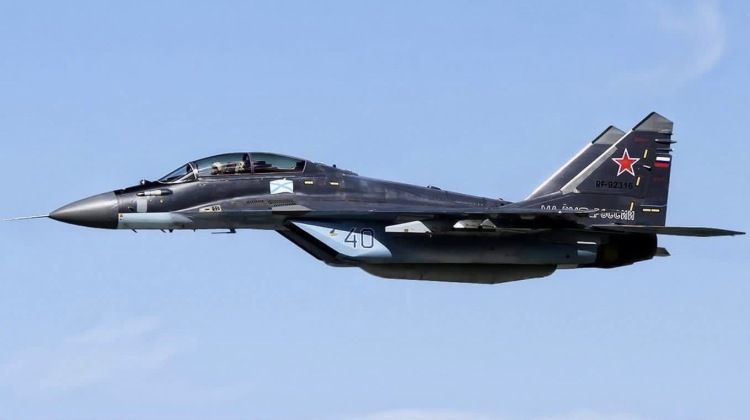
Russian Navy MiG-29K
On July 11 a pair of Russian Navy MiG-29K fighters were intercepted by German Eurofighters over the Baltic Sea, with the latter aircraft deploying from Latvia on NATO air policing duties. The incident occurred over international airspace, and is notable due to the class of Russian aircraft involved. The MiG-29K is a navalised derivative of the MiG-29M ‘4+ generation’ medium weight fighter, itself an enhanced variant of the Soviet MiG-29 with an electronically scanned array radar, glass cockpit, and access to a range of modern air to surface, air to air and anti ship missile classes. The MiG-29K’s most conspicuous difference is its folding wings, allowing it to be accommodated on aircraft carriers. Production was first financed by orders for 42 of the aircraft by the Indian Navy in the early 2010s, allowing Russia to then order a single regiment’s worth of 22 aircraft for its own carrier the Admiral Kuznetsov. Although the Russian Navy reportedly initially preferred a navalised derivative of the heavyweight Su-27 fighter, the fact that the costs of opening a production line for the MiG-29K had already been financed by Indian orders led it to instead acquire the lighter and much shorter ranged aircraft.
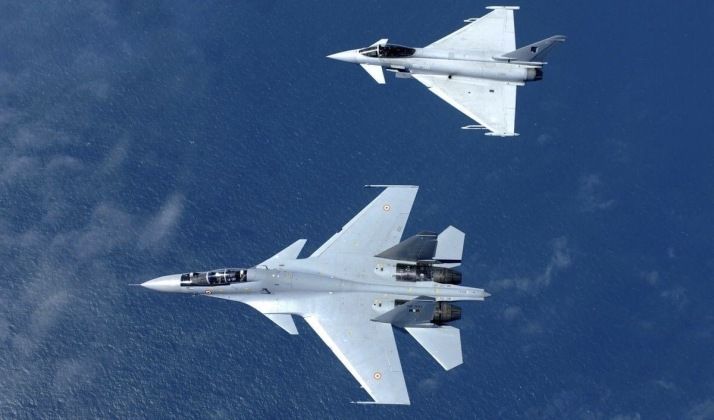
The outcome of a hypothetical combat engagement between Eurofighters and MiG-29Ks is likely to be heavily determined by the variant of former involved, with models built before the 2020s relying on obsolete mechanically scanned array radars which are according to a wide range of reports relatively straightforward to jam. These older models make up the vast majority of the current German fleet. Newer Eurofighter Tranche 4 variants, however, use the Captor-E radar, which is considered more sophisticated and powerful than the MiG-29K’s Zhuk-ME radar. A major further factor remains whether Eurofighters carry the modern Meteor air to air missile, which can comfortably outrange the R-77-1 deployed by MiG-29 units. A primary reason for these disadvantages against the very latest Eurofighter models is that MiG-29s have not been prioritised for modernisation, with the lack of carrier operations in the Navy further reducing the Defence Ministry’s incentive to invest in modernising its MiG-29K regiment despite more advanced radar and weapons technologies being available.
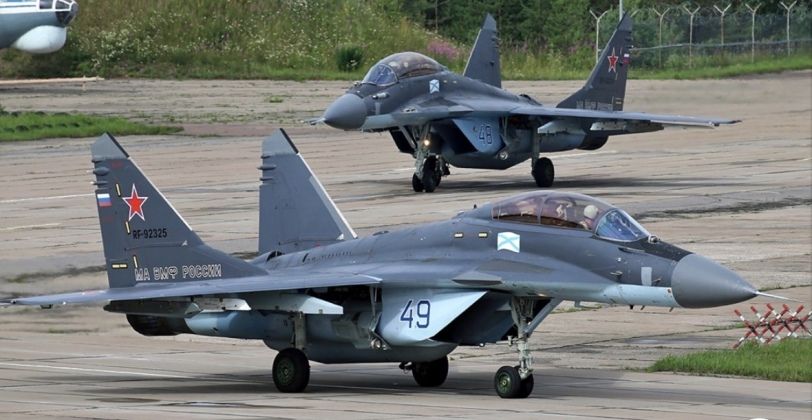
The MiG-29 has seen its role in the Russian Air Force rapidly diminish since the disintegration of the Soviet Union in 1991, and while approximately 800 were in service in the country in 1991, with dozens more set to join the fleet every year, today Russia fields only around 100 - 64 percent of which are unmodernised variants far inferior to the MiG-29K. Indeed, the MiG-29K regiment in the Navy remains by far the most modern MiG-29 unit in Russia, and while modernised MiG-29SMT units in the Air Force use similarly advanced avionics and engines, their airframes date back to the Soviet era and lack use of modern composite materials. A primary reason for the decline in the MiG-29’s role was that the heavier and more capable Su-27 and its many derivatives were considered more cost effective to field despite being far more expensive, in part due to their ability to patrol far wider areas with their longer ranges and larger radars. As a result the vast majority of encounters between NATO and Russian fighters have involved derivatives of the Su-27 - usually the original, the Su-30 or the Su-35.
