
Japanese Remilitarisation? Tokyo Considers Unprecedented Increase to Defence Budget
Military Watch Magazine Editorial Staff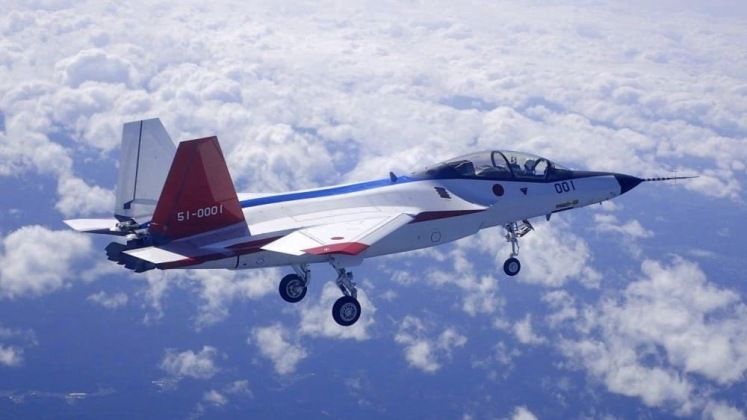
Japanese Shinshin X2 Sixth Generation Technology Demonstrator
Japan's Defence Minister Nobuo Kishi has revealed that his country is ready to end the one percent cap on military spending which has been in place since the 1990s, with the minister stressing that Tokyo will not decide its defence budget while worrying about how big it is in relation to GDP. “We must increase our defence capabilities at a radically different pace than in the past” as “the security environment surrounding Japan is changing rapidly with heightened uncertainty”, he said, citing the growing military capabilities of neighbouring China. Kishi stressed that Japan needed to keep up with technological advances and develop its capabilities in new areas of warfare, such as space, cyber, and electromagnetics. Japan has hosted a large U.S. military presence since it was given independence in 1952, after a seven year period of American military rule. It has been closely locked into the U.S. sphere of influence ever since and supported Western efforts to counter a number of major adversaries including the Soviet Union, China, North Korea and Iraq. New evidence released in 2020 showed that Japanese child soldiers participated in the Korean War from 1950 alongside U.S. forces.
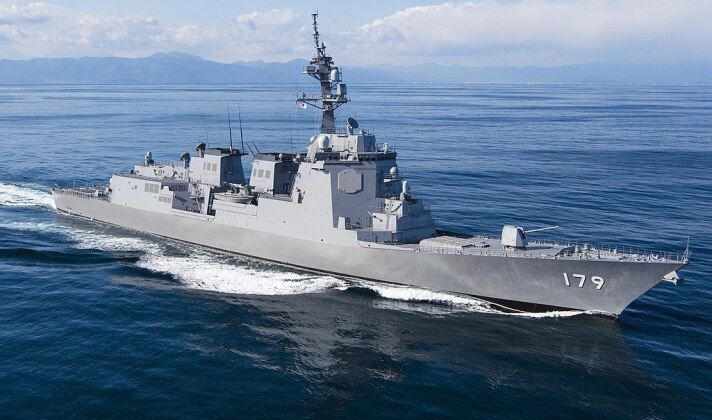
Other than South Korea, Japan is considered the most powerful U.S. defence partner in the world by a considerable margin, and has a destroyer fleet larger and more capable than the entire European continent combined. Other than South Korea's Sejong the Great Class destroyers, Japan's latest destroyers are considered much more capable than any surface combatants fielded by a U.S.-aligned country. Japan has pioneered several key technologies particularly in relation to warships and radar systems, and was the first to integrate AESA radar technologies onto destroyers, air to air missiles and fighters. The country is currently invested in developing a sixth generation fighter jet, after Mitsubishi Heavy Industries flew a technology demonstrator for such an aircraft multiple times in the mid-2010s.
Although Japan was initially expected to partner with U.S. or British firms to develop the aircraft, it was subsequently announced that it would pursue the program more independently. The first prototype is expected to be complete by 2024. Japan’s ability to afford a larger defence budget had repeatedly been called into question due to its very high levels of government debt, although the benefits of revenues from arms exports may help to offset some of the costs of a greater focus on the military. Tokyo has long been under pressure from the U.S. to increase defence spending to reduce the burden on America of maintaining the U.S.-led order in East Asia.
