
China’s J-20 Long Range Stealth Fighter Units Gain New Role Guarding Strategic Nuclear Bombers
Military Watch Magazine Editorial Staff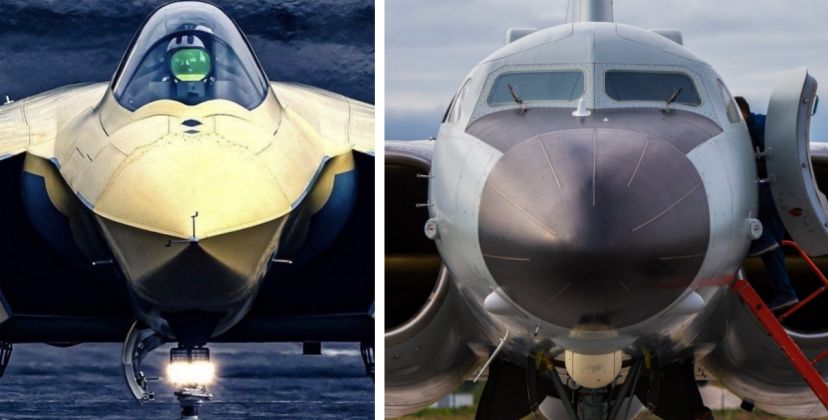
J-20 Fighter (left) and H-6 Bomber
Chinese state media has for the first time released footage showing J-20 fifth generation fighters escorting new H-6N strategic bombers configured to carry the JL-1 air-launched ballistic missile. Released to mark the 99th anniversary of the founding of the Chinese People’s Liberation Army, the footage has drawn attention to the J-20’s new role, at a time when the advanced fighter type has seen its production scale expanded considerably. While the H-6 is one of the oldest bomber types in the world, heavily enhanced new variants have continued to be introduced into service in recent years, with the H-6N designed to provide an intercontinental range nuclear strike capability.
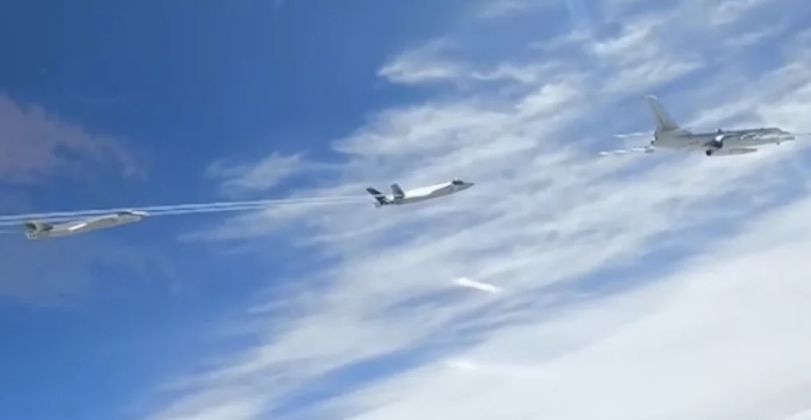
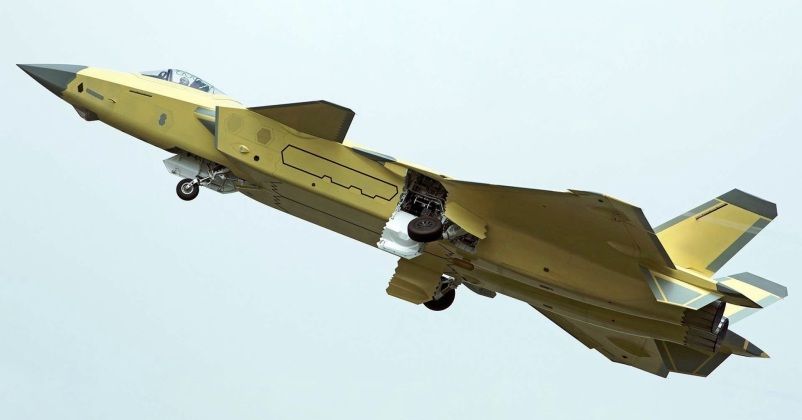
The J-20 is a long range air superiority fighter well optimised for bomber escort missions, and was developed as a successor to the fourth generation J-11, which was originally also designed in the Soviet Union with such escort missions in mind. The fighter’s unrefuelled combat radius of over 2,000 kilometres is among the longest in the world, far exceeding that of any Western fighter type and doubling that of the rival F-22 and F-35 fifth generation fighters fielded by the U.S. Air Force. Combined with growing availability of aerial refuelling from the Air Force’s fast expanding fleet of YY-20 tankers, and with the aircraft’s large and cutting edge radar, this allows the aircraft to escort the H-6 across much of their flight paths.
The H-6N was specifically developed with an in-flight refuelling probe, allowing it to operate far beyond the reach of earlier H-6 variants and substantially expanding the effective range of China’s air-based strategic deterrent. Footage released by Chinese state media to mark the tenth anniversary of the Y-20 strategic transport aircraft in June specifically highlighted its role in supporting the air arm of the country’s strategic nuclear deterrent against the United States by refuelling H-6N strategic bombers. The missile’s considerable weight and aerodynamic drag significantly reduce the bomber’s range, making aerial refuelling a critical component of long-range strike operations.
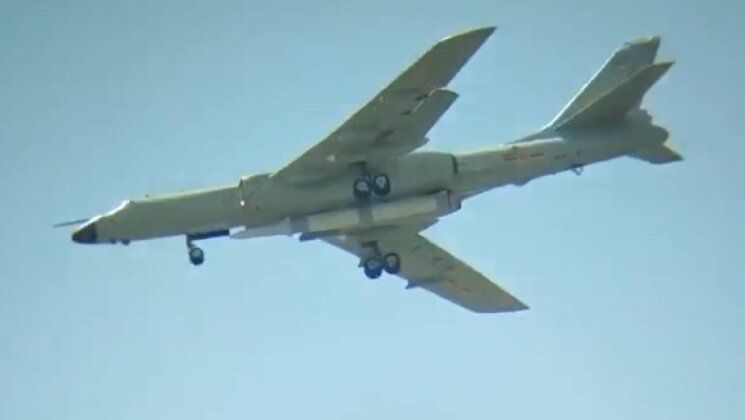
Unlike cruise missiles carried on external pylons, H-6 bombers integrate the JL-1 on a distinctive semi-recessed fuselage station beneath the aircraft, with each bomber able to carry a single missile in this position. The JL-1 is currently the world’s only operational long-range air-launched ballistic missile, with estimates placing its range at approximately 3,500 kilometres, allowing the H-6N to engage targets at intercontinental ranges, including on the United States mainland. This complements major advances in China’s ground based and submarine nuclear arsenals. The missile will be heavily relied on until China’s much larger H-20 intercontinental range stealth bomber begins to enter service close to 2030.
