
Is Russia Seeking to Displace the U.S. as the Philippines’ Primary Defence Partner? Cutting Edge Military Hardware On Offer Under Generous Loan
Military Watch Magazine Editorial Staff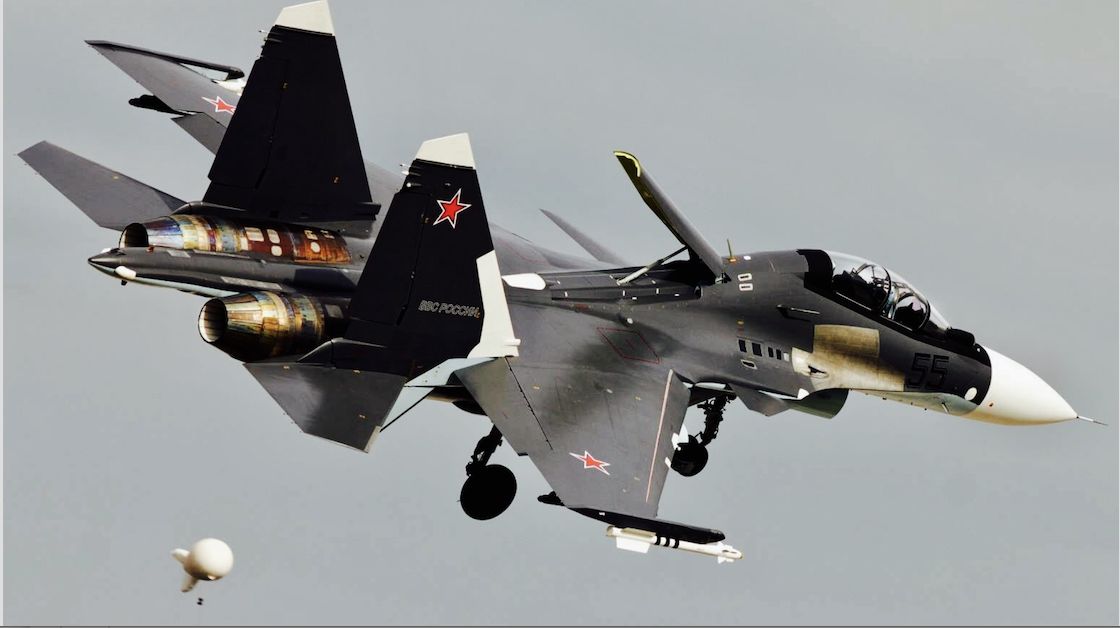
Su-30 Air Superiority Fighter
The presidency of Rodrigo Duterte has led to a considerable shift in the Philippines’ foreign policy, and brought about unprecedented military cooperation between Moscow and Manilla. While the Philippines, a former American colony, was previously prohibited from acquiring arms from any party other than the United States without Washington’s permission, refusals by Western states to provide the country with high end arms and considerable doubts in Manilla regarding the Western Bloc’s ability to provide for the Southeast Asian state’s security needs has provided considerable opportunities for Moscow. Most prolifically, Russia has offered the Philippines several Project 636 Improved Kilo Class submarines - a potent asymmetric asset highly effective in denying hostile warships access to the country’s claimed territorial waters. The Kilo Class are fielded in large numbers by Vietnam and China among others, and even in small numbers can seriously complicate the operations of potential adversaries against near Filipino waters.
Alongside the Kilo Class, Russia has reportedly offered the Philippines a number of high end assets to seriously modernise its aerial warfare and its air defence capabilities. These have reportedly included Su-30 air superiority fighters - long range aircraft also capable of being outfitted for a maritime strike role. Russia’s United Aircraft Corporation has indicated that it is particularly eager to export these high end combat aircraft, and the country is reportedly willing to provide the Philippines with a loan of up to $2 billion - much of which will finance this acquisition. The fighters are notably highly similar to those deployed on the Chinese People’s Liberation Army (PLA) Air Force, the J-15 Flying Shark, which is in part derived from the Su-30 design. With the Philippines perceiving a potential threat from China to its territorial integrity, it is notable that the land based Su-30 jets will be able to fly faster, higher and with more weapons and will overall be more capable than the carrier based jets currently fielded by the PLA Navy.
Other prominent assets offered to the Philippines’ armed forces for the modernisation of the country’s air defence capability include BuK-M1 and BuK-M2 medium range and Pantsir-S1 short range surface to air missile systems. These highly mobile platforms, while lacking the range of more costly long ranged platforms such as the S-300VM, are considerably less costly, highly versatile and ideal for defending cities, military bases or even outlying islands from air and missile attacks. While Russian arms are likely to be highly attractive to Manilla, the Countering America's Adversaries Through Sanctions Act (CAATSA), which allows the U.S. Treasury to impose economy sanctions against Russian defence clients, does provide the United States with a particularly potent means to deter the Philippines from acquiring Russian arms. Whether or not Manilla will proceed with these acquisitions, therefore, remains to be seen.
