
Iran's New Foe? South Korea Sends Heavily Armed Missile Destroyer to Persian Gulf After Tanker Seized
Military Watch Magazine Editorial Staff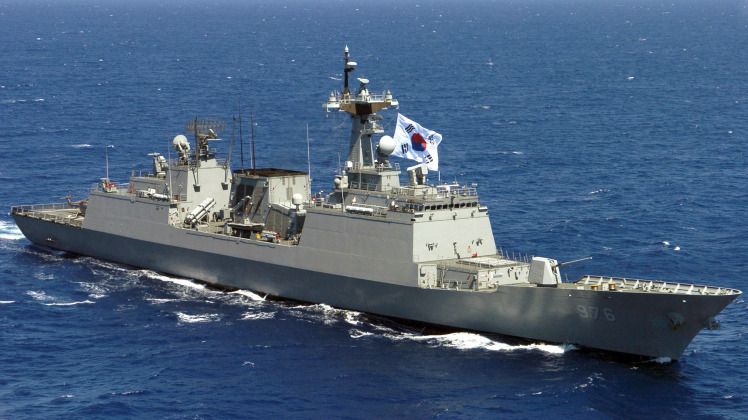
Chungmugong Yi Sun Sin Class Destroyer
Amid high tensions between the United States and Iran, Washington’s treaty ally South Korea has dispatched a Chungmugong Yi Sun Sin Class destroyer to patrol the Persian Gulf in the area surrounding the Strait of Hormuz - a key potential hotspot. The warship’s arrival came a day after Iran's Revolutionary Guard Corps seized a South Korean flagged commercial tanker, the Hankuk Chemi, in the area, under the pretext that it was allegedly "creating environmental and chemical pollution in the Persian Gulf.” An Iranian government spokesman soon afterwards highlighted that South Korea had frozen $7 billion of Iranian funds two years prior - indicating that the tanker and its crew had been taken hostage until the money was released. The Korean destroyer will be tasked with protecting merchant shipping in the area, with the South Korean Defense Ministry announcing: "The Cheonghae unit arrived in waters near the Hormuz Strait earlier in the day. It is carrying out missions to ensure the safety of our nationals." With the possibility of open hostilities between U.S. and Iranian forces having been raised, there remains a significant possibility that the South Korean destroyer could play some role in supporting American and allied forces. Seoul is notably treaty bound to support the United States in the event that it comes under attack, which depending on the circumstances of the outbreak of a potential clash could be interpreted as requiring its involvement against Iran.
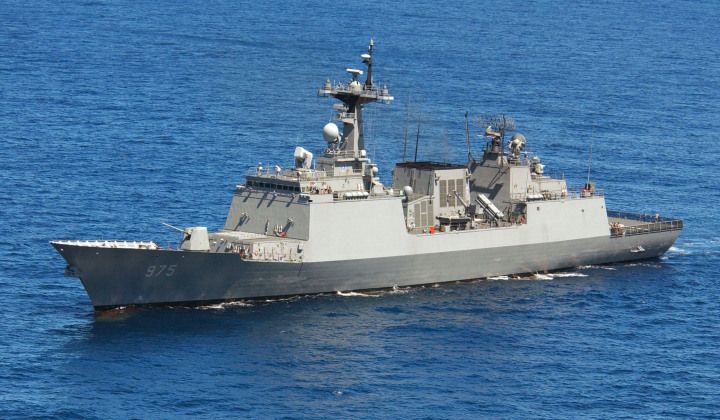
Chungmugong Yi Sun Sin Class destroyers are relatively light displacing approximately 5,500 tons each with a full combat load. The first ship of the class was commissioned in 2003, and each deploys a sizeable arsenal of 64 vertical launch cells. These can accommodate indigenous Korean designed Hyunmoo-3 cruise missiles and Red Shark anti submarine rockets, as well as American SM-2 missiles for air defence. For anti shipping roles, the ships also deploy Harpoon missiles in four tube launchers separate from the vertical launch system. The ships are far from the most capable in Northeast Asia or even in South Korea itself, but are considerably better armed and more sophisticated than any surface combat ship in the Iranian Navy. Iran is notably one of North Korea’s leading defence partners, with its submarine fleet and ballistic missile arsenal both overwhelmingly based on technologies provided by the East Asian state. It remains to be seen whether tensions in the Persian Gulf will be reduced following the inauguration of the Joe Biden administration, which is expected to seek to quickly conclude a deal with Tehran for a reduction in economic sanctions on the country to allow Washington to refocus its attentions towards East Asia.
