
Indian Military Pledges to Proceed With Russian S-400 Acquisition Despite U.S. Threats
Military Watch Magazine Editorial Staff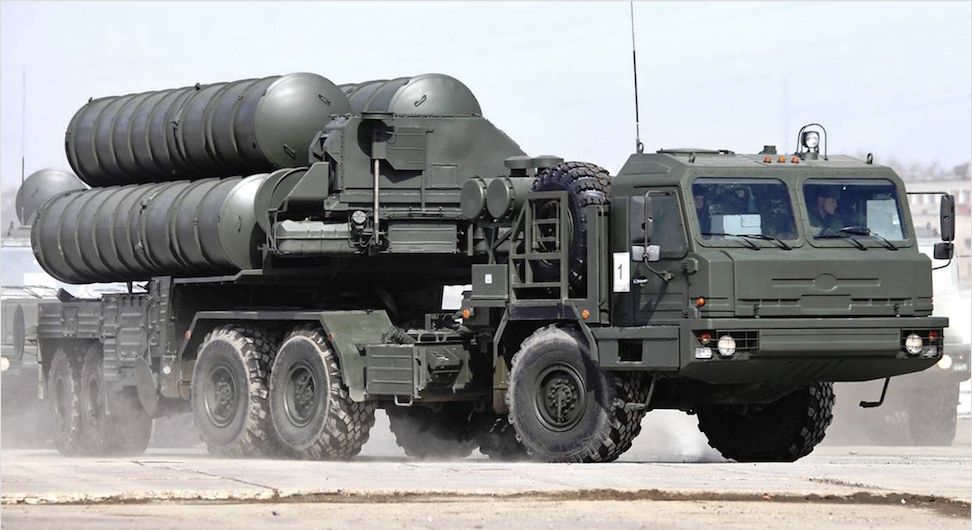
S-400 Surface to Air Missile Battery
Following threats from the United States to downgrade its defence partnership with India over Delhi’s acquisition of the S-400 long range surface to air missile system, and in light of Washington’s recent scrapping of the South Asian state’s preferential trade status, India’s Foreign Ministry has pledged to proceed with the purchase of the Russian weapons system. The S-400 is manufactured by Russian defence manufacturer Almaz Antey, and parties which have shown interest in the system have been threatened by unilateral economic sanctions from the United States under the Countering American Adversaries Through Sanctions Act (CAATSA). A spokesman for the Indian Defence Ministry stated on June 6th: "I really can not share how are we going to tackle the whole issue. We already have contract which has been signed and you already know that steps are being undertaken to implement the contract. We are engaged and we have engaged with the US administration as well as the US Congress on the issue of CAATSA.”
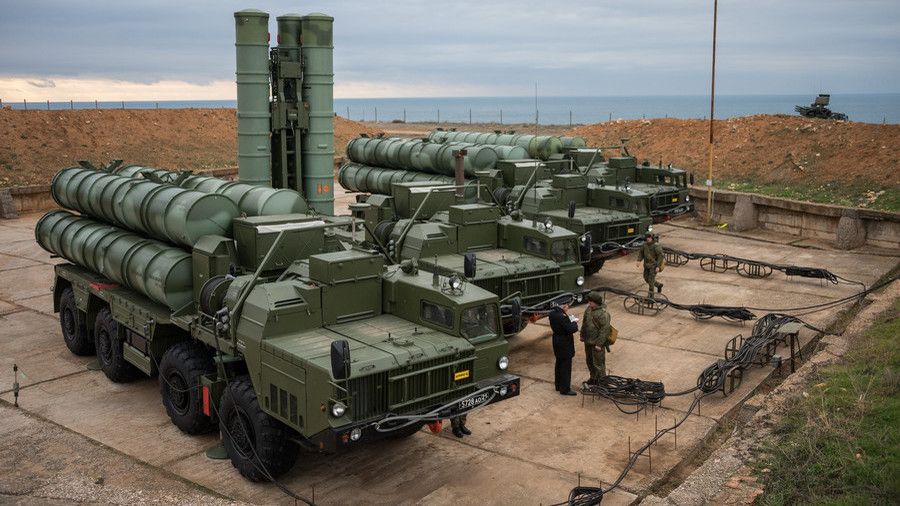
India and Russia signed a $5.43 billion contract for S-400 acquisitions in October 2018, with the first batch set to be delivered in October 2020. The remaining four batches will be delivered by 2023, and the systems are set to revolutionise the country’s air defence capabilities in a complementary role to its fleet of Su-30MKI air superiority fighters. Over 300 Su-30MKI fighters are expected to be in service by the time the S-400 delivery is complete. Russia and India are also currently negotiating joint production of Su-57 fifth generation air superiority fighters - though India has reportedly shown a greater interest in acquiring the aircraft from Russia. The U.S. has responded both by threatening India and by offering its own weapons systems to replace those from Russia. India’s lack of interest in the F-35A fighter which the U.S. has shown a willingness to provide Delhi, however, has undermined this strategy. The United States has repeatedly offered India the THAAD air defence system as an alternative to the S-400, though this platform remains poorly suited to India’s defence needs and lacks most of the advanced capabilities of the S-400 despite its far greater price. THAAD lacks anti stealth capabilities, hypersonic missiles, or warhead equipped interceptors - and deploys just a single interceptor type where the S-400 has access to over half a dozen. The S-400’s range is double that of the THAAD system, its sensors more powerful, and it retains the versatility to engage all manner of targets including ballistic missiles, cruise missiles and combat aircraft. THAAD is only capable of engaging ballistic missiles - though its test record has brought its capabilities to serious question. How the U.S. and its partners will respond to India’s continuation of defence partnership with Russia in defiance of repeated threats remains to be seen.
