
Indian and Pakistani Forces Exchange Fire in Kashmir
Military Watch Magazine Editorial Staff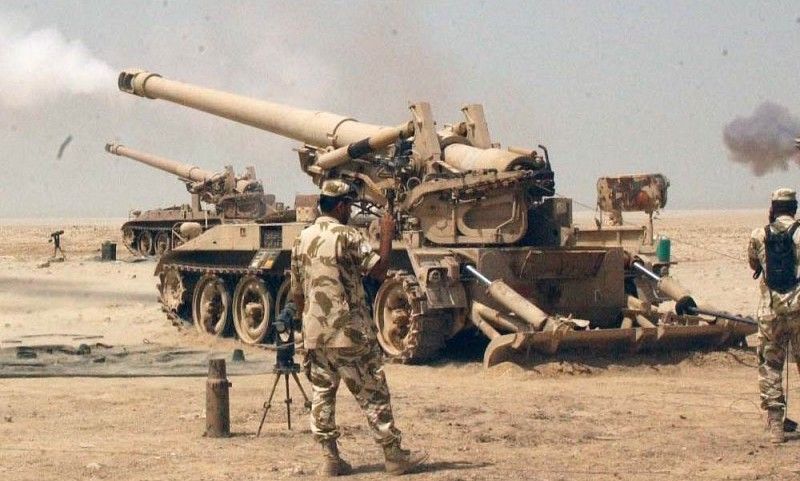
M110 Self Propelled Howitzer
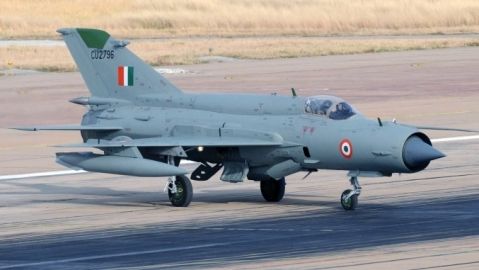
Following a number of air battles between India and Pakistan, in which the latter gave evidence of having shot down two Indian jets and the former responded with claims it downed a single Pakistani F-16 fighter, an exchange of shelling took place at the border on March 1st at the Line of Control separating each country’s control zone in the disputed region of Kashmir. Indian Defense Ministry spokesman Lt. Col. Devender Anand stated regarding these hostilities: "At about 0600 hours, Pakistan initiated unprovoked ceasefire violation by shelling with mortars and firing small arms along LoC in Krishna Ghati Sector. The Indian Army retaliated strongly and effectively. The firing stopped at about 0700 hours.” Pakistan for its part appears to be taking steps to deescalate the conflict, and on the same day released captured Indian Air Force commander Abhinandan Varthaman - who was shot down piloting a MIG-21 over Pakistan earlier in the week.
Both India and Pakistan deploy of formidable artillery systems in large numbers which can lay down considerable firepower in the event of a border conflict, though it has yet to be confirmed which are currently deployed at the border to take part in exchanges. While India has placed a sizeable order for American M777 howitzers, platforms which have proven highly problematic in the past and caused Indian casualties during testing, the Soviet M-46, D-30 and 2S1 artillery pieces - the last self propelled, are fielded in large numbers. The Indian Army also deploys the South Korean K9 Thunder, with 100 on order and 10 currently in service. While these are widely considered the most capable self propelled artillery systems in the world, they have yet to enter widespread service. The indigenous Indian Field Gun MK3 and Russian 9K58 MBRL are also deployed in large numbers, and boast considerable firepower.
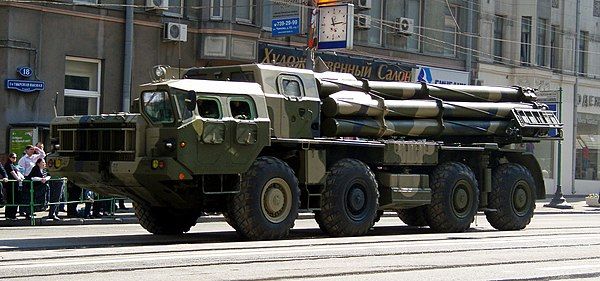
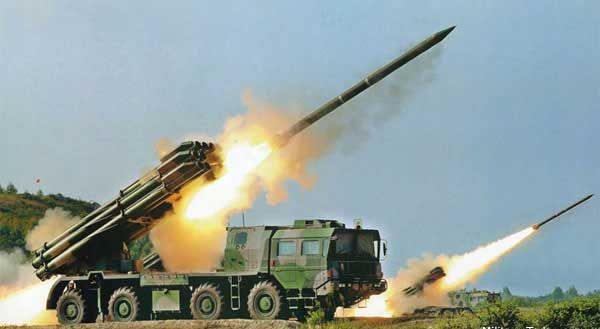
Pakistan for its part deploys a number of American howitzers, including the M110, M109, M115, M114, M198 and M101 - all fielded in large numbers. Chinese howitzers are increasingly relied on to supplant this older American hardware, with Pakistan deploying the Type 59-1 field gun, the Type 54-1 and Norinco D-30 towed howitzers. Approximately 50 Chinese made A-100 multiple launch rocket systems, incidentally the same platform as that from which the Nasr nuclear artillery is deployed, are also reportedly deployed for conventional use. Pakistan also manufactures the North Korean 122mm KRL 122 rocket artillery system under licence - itself an enhanced variant of the Soviet BM-21 Grad.
The Indian government has convened an urgent security meeting in response to the escalating conflict, with the three service chiefs meeting in New Delhi and reportedly considering another major strike against Pakistan. It is notable that the Indian Air Force has not made use of its most capable assets, namely the Su-30MKI air superiority fighter, which is considerable more capable than previously deployed Indian jets . Even the medium weight MiG-29 has not seen combat, with the Air Force instead relying on lower end lighter platforms such as the MiG-21 and Mirage 2000 - the two least capable aircraft currently in active service. India’s arsenal of Brahmos cruise missiles may also be deployed in potential future strikes, though this currently appears unlikely given their lethality and the resulting risk of major escalation.
