
Indian Air Force Officially Inducts First Rafale Fighters Into Service After Controversial $8.8 Billion Deal
Military Watch Magazine Editorial Staff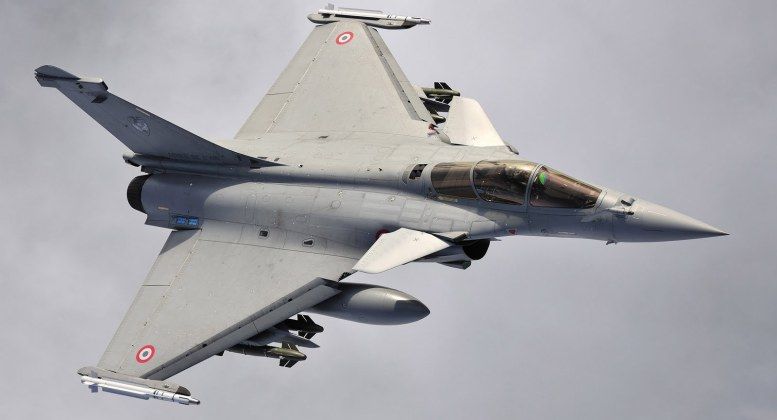
Rafale Lightweight Twin Engine Fighter
The Indian Air Force has officially inducted its first five Rafale lightweight twin engine fighters into service, after receiving the aircraft from France in July. The Defence Ministry ordered 36 fighters under a deal worth over $8.8 billion - meaning each fighter has taken over $240 million from the defence budget. The cost of the fighters, and the poor sales record of the Rafale, has led to considerable controversy and a major corruption scandal surrounding the deal - with analysts widely questioning the cost effectiveness of the acquisition. The Rafale is the first new class of foreign fighter to enter service since 2002, when the first Su-30MKI heavyweight platforms joined the Air Force, and their commissioning comes at a time of high tensions between Indian and China over a territorial dispute in the Ladakh region. Upon entering service, the Rafale has gained the title of the slowest fighter in the Indian fleet and has the lowest altitude ceiling. Despite limitations on the platform’s flight performance, particularly compared to jets already in service such as the MiG-29 which is much more manoeuvrable and has higher climb rate, or the Su-30MKI which has far superior endurance, the Rafale has a number of advantages in terms of electronic warfare systems and sensors.
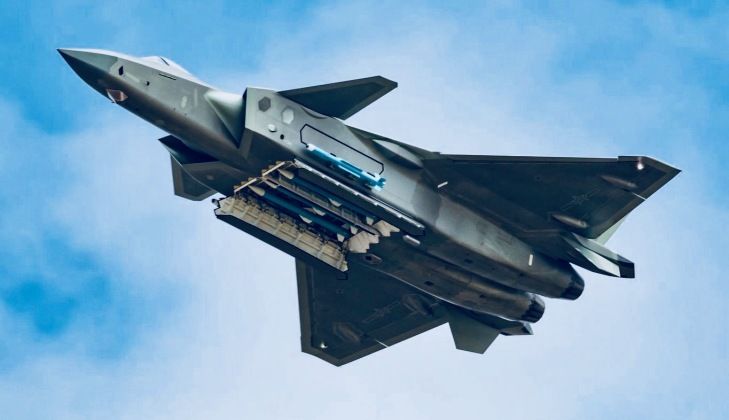
Although older variants of the Rafale were considered unremarkable, and were comparable to the American F-18C Hornets of the Cold War era with similar flight and engine performances and radar size, newer variants are prized for their superior electronic warfare systems, sophisticated AESA radars and access to new SCALP and Meteor missiles. The Scalp is a radar evading standoff cruise missile, and although much slower and less versatile than India’s indigenous BrahMos cruise missile it has a longer range and an advanced radar evading profile. The Meteor, meanwhile, has a formidable range estimated at 250-300km and is designed for air to air engagements - although its ability to match its latest Chinese rival the PL-15 is questionable with the Chinese design integrating an advanced AESA radar it them harder to jam and providing a better performance against stealth targets. This, among other factors, has brought the Indian fighter's ability to go head to head with the latest Chinese fighters such as the J-16 and J-20 into serious question. India is not expected to invest in acquiring further Rafale units, but is currently considering acquiring heavier MiG-35 ‘4++ generation’ and Su-57 next generation fighters from Russia. The Indian Air Force’s latest orders placed in February 2019 and more recently in July 2020 have been for further Russian MiG-29 and Su-30 fighter jets - purchases of which have been far less controversial and have been made in much larger numbers.
