
India’s New Rafale Jet vs. China’s J-20 Stealth Fighter: Do French Built Aircraft Stand a Chance?
Military Watch Magazine Editorial Staff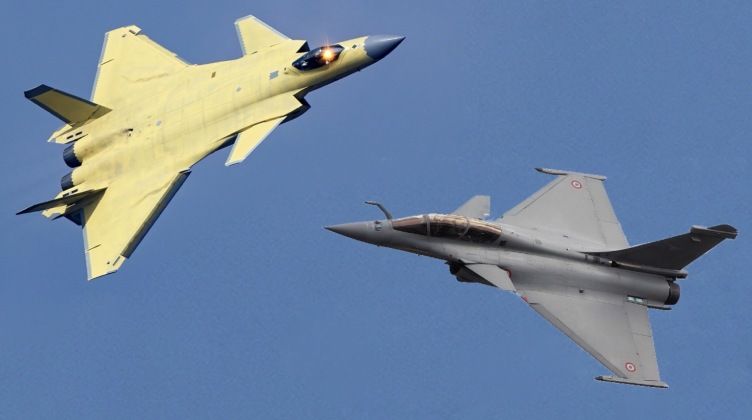
Chengdu J-20 vs. Dassault Rafale
On July 29th the first five Rafale fighter jets arrived in India from France, out of a total order of 36 aircraft placed in 2016 which has set the Indian Defence Ministry back $9.35 billion - or $$242-260 million per fighter depending on the exchange rates. Following clashes with Chinese forces in the Ladakh region on India’s northern border, the country has moved to reinforce its positions in the region and will deploy its first five Rafale jets to the area as part of this wider effort. The deployment of Rafale jets near the Chinese border at a time of high tensions has led to widespread comparisons between the new French built jets and China’s own leading fighters - the J-10C, J-16 and J-20. Although the J-20, like the J-10C, is not deployed under China’s Western theatre command meaning the aircraft are nowhere near the Indian border, the fighter has been singled out for comparison with the Rafale due to its advanced capabilities.
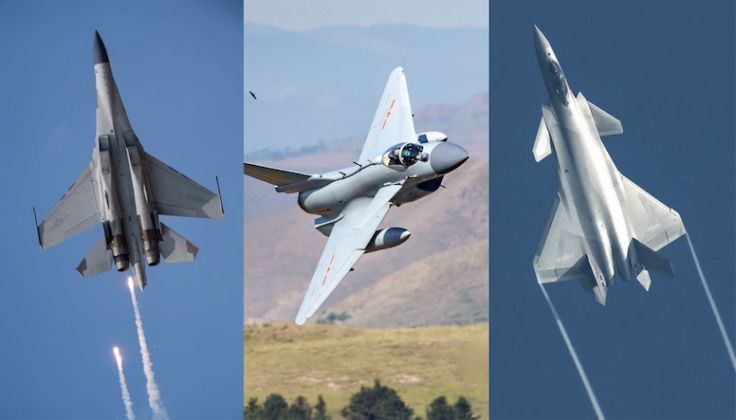
Other than the locations of J-20 units, the sensibility comparisons of the fighter with the Rafale are questionable for a number of reasons. While the J-20 is China’s heaviest and most capable fighter, this is not the case for the Rafale which is not only lighter, but is in many ways less capable than the Su-30MKI heavyweight jet of which India currently deploys over 250. Furthermore, the J-20 and Rafale are from entirely different weight ranges, with the J-20 being large even by the standards of heavyweight jets at around 32,000kg - while the Rafale straddles the boundary between lower-medium weight at lightweight jets at just 15,000kg. Not only is there a massive difference in weight, which indicates that the J-20 is from a much higher class of aircraft, but there is also a significant generational difference. The Rafale is considered a ‘4+ generation’ aircraft comparable to the Chinese J-11BG or American F-18E Super Hornett, while the J-20 comes from the fifth generation - one of just three active fighters of its generation in the world alongside the American F-22 Raptor and F-35 Lightning II jets.
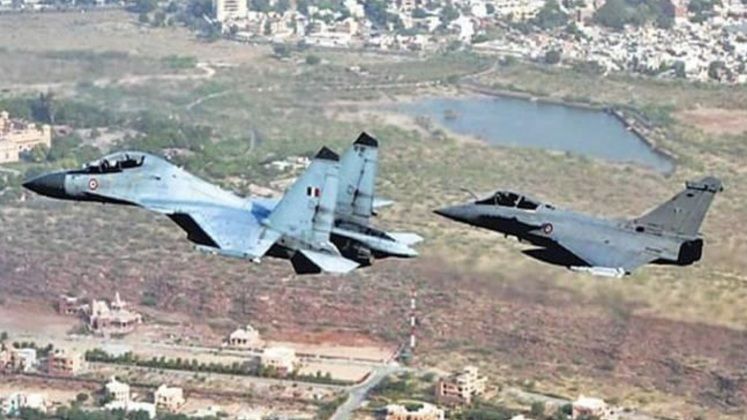
A further major difference between the Rafale and the J-20 is the purpose for which they were designed. Alongside multiple classes of bomber, China is manufacturing at least five separate classes of fighter for its armed forces simultaneously. This diversity is facilitated by the sheer size of its defence sector and the cost effectiveness of its products. While Russia and the United States are also able to manufacture multiple fighter classes for different roles, small manufacturers such as Taiwan, France, Iran and Sweden can only afford to produce single fighter class at a time. For countries restricted to producing a single fighter, the aircraft must prioritise a low operational cost and be a ‘jack of all trades’ without specialisation in any field. This means that while the Rafale can perform land attack, air to air and anti shipping roles, as well as nuclear delivery, its airframe must balance between all of them. This leaves such aircraft at a disadvantage relative to specialist fighters, with the J-20, like the American F-22 and Russian Su-35, being a specialist in air to air combat where other fighters like the countries' respective JH-7, F-15E and Su-34 are allocated land attack roles. Specialists consistently perform far better in their roles than ‘jack of all trade’ jets, hence why larger industrial powers which can afford to pursue them have done so.
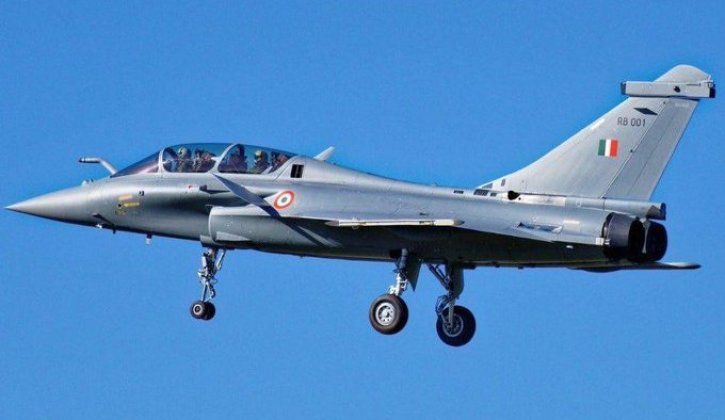
Based on the stark differences between the two designs, it is evident that the J-20 will have a very significant advantage in air to air combat due to multiple critical factors. Looking to specifications, the Rafale is the slowest and lowest flying fighter in the Indian Air Force, and its manoeuvrability and climb rate are unremarkable and inferior to older Indian fighters such as the MiG-29. The French built has a lower altitude ceiling than any other Indian operated fighter, at around 15km, which makes its ability to operate effectively in mountainous border regions highly questionable. The fighter’s endurance is also very low compared to heavyweight fighters like the Su-30MKI, meaning it cannot carry high weapons loads over long distances. Its small size and relatively weak engines, furthermore, mean that each additional weapon carried will take a much greater toll on its flight performance than would be the case for heavier jets.
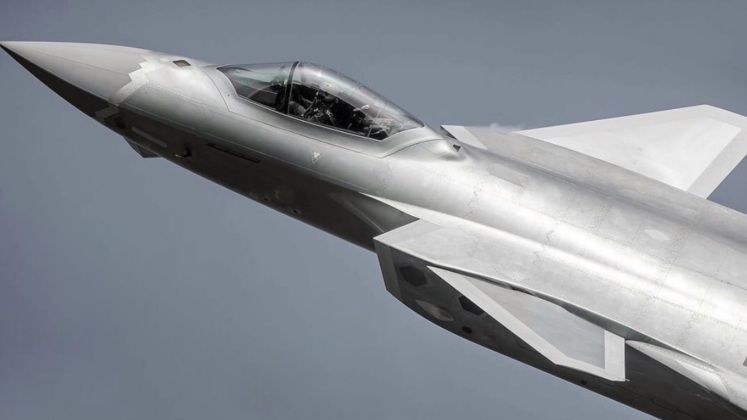
Looking to the J-20, the fighter has one of the highest altitude ceilings in the world and can comfortably exceed Mach 2 speeds, meaning it will be able to attack the Rafale from above and provide its missiles with much more kinetic and gravitational potential energy. Its range and endurance are among the longest in the world, with the aircraft designed for long distance missions over the Pacific. More important than its flight performance advantages however are its technological ones. As a fifth generation fighter, the J-20 makes use of an advanced radar cross section reducing airframe. Although the fighters in peacetime often deploy with luneburg reflectors or external fuel tanks, making them easy to detect even at long ranges, when in ‘stealth mode’ the fighters have a small fraction of the radar cross section of any fourth generation jet making them extremely difficult to lock onto. The J-20 further benefits from advanced stealth coatings, an asset the Rafale lacks, which absorb radar waves and augment the stealth advantage already provided by the design of its airframe.
In terms of situational awareness both the Rafale and J-20 deploy AESA radars, with France and China being the first two countries after Japan and the U.S. to integrate such radars onto fighter aircraft. It is important to consider that China’s research and development budget is several times higher, which combined with a much larger and generally more sophisticated military industrial base is expected to provide it with more advanced radar and electronic warfare systems. Not only this, but the J-20’s sheer size, more than twice as large as the Rafale, means it can carry a much heavier radar. The latter factor alone guarantees a significant advantage in situational awareness for the Chinese jet. The J-20’s situational awareness is further augmented by integration of state of the art distributed aperture systems, which are currently deployed only by the Chinese fighter and the American F-35 and will provide an important advantage over the Rafale particularly at closer ranges.
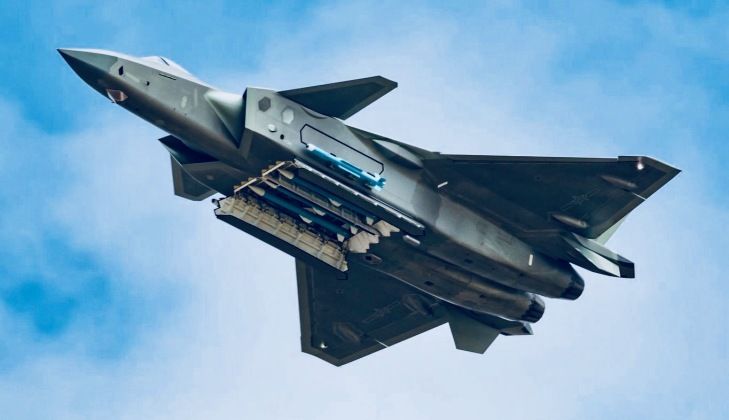
Finally, looking to weaponry, the J-20 deploys the PL-15 air to air missile with a 250-300km range. The missile makes use of thrust vector controls and has a very high manoeuvrability, although its most outstanding feature is its use of an AESA radar which not only makes it much more difficult to jam than passive radar guided missiles, but also allows it to lock on to its targets at greater distances and better engage stealth targets at range. The Rafale currently deploys the ageing MICA air to air missile, which is effectively obsolete for long range engagements with a range of 80km - respectable for its time but now far surpassed by new Chinese and American technologies. India’s Rafales will, however, soon deploy the Meteor missile which is thought to have a range anywhere between 200-280km, a potential challenge to the PL-15. it remains uncertain whether the Meteor integrates an AESA radar as the PL-15 does, although given the cost equipping missiles with such radars would incur in Europe it is likely that the platform, like the latest American missiles, still uses a passively scanned radar.
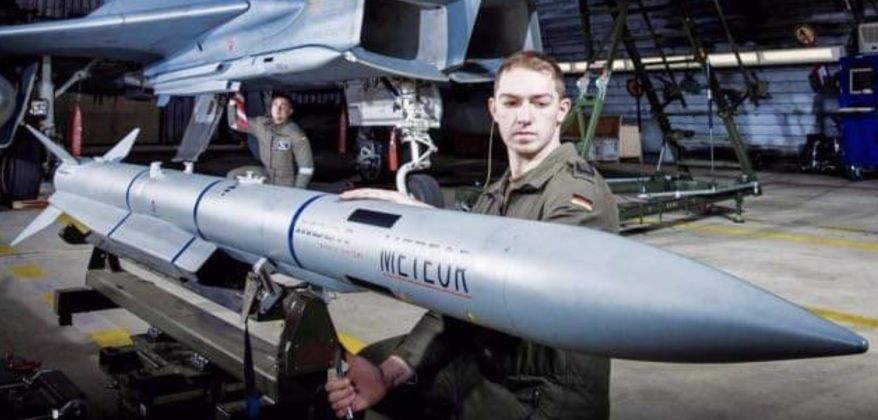
Unlike the PL-15, which was developed with targeting stealth fighters in mind, the Meteor was primarily designed to engage very manoeuvrable but non-stealthy jets such as the Russian Su-35. This means its capabilities against stealth jets are not expected to match its Chinese counterpart or its upcoming American rival the AIM-260 - which is similarly being designed to neutralise stealth targets. Furthermore, due to the sensitivity of the Meteor’s technologies and the strong tendency among European manufacturers to downgrade missile designs for export to the third world, India will almost certainly be receiving a less capable Meteor variant than that used by the French Air Force itself. This is far from the case for the PL-15, which is used by the country which designed and manufactured it and will represent the pinnacle of Chinese missile technology.
The J-20’s missile advantage will likely be most pronounced in short ranged engagements, with the new PL-10 short ranged air to air missile using thrust-vector control, capable of high-off bore-sight engagements, and able to engage targets beyond 90 degrees providing a very significant advantage over its French analogue the Magic II. This will ensure that the J-20 will almost certainly shoot first in the case of a short range clash, with the PL-10 also benefitting from a longer range than its much older and less sophisticated French analogue. The J-20 has also recently benefitted from improved manoeuvrability with the integration of new more advanced indigenous engines - an its flight performance will only further improve now that models with thrust vectoring engines have gone into production.
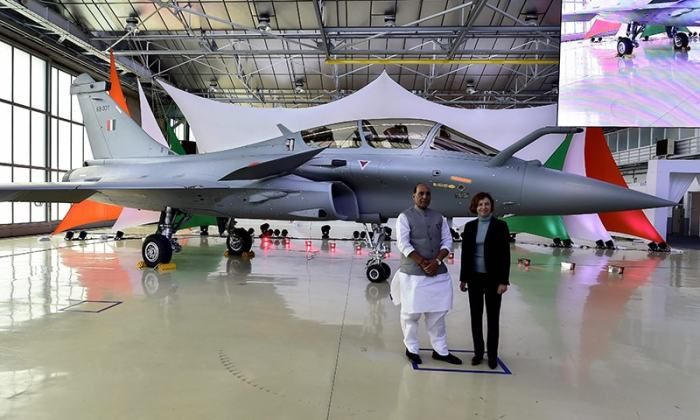
Ultimately the J-20 and Rafale represent two entirely different kinds of aircraft - the former an analogue to the American F-22 Raptor and the latter analogous to the F-18 Hornet, leaving little question as to which is the more high-tech or the more elite design. The government of India for its part has faced considerable criticism over its controversial decision to purchase the Rafale, but is considering acquisition of more capable and heavier aircraft such as the Russian Su-57 which will provide a much greater challenge to the J-20 - coming from the same weight range and the same technological generation. China is unlikely to deploy its J-20 fighters near the Indian border in any meaningful numbers, and unlike the U.S. and its Western allies India is not by Beijing as likely to harbour any significant aggressive intentions towards China meaning disputes are likely to be resolved through dialogue. Should the J-20 for any reason be deployed near India’s border, the Indian armed forces will have other means of tackling the jet including reliance on new S-400 air defence systems - designed specifically to take on high performance stealth fighters - and Su-30MKI fighters armed with BrahMos missiles which could be used to threaten airbases deep into Chinese territory. India is very far from helpless if it needs to confront China’s most elite fighter, but its new Rafale jets are poorly suited to doing so and will be overwhelming outmatched if attempting to take on aircraft over twice their weight and a generation ahead.
