
India’s Tejas is Now Fighting Pakistan’s JF-17 - For Malaysian Arms Contracts
Military Watch Magazine Editorial Staff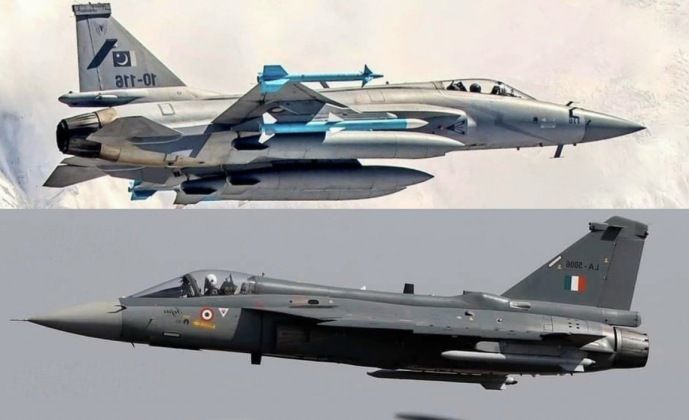
JF-17 (top) and Tejas Light Fighters
Malaysia is currently considering the acquisition of a new class of lightweight single engine fighter jet to modernise its air force, with the three leading contenders being the South Korean F/A-50, the Sino-Pakistani JF-17 and the Indian Tejas. According to a number of sources the country’s armed forces are currently inclined towards the JF-17, which has a significantly longer operational record, has been produced in larger numbers and is already operated by three countries - namely Pakistan, Myanmar and Nigeria. The F/A-50 its also considered a leading contender, but the Tejas is not. Other contenders which have reportedly already been excluded are the Russian Yak-130, the British Hawk and the Swedish-American Gripen - the first two of which have much more limited combat capabilities and cannot fly supersonically, while the Gripen is much more restricted in the ways its operators are permitted to use it.
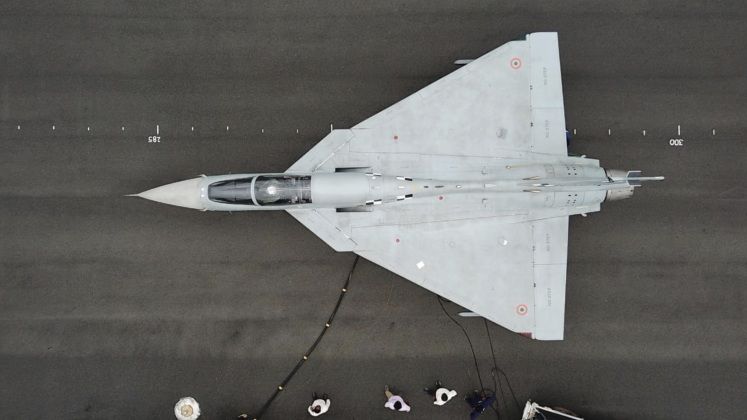
The JF-17 and Tejas have long been seen as rival fighter programs, with both sharing many similarities including being from the ‘very light’ weight range - placing them below standard lightweight fighters such as the F-16 and J-10 in size. Both were designed to prioritise a low operational cost, and use derivatives of engines developed for Cold War era medium weight twin engine fighters but in single configuration. The Tejas’ powerplant is derived from that of the American F-18, while the JF-17 uses a powerplant derived from that of the Soviet MiG-29 which was the F-18’s direct competitor. Both fighters are heavily oriented towards air to air combat, and were designed to be operated at a low cost with minimal fuel consumption or maintenance requirements. As a result neither are considered particularly to be particularly high end aircraft on par with an F-16 or MiG-29, but both have integrated advanced avionics, electronic warfare systems and weaponry to partially compensate for disadvantages in flight performance.
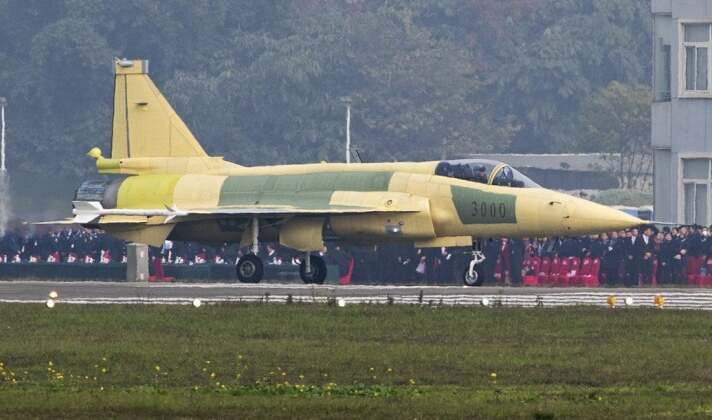
The reasons for Malaysia’s preference for the JF-17 can be speculated. The fighter has been produced in larger numbers and enjoyed a much less troubled development - with the Tejas by some counts having a longer development time than any other fighter in history due to major delays. The Indian fighter entered service over 40 years after development began. The JF-17 is also available in multiple variants including a twin seat training and strike variant, the JF-17B, with continued upgrades to the aircraft provided by a much larger industrial base with far more experience in military aviation. The Sino-Pakistani jet is also more compatible with Chinese armaments, which Malaysia already relies on heavily, while the Tejas is more of a Westernised aircraft which alongside its American engine notably uses Israeli avionics - a major drawback for a Muslim country which has poor relations with Israel. The Tejas is also considerably more costly to build, as a result of both less efficient production lines and the very high cost of the U.S. and Israeli parts it relies on.
The latest variants of the Tejas notably have the advantage of a superior radar to the JF-17 Block 2, although the upcoming JF-17 Block 3 which is expected to enter serial production before the end of 2023 has an overwhelmingly superior performance. Among other features, it integrates an AESA radar, Chinese PL-15 air to air missiles, enhanced engines, a radar cross section reducing airframe and fifth generation level avionics. Ultimately whichever fighter is chosen, they will be at the lower end of the Malaysian fleet with its elite still comprised of Su-30MKA heavy fighters from Russia. The country has notably shown an interest in replacing its Su-30 unit with more modern Su-57 next generation fighters.
