
India Announces Plans to Re-Export Hundreds of T-72 Tanks: Could They Soon Go Back to Russia?
Military Watch Magazine Editorial Staff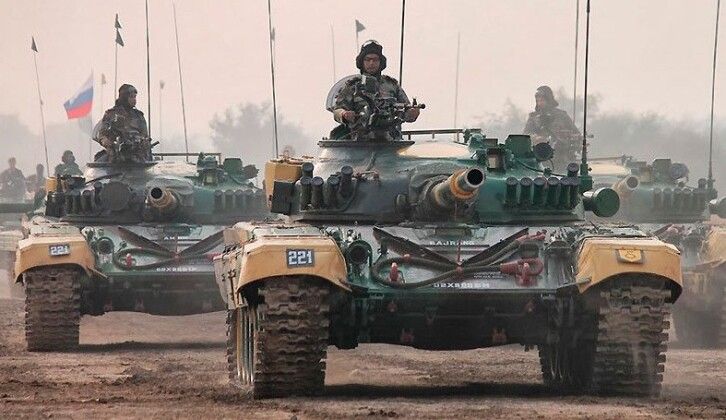
Indian Army T-72 Tanks
The Indian Army is planning to retire several hundred T-72 tanks from service, and at a time when global demand for the tank class has increased very considerably is set to offer them for export. The service fields approximately 2,500 T-72 tanks, the first of which were received in the late 1970s, alongside over 1000 T-90s with further T-90s on order. This long made the Indian Army the largest operator of both classes in the world, with both retaining significant interoperability since the T-90 is itself an enhanced derivative of the T-72 - one initially designated the T-72BU. While the T-72 has considerable room to incorporate upgrades, the age of the vehicles raises their operational requirements and reduces availability rates, leading the Indian Army to favour placing further orders for new T-90s as it has continued to do. A senior official revealed regarding plans to offer retired T-72s for export: “The tanks will be modernised before export, allowing countries in Africa, the Middle East, and Southeast Asia to benefit from these combat vehicles.” Overhauling of the retired tanks will take place at the Heavy Vehicles Factory in Avadi, which previously manufactured them under license before turning to licence production of the T-90 in the 2000s.
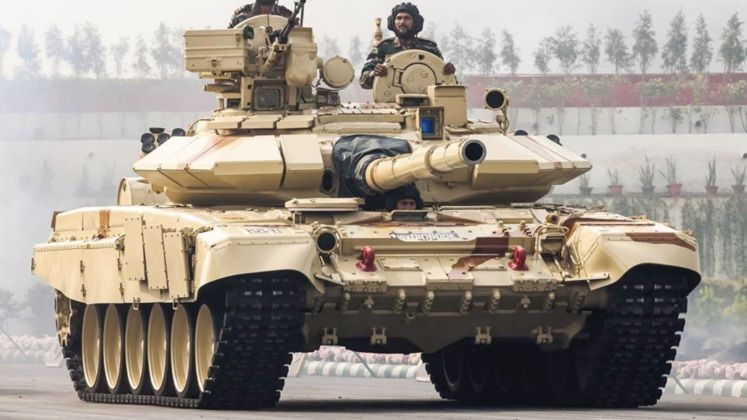
The possibility of hundreds of T-72s being made available for export has raised serious questions regarding the impact this could have for global tank markets. Significant surpluses of T-72s have been depleted rapidly over the past 30 months as tanks across Europe and from Morocco have been donated to Ukraine, while Russia’s own reserves and those of neighbouring Belarus have been integrated into new Russian Army units. The T-72’s competitiveness on export markets, although having had few rivals in the 1980s and 1990s, has diminished considerably in recent years primarily due to the development of rivals such as the Chinese VT-4 and North Korean Chonma 2, which offer features such as active protection systems and advanced thermal sights that have left the older Soviet vehicle class far behind. The T-72’s operational costs are also higher than those of these newer vehicles, and much higher than those of more conservative tank designs such as the Chinese Al Kafil-1 developed for Iraq loosely based on the Type 59.
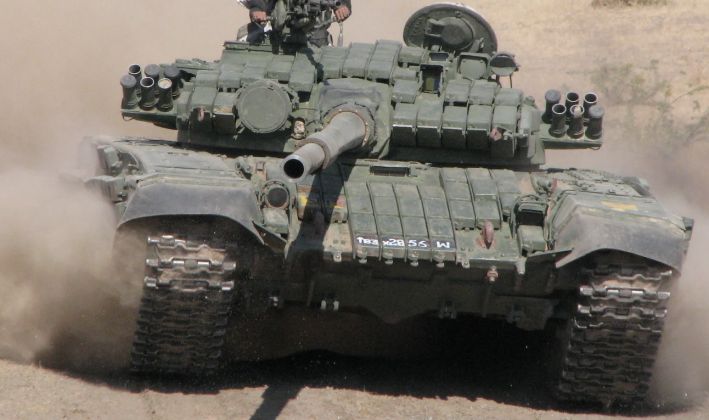
Despite tough competition India could have a number of openings to sell its tanks. A key selling point of the T-72 is that it is already very widely operated, meaning there are a wide range of clients from South Sudan to Venezuela which could seek to expand their fleets by acquiring more of the vehicles with full commonality of maintenance. The country with perhaps the greatest capacity to absorb hundreds of the vehicles would be Russia itself, which has brought hundreds, and by some estimates thousands, of the vehicles out of storage following their retirement in the post Soviet years. While many Russian reports claim that the country’s latest operational tank class the T-90M has seen production successfully surged to over 100 per month, more conservative estimates for current T-90 production would indicate that Russia could still have a strong interest in further T-72 acquisitions. Nevertheless, it remains uncertain whether India will be willing to endure Western pressure not to transfer armaments to Russia directly, with the possibility remaining that they could be transferred through a third party.
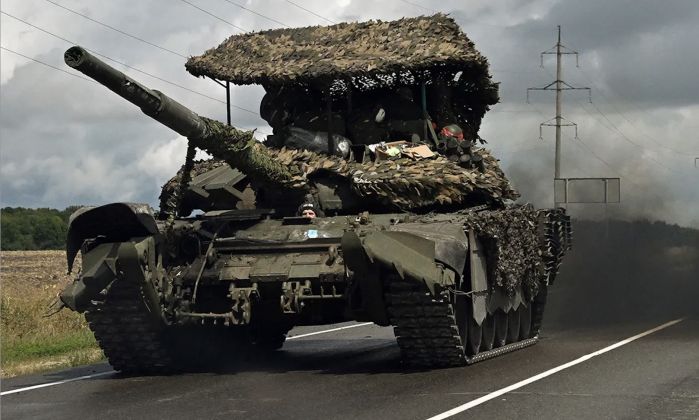
Other than Russia, possible clients could include Vietnam, which already operates the T-72 and with which India has strengthened strategic ties, although the country’s armed forces have already acquired T-90s and are relatively well funded. Laos, which received T-72s from Russia as aid from the late 2010s, is another possibility, as is Iran which produced over 400 T-72s under license in the 1990s before being cut off by Russia. The possibility also remains that India could supply T-72s as aid to influence potential strategic partners such as Bangladesh or Myanmar, which would be far from unprecedented. With the war in Ukraine having transformed markets for T-72/90 tanks, preventing Russia, Ukraine and Belarus from exporting their own stockpiles as they previously did very widely, India’s decision to export its vehicles comes at a potentially optimal time for what has for decades been the world’s most popular tank class on global markets.
