
Belarus Inherited Over 100 T-80B High Performance Soviet Tanks: Why Aren’t They Available Today?
Military Watch Magazine Editorial Staff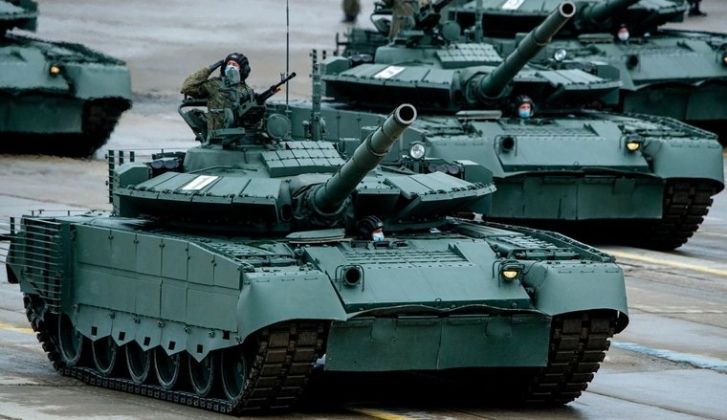
Russian Army T-80BVM Tanks
Following the disintegration of the Soviet Union in 1991 the Soviet Army’s most capable class of main battle tank the T-80 was inherited by the armed forces of three successor states, including Belarus, Ukraine and Russia. While Ukraine would export the large majority of its more capable T-80UD tanks to Pakistan before the end of the decade, and in the process nearly exhaust its supply of production kits for new vehicles to meet Pakistani orders, Russia would cease production of the vehicles entirely. The Russian Defence Ministry instead favoured the cheaper and lower end T-72, the latest variant of which, the T-72BU, was redesignated T-90 for marketing purposes. Belarus by contrast did not inherit facilities for tank production, and as part of deep cuts to defence spending would quickly place its fleet of little over 100 T-80 tanks in storage. The country would continue to operate approximately 550 T-72B tanks, with the remainder of its T-72s placed in storage, and all older tank classes scrapped. This was consistent with broader trends in the Belarusian Armed Forces, with the country retiring its most capable combat jets the MiG-25, Su-24M and Su-27 due to their high operational costs, while keeping a portion of its less capable MiG-29s in service.
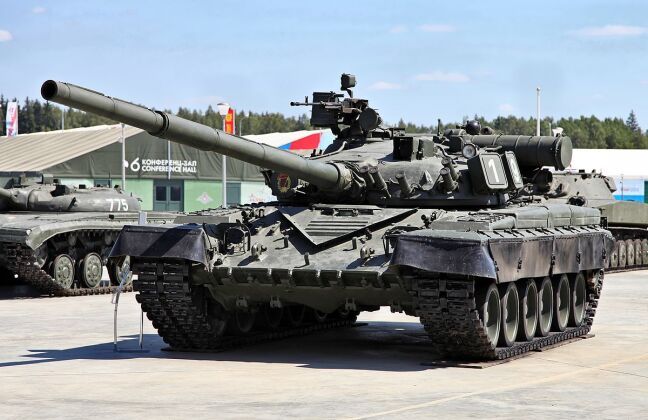
Following the escalation of Russian-Ukrainian hostilities to full scale war in February 2022, Moscow and states across the Western world made considerable efforts to acquire new armour from the frontlines. Western countries were able to procure T-72 tanks from Morocco, while Warsaw Pact T-72s were delivered in their hundreds from across Eastern Europe, followed by German built Leopard 1 and Leopard 2 tanks, American M1A1 Abrams tanks, and British Challenger 2 tanks. These were all used to equip the Ukrainian Army. Russia by contrast was able to draw upon considerable stockpiles of Soviet-built vehicles in storage across the country, although with the vast majority of these having been scrapped, and many of the remainder having been improperly stored, the number of vehicles available was considered insufficient. The fact that the Russian Army had only fielded around 4000 tanks when the war started, compared to over 50,000 in the Soviet Army when the Cold War ended, highlighted the extent of the fleet’s contraction over three decades.
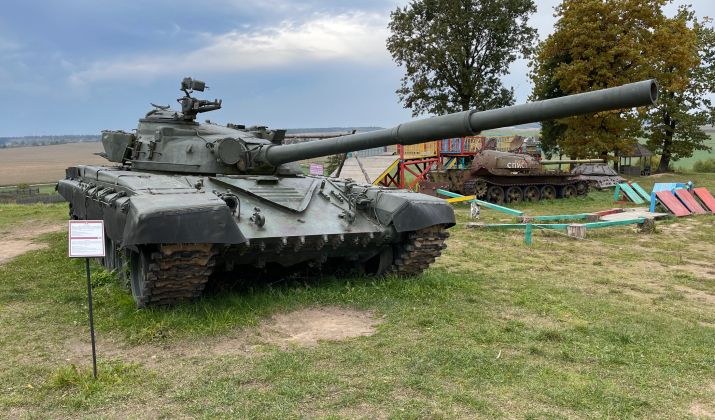
As Russia’s only treaty ally in Europe, Belarus was able to supply Russia with T-72 tanks from its stockpiles during the war’s first year. Demand was particularly high in the Russian Army for T-80s, however, with combat in Ukraine having quickly demonstrated the advantages of the more costly vehicles over T-72s and T-90s, particularly in terms of their mobility in difficult terrain. The result was both an effort to bring as many T-80s as possible out of storage, and a decision announced in September 2023 to restart production almost a quarter century after production lines closed. This raised the question as to why T-80s could not be procured from Belarus, while had previously been the third largest operator of the class. The reason for this was that, as was the case for many of the Soviet arms inventories, the Belarusian government had sold its T-80s to clients in the third world, with a contract in 2009 seeing 92 of the vehicles delivered to the Yemeni Army from 2010-2012. The last vehicles were delivered just two years before the Yemeni Civil War began. Preceding the Yemeni sale, there were a number of unconfirmed reports that North Korea had acquired 2-4 T-80B tanks from Belarus, which were intended for study and evaluation, although no evidence of such a transfer ever emerged.
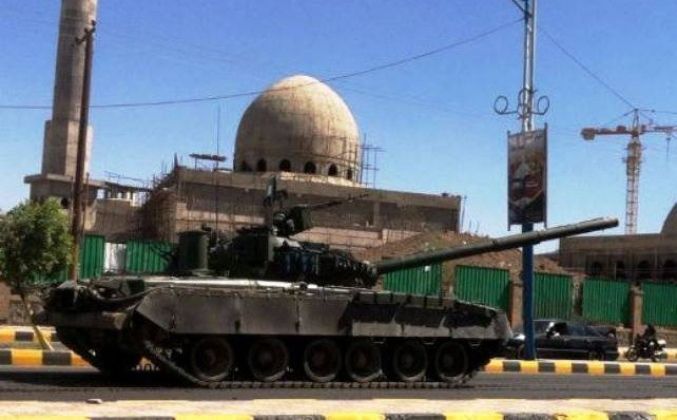
T-80s sold to Yemen were accompanied by 68 spare SG-1000 gas turbine engines, with these and the tanks themselves reported to have been lightly refurbished before delivery. The T-80 sale to Yemen was notably far from unprecedented, with a contract in the year 2000 having seen 27 T-72B tanks delivered to the country that year. Yemen was at the time rapidly expanding its military power, and would acquire MiG-29 fighters with modern R-77 active radar guided missiles from Russia and Hwasong-5 ballistic missiles from North Korea. The export of surplus T-80 tanks was notably far from isolated to Belarus, and was often done on highly favourable terms, with Russia having exported its own T-80s to South Korea to partially repay outstanding debts in the 1990s - vehicles which the United States is today reportedly seeking to press Seoul to re-export to Ukraine. Other notable exports of surplus equipment by Belarus included the sale of MiG-23MLD fighters to Syria in 2007, and the sale of its top strike fighter the Su-24M to Sudan early the following decade. With a large scale war of massive artillery and armoured forces in Eastern Europe having been wholly unanticipated by countries on either side, the selling off of higher performing Soviet tanks by Russia, Belarus and Ukraine ultimately left all three in poorer positions to sustain their respective war efforts, with the vehicles previously having been expected to become obsolete long before there was any use for them in the theatre.
