
Inadequate Surveillance Assets Means U.S. Navy Cannot ‘Shape the Combat Environment’ in Potential War with China - Report
Military Watch Magazine Editorial Staff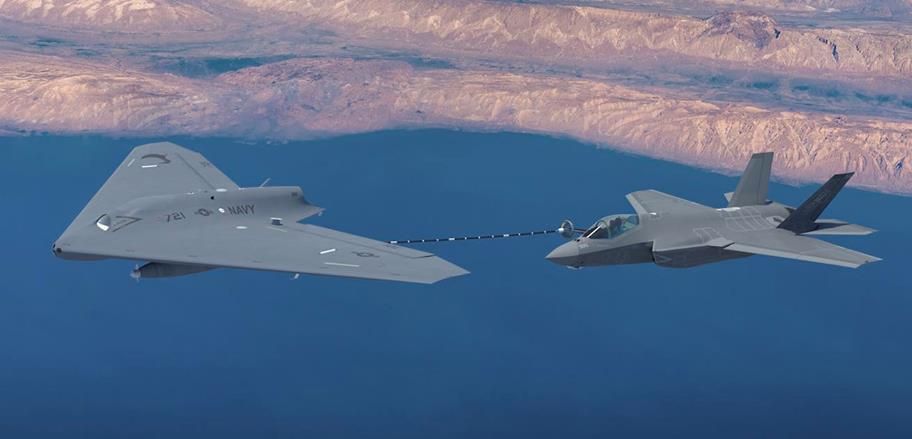
MQ-25 Stingray and F-35 Fighter - Artwork
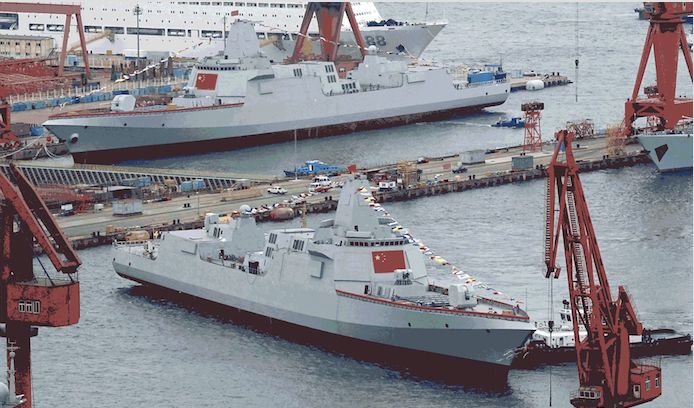
A new report from the Hudson Institute think tank suggests that the U.S. Navy lacks the surveillance assets needed to effectively project power overseas and support its vast fleets. The report particularly highlights the risks posed by a lack of situational awareness when facing the increasingly sophisticated long range weapons systems deployed by the Chinese People’s Liberation Army (PLA). This would seriously limit its ability to “shape the combat environment” in a potential clash with Chinese forces at sea, which is particularly dangerous considering that new Chinese surface combatants deploy faster, more powerful and longer ranged missiles and do so in greater quantities than their American counterparts. Thus in attempting to contest a given area of the sea, American commanders’ situational awareness may be inferior to those of their Chinese counterparts due to shortcomings in the Navy’s intelligence, surveillance and reconnaissance assets. Assets available are insufficient to cover the current size of the Navy’s fleet - much less the ambitious plans for an expanded fleet envisaged by the Trump administration and many in the military leadership.
The Hudson Institute report was titled: ‘If You Can’t See ’em, You Can’t Shoot ’em: Improving U.S. Intelligence, Surveillance, Reconnaissance, and Targeting.’ It states the following: “Among the most important is the ability to out-range an adversary, for which the range of weapons is as critical as the ability to target the adversary effectively... The ability to target a potential adversary’s naval power deserves far more attention than it has received.” It further warns: “The U.S. currently lacks ISR platforms, manned or unmanned, that can remain on station for long enough, cover enough ground, and feedback enough information to an American fleet to allow U.S. commanders to shape the combat environment.”
Regarding the potential implications of the Navy’s lack of situational awareness in combat, the report notes: “In the worst case, America’s adversaries may outpace the U.S. in a conflict’s opening phases, forcing Washington to decide between accepting high casualties or ceding an operational region... Less catastrophically, if the U.S. lacks information on China’s movements in the Pacific, this can allow Beijing to manipulate the time and place of potential confrontations, forcing U.S. commanders to choose between unsavory escalation scenarios.”
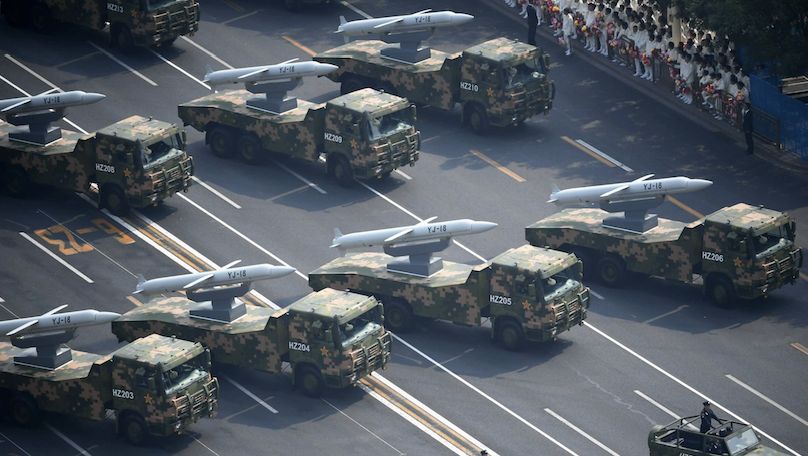
Regarding the challenged posed by the Chinese PLA in particular to American primacy at sea, the report referred to China’s wide array of anti ship munition types. Some of the most prominent are the YJ-12, YJ-18 and DF-100 anti ship cruise missile and DF-21D anti ship ballistic missile. The report stated regarding the PLA’s capabilities: “China’s threat to the U.S. Navy’s sea control abilities within the first island chain is increasing... Reasonable operational goals for the Navy’s response should include maintaining fire-control quality tracking on all PLAN combatants out of their home ports within the first island chain, and suitable weapons pairings capable of acting upon the tracks maintained.” It remains uncertain how the U.S. Navy will respond, with increased investment in surveillance satellites and in maritime surveillance drones such as Triton and MQ-25 Stingray all remaining possible. The Stingray is expected to deploy from the Navy’s aircraft carriers from the early 2020s, and while primarily designed as a tanker it is also capable of performing a surveillance role.
