
How Swedish Made Gripen Fighters Managed Beat China’s Soviet Built Su-27SK Flankers in Beyond Visual Range Combat Simulations - Lessons for the PLA
Military Watch Magazine Editorial Staff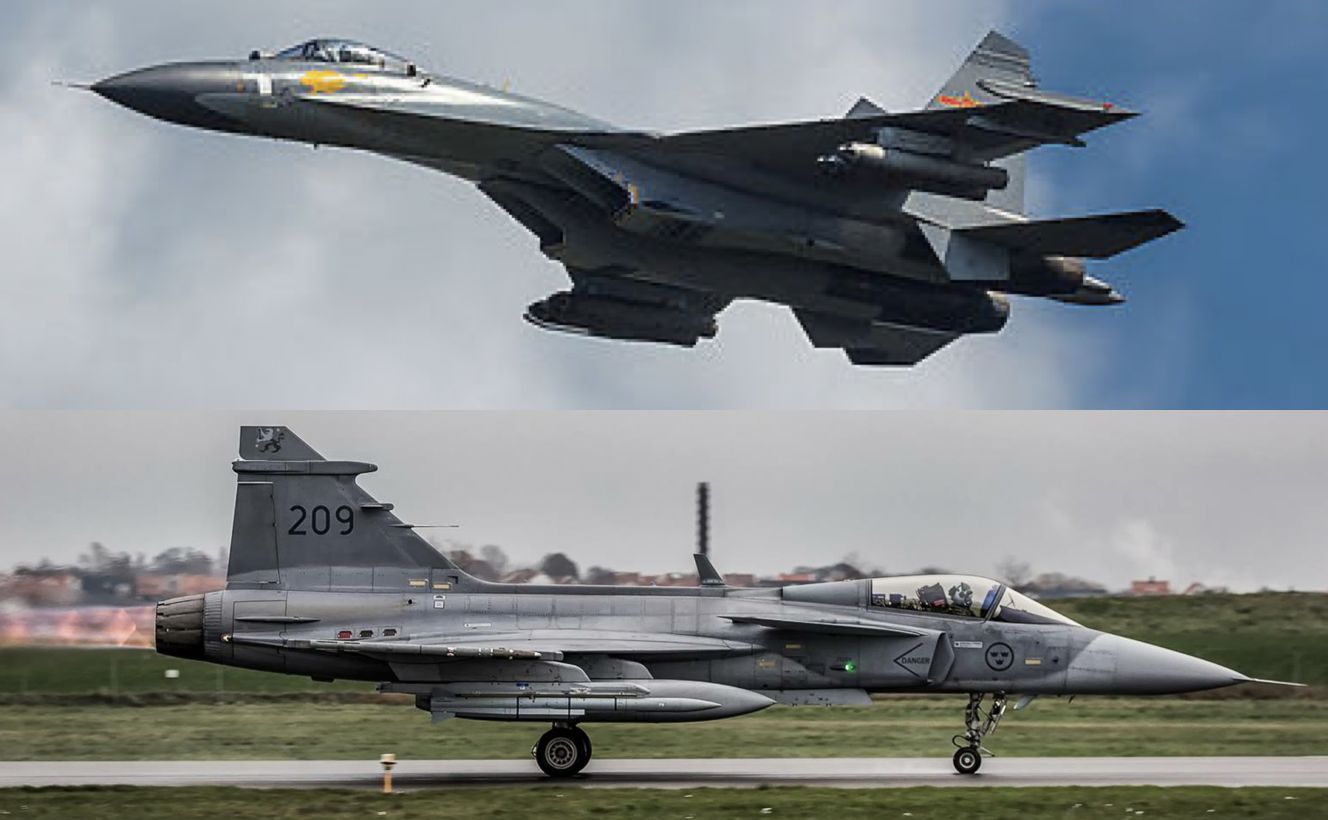
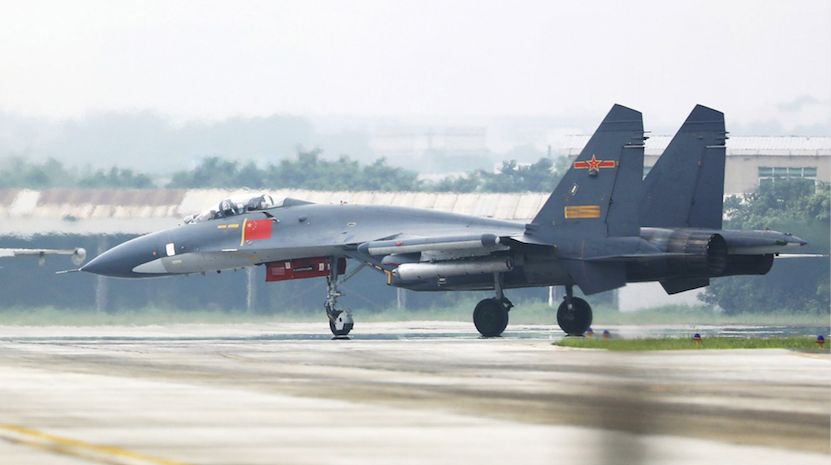
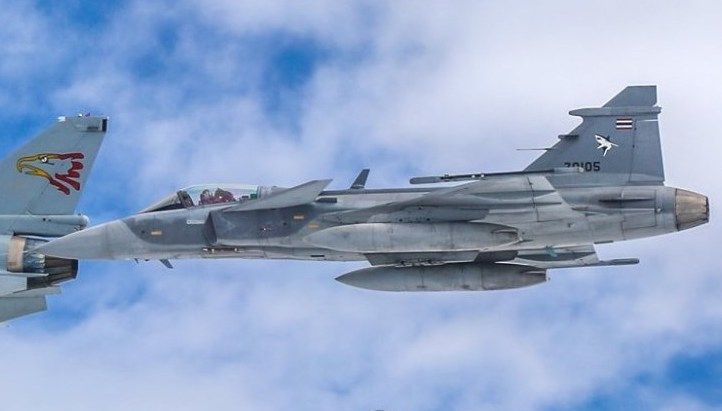
Chinese Su-27SK Heavyweight Fighter (top) and Swedish Gripen Light Fighter
The recent publication of the results of Falcon Strike war-games and simulated aerial engagements held between the Chinese People’s Liberation Army (PLA) Air Force and the Royal Thai Air Force in 2015 has raised serious questions regarding China’s aerial warfare capabilities. The exercises saw the PLA deploy Soviet Su-27SK air superiority fighters against Thai Gripen C light multirole jets. The outcome saw the Thais win an overwhelming victory in simulated beyond visual range engagements, and has very significant implications for the balance of power in Northeast Asia - offering a rare glimpse into the combat capabilities of the PLA which are highly prized in light of both its fast growing capabilities and the lack of data on its actual combat performance. With the Su-27 and its advanced derivatives today forming the backbone of both the Russian and Chinese combat fleets, with over 500 in service in each, and with the aircraft not seeing air to air combat since the Eritrean-Ethiopian War of the late 1990s, an assessment of the exercises and their outcome takes on additional significance.
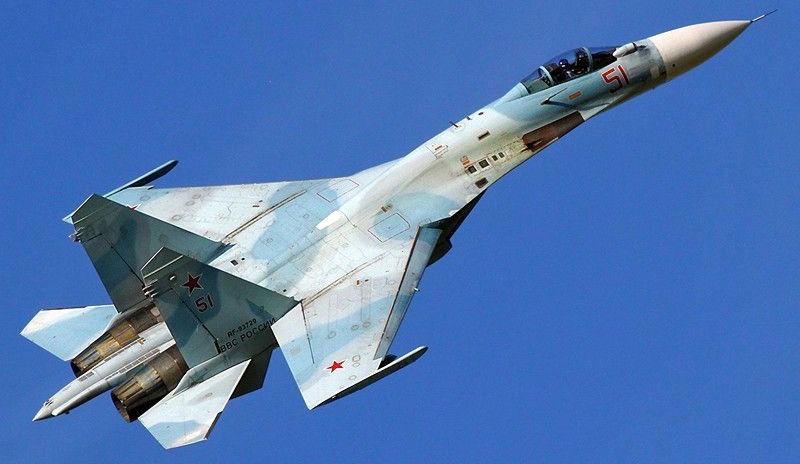
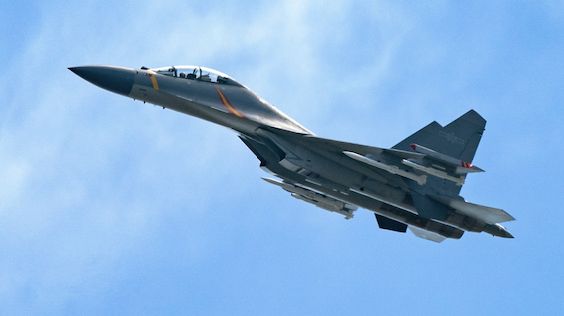
While China’s PLA Air Force deploys one of the most diverse fleets of combat aircraft in the world, from lightweight JL-10 and J-7G fighters to heavyweight J-20 fighters and H-6K bombers, aircraft deployed for war games in Thailand were among the oldest in its inventory and came from a minority of foreign sourced equipment. The Su-27SKs were first ordered from the Soviet Union in 1991, an export variant of the elite Su-27 Flanker design which entered service in the Soviet Air Force from 1985. While advanced derivatives of the Flanker such as the Su-35 and J-16 continue to be at the cutting edge of fighter technology, China’s relatively small fleet of Su-27SK fighters are among the weakest Flankers in service worldwide alongside those in Ukraine, Kazakhstan, Ethiopia and Eritrea. Although their flight performances are impressive, these models have seen few significant improvements made since the Soviet era meaning their avionics, electronic warfare systems and armaments are well out of date. Although the Russian Air Force has significantly enhanced its own Su-27s, refurbishing Soviet-era models with ‘4++ generation’ avionics, radars and electronic warfare systems developed for the Su-35 under the Su-27SM2 program, no remotely comparable upgrade program has been initiated for Soviet-era Su-27s in China. Furthermore, with China’s Su-27 fighters having been specifically built for export - the only ones ever built for export in the Soviet Union - their baseline capabilities are inferior to those which Russia, Ukraine and others inherited after the Soviet collapse, with a number of sensitive technologies left off the export variants.
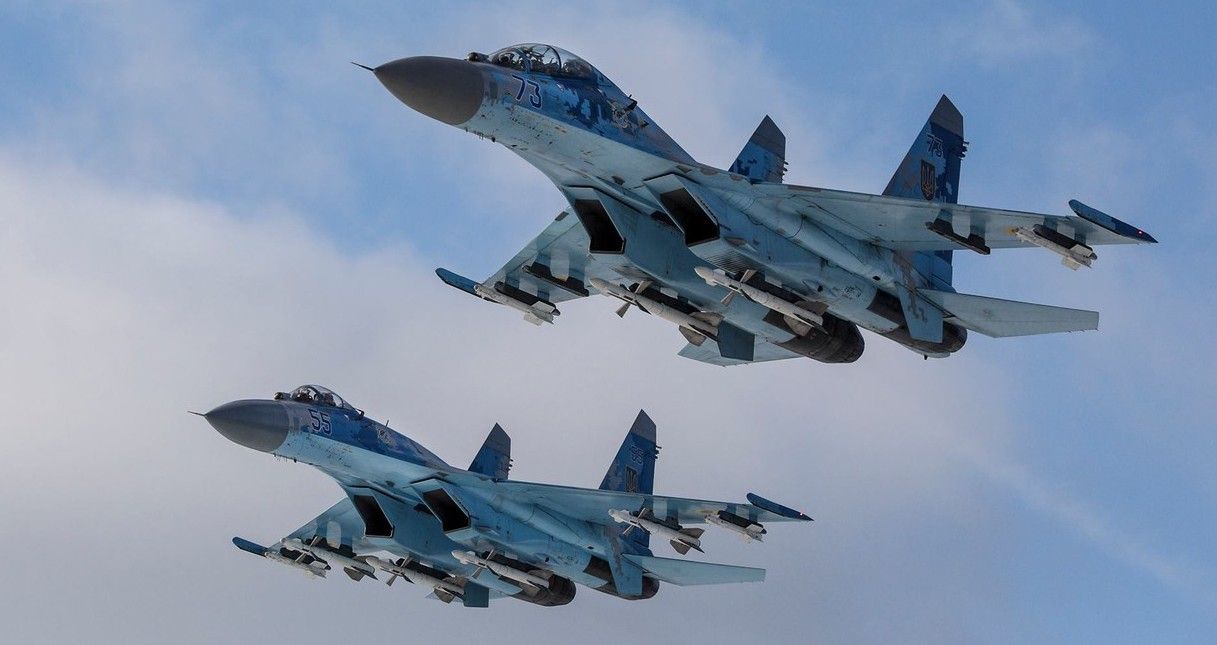
The 1980s sensors, avionics and electronic warfare systems on the Su-27SK are quite possibly the least advanced in the PLA Air Force, with even the country’s J-7 fighters having entered service after 2000 and integrating far more advanced subsystems. Furthermore, and perhaps most critically for beyond visual range engagements, the Su-27SK fighters in Chinese service are not reported to have been equipped with modern air to air missies. The baseline R-27T semi-active radar guided missile was already out of date by the time of the Soviet collapse, and its 40km range was far from impressive. While the R-27 was in the 1990s one of China’s most advanced air to air missiles, and was produced domestically under a licence purchased from Ukraine, its capabilities pale in comparison to the latest American, Russian and domestic designs. Russian Flankers and those more recently exported to states such as Venezuela and India deploy far more modern air to air missiles. Examples include the R-27ER and EA, with more independent guidance systems, over triple the range and superior electronic warfare countermeasures, the active radar guided R-77 with comparable capabilities and a slightly longer range to the American AIM-120 AMRAAM, and the latest R-37M which can engage targets up to 400km away at hypersonic Mach 6 speeds. These missiles can be integrated onto newer Russian made jets in PLA service such as the Su-30MKK and Su-35 (Chinese purchases of the R-37M for the Su-35 are suspected but not confirmed). China for its part has equipped all of its domestic Flanker variants such as the J-11B and J-16 with either the PL-12 or the newer PL-15, both active radar guided platforms with ranges of 100km and 150-200km respectively. These missiles are not known to have been integrated on any Russian built fighter classes, and may not be compatible with the Su-27SK due to the age of its sensors and avionics.
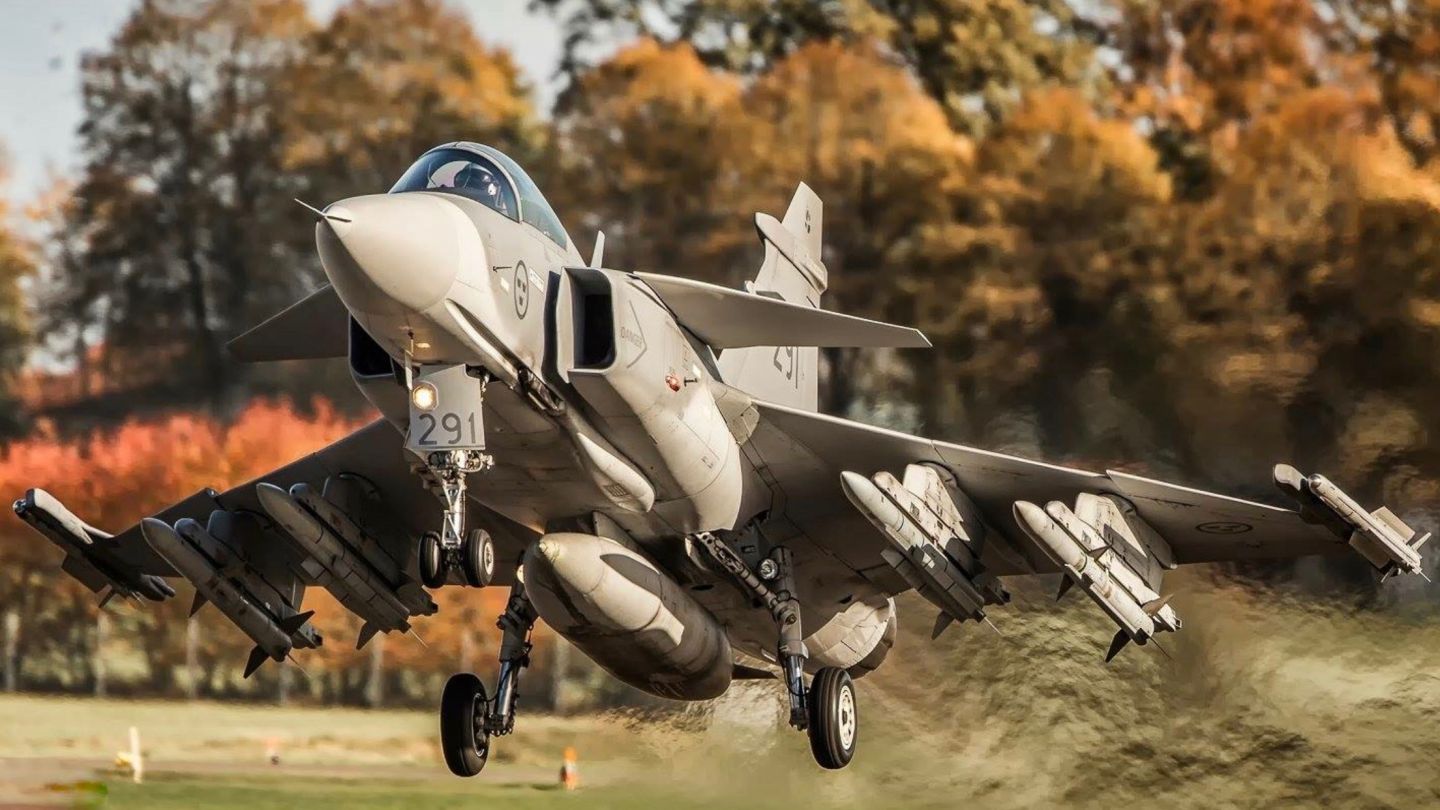
While considerably lighter and using a far less imposing airframe than the Su-27SK, the Gripen C fighters ordered by the Royal Thai Air Force were built around 20 years later than China’s Su-27SK jets and as such integrate considerably more modern technologies. Although the Gripen is considerably less manoeuvrable, shorter ranged, slower and more restricted in its altitude ceiling, and carries a much smaller and radar, it can heavily compensate with more sophisticated subsystems. Even for a relatively small manufacturer like Sweden’s SAAB, technology comes a long way in two decades - particularly with support from extensive European and American technology transfers. With a tiny Volvo RM12 engine putting out just 80.5 kN of thrust, compared to the 245 kN of twin Soviet AL-31F turbofans, there is little comparison between the airframes of the Su-27 and the Gripen. The Su-27 is over three times as powerful, a highly ambitious air superiority fighter designed to outperform the elite of the American fleet, while the latter is a lightweight low budget platform in the same weight range as the Indian Tejas and Sino-Pakistani JF-17. Indeed, even compared to the lightest fighter in the U.S. Air Force’s inventory the F-16 Fighting Falcon, the Gripen and its engine are still considered underpowered. There was thus an extreme mismatch between the high end but old airframe of the Su-27, and the low end by modern Gripen. This was closely reflected in the results of the mock aerial battles.
Had the Su-27, even in its weakest and oldest variant, not won overwhelmingly against the Thai Gripens in visual range combat, it would have raised very serious questions regarding the quality of Chinese pilots. As it was, the Flankers shot down 16 Swedish built jets for zero of their own number - a predictable result considering the massive discrepancy in flight performance. A second day of visual range engagements reportedly saw the Gripens perform slightly better, downing one Chinese Flanker for nine losses. This gave a kill ratio of 25:1 in favour of the Chinese Flankers. In beyond visual range combat however, where electronics, sensors and munitions played a greater role than flight performance, the Gripen’s advantages over the much older fighters came to the fore. While almost 80% smaller than the Flanker's Zuk-M, the Gripen C’s PS-05/A Pulse-Doppler radar made up for its small size with greater sophistication, while its electronic warfare systems were far superior to the 1980s Soviet systems on the Su-27SK. Newer cockpit displays further provided far better situational awareness to Gripen pilots than the antiquated dials on the Su-27 could. This was compounded by the Swedish made fighters’ access to American AIM-120C active radar guided air to air missiles, comparable to the Chinese PL-12, which could soundly outperform the semi-active radar guided R-27. The American missiles provided not only superior sensors and flight performance, manoeuvring and maintaining a lock in ways the R-27 could not, but they also allowed the Gripens to ‘fire and forget’ - meaning they did not need constant course corrections from the aircraft’s radar and could home in on their target using their own sensors alone. This was not the case for the R-27 deployed by the Su-27. Thus overall the Gripens enjoyed a highly favourable ratio in beyond visual range combat - downing 19 Su-27s for a loss of just three of their own.
There are several lessons to be learned from the Falcon Strike exercises – many with potentially decisive implications for future air battles. While Chinese pilots won overwhelmingly in visual range combat, this is not necessarily indicative of a high level of skill on their part – it is difficult to lose in a jet as powerful and as well optimised for visual range combat as a Flanker against a below average jet like the Gripen. PLA pilots’ inability to outperform the Gripens in beyond visual range combat, however, arguably vindicates China’s decision to invest so heavily in developing the most capable sensors, electronics and beyond visual range air to air missiles possible. Chinese fighters deployed active radar guided air to air missiles, in the form of the PL-12, long before Russian units began to receive the R-77. The PLA has since progressed to a new generation of air to air missiles with the induction of the PL-15 far faster than Russia or the U.S. could – reliant as they are on the R-27/R-77 and the AIM-120C respectively to arm the bulk of their fleets. The PL-15 is widely considered the best performing long range air to air missile which has been widely deployed anywhere in the world. The ability of the U.S. and Russia to deploy their own next generation missiles in comparable numbers, the AIM-260 and R-37M respectively, the former which is still in early development stages, remains highly questionable due to budgetary constraints. New generations of missiles enjoy superior manoeuvrability, longer ranges, more powerful sensors and more sophisticated electronic warfare countermeasures, providing a considerable advantage in beyond visual range engagement much as Thai AIM-120 missiles did over the R-27. The speed with which China developed the PL-15 in particular, its access to many Russian technologies through technology transfers, and reports of next generation missiles currently being under development such as the PL-21 and PL-12D, indicates that the PLA's advantage in the field will only grow in the coming years.
While the Su-27SKs are the oldest PLA fighters still serving, the average age of the PLA fighter inventory positions it as the newest large fighter fleet in the world - much as is true for its destroyer fleet and its bomber fleet among other prominent assets due to the unrivalled pace of military expansion and modernisation. This means that, much like the Gripen C fighters did relative to the Su-27SKs, on average a Chinese fighter will deploy considerably newer sensors, electronic warfare systems and avionics than its American, Japanese, South Korean, Russian or South Korean counterpart. The average fighter in the U.S. Air Force is more than ten years older than the average PLAA fighter – possibly more than 15 years. If the Falcon Strike wargames are anything to go by, this is not a place China’s potential adversaries want to be in. In the case of the U.S. in particular, due to the fast rising acquisition and operational costs of new fighters, and considerable delays with almost all major programs (the F-35 still hasn’t entered full scale production, and its combat readiness is questionable), this situation is only set to worsen with time. Thus not only are Chinese fighters on average a lot heavier than their American counterparts, but they will on average deploy longer ranged missiles and more modern radars and avionics.
