
America's Nimitz Class vs. France's Charles De Gaulle: Comparing the West's Nuclear Carrier Designs
Military Watch Magazine Editorial Staff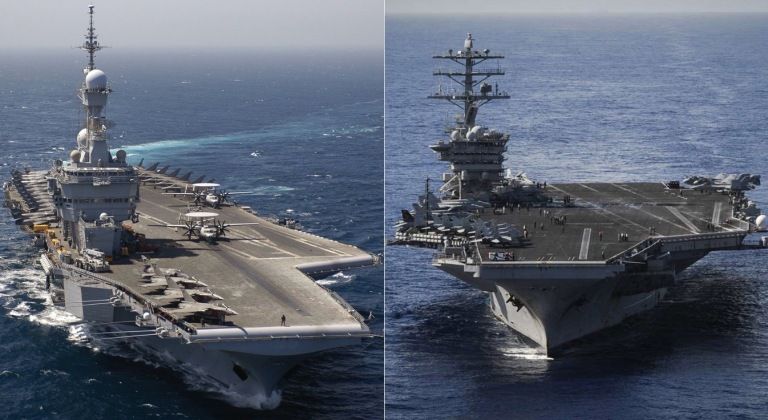
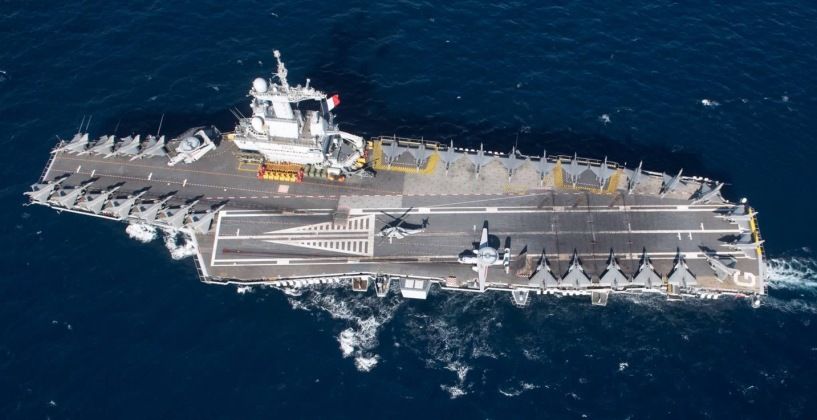
French Carrier Charles De Gaulle (left) and America Nimitz Class Supercarrier
While over a dozen countries today operate some kind of carrier warship, only the United States and France operate nuclear powered aircraft carriers. American and French designs are also the only active carriers in the world with catapult launch systems to facilitate the deployment of heavier aircraft, and provide unique power projection capabilities beyond those of other carriers. While the United States operates ten nuclear powered Nimitz Class supercarriers and a single Gerald Ford Class supercarrier, France operates only one carrier capable of deploying fixed wing fighter aircraft - the Charles De Gaulle. The ship bears many similarities with the American Nimitz Class and benefitted from American support during development. The French carrier was commissioned into service in 2001, 26 years after the first American Nimitz Class carrier which entered service in 1975. With France lacking the United States' extensive experience of developing and operating aircraft carriers, or a shipbuilding sector as large or cost effective as that of the U.S., the effectiveness of its sole nuclear carrier has repeatedly been called into question.
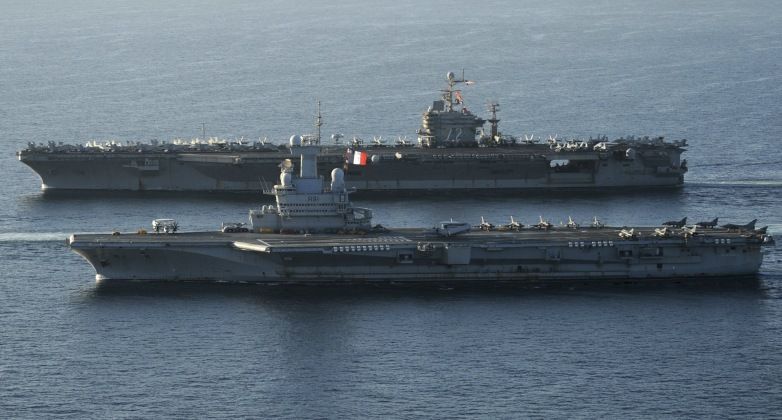
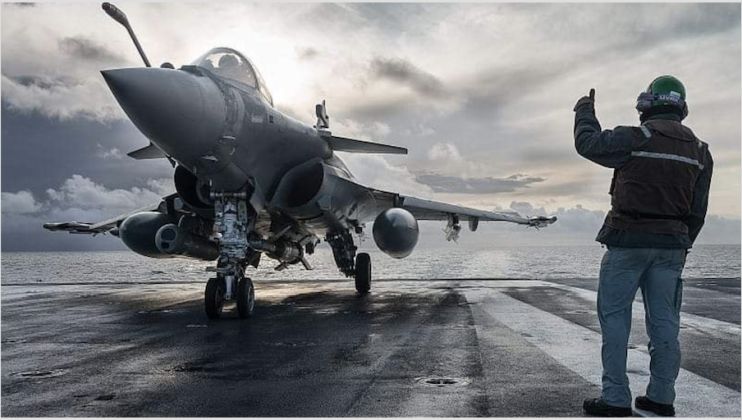
Nimitz Class carriers are powered by two A4W nuclear reactors which need refurbishment only once during their fifty year lifetime, and are key to allowing the large warships to deploy for months at a time across oceans to project American power. By contrast France's De Gaulle relies on a single less advanced Areva reactor which requires refurbishment at least every seven years. The lower efficiency of the French reactor means maintenance requirements are high despite its much more conservative power output. Nimitz Class ships' powerplants allow them to reach speeds of over 60km per hour, where the De Gaulle will struggle to exceed speeds of 50 km per hour. This is despite the Nimitz Class being approximately 250% as large as the De Gaulle, with the French carrier displacing close to 40,000 tons while the American design displaces 100,000. Although both the Nimitz and De Gaulle use catapult assisted takeoff to launch their aircraft, the De Gualle's smaller deck and single runway prevent it from carrying out simultaneous launch and recovery operations meaning that it cannot match with the Nimitz class' ability to launch a single aircraft per minute. Not only this, but with a far smaller flight deck the De Gaulle can accommodate only around half the number of aircraft the Nimitz class can at 35 Rafale M fighters - despite these fighters being much lighter and smaller than the F-18E and F-35C jets deployed by American supercarriers.
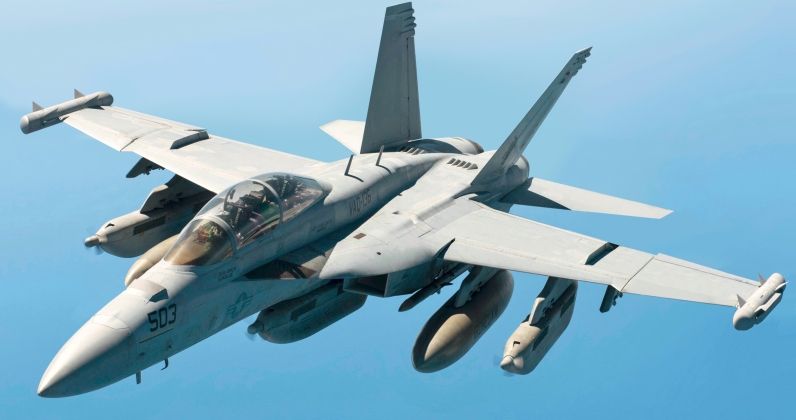
A major advantage of Nimitz Class carriers is the superiority of its air wings, not only in terms of size but also in quality. The U.S. retains a very considerable lead over France in its military aviation sector, with the size of its research and development investments being several times as large and in many ways more efficient. The Boeing F-18E Super Hornet Block 3 fighter compares highly favourably with the Dassault Rafale M, and despite being much larger its more efficient design means it has a significantly lower operational cost and lower maintenance requirements. The Super Hornet is slightly slower, but benefits from superior endurance, a higher weapons payload and access to superior munitions types. Perhaps most importantly, its electronic warfare systems, AESA radar and infra red search and track system are all widely considered far superior to those which France is able to produce. American carrier air wings also benefit from the deployment of E/A-18G Growler electronic attack jets - a highly specialised design which is very well suited to suppressing enemy air defences and which is well equipped with anti-radiation weapons. France has no equivalent to the Growler to deploy from its own carriers.
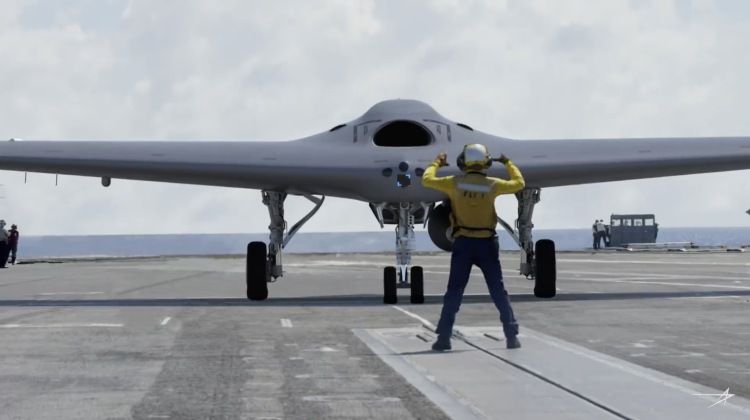
The Charles De Gaulle notably relies on E-2 Hawkeye airborne early warning aircraft purchased from the United States, with export models of these costly aircraft considered inferior to those produced for the U.S. Military itself. The discrepancy in the combat potential of French and American air wings is set to grow considerably further as the latter commissions the world's first fifth generation carrier based fighter the F-35C. Even moreso than the F-18E, the F-35C has a tremendous performance advantage over the Rafale and is well suited to penetration of well defended enemy airspace due to its advanced stealth and electronic warfare capabilities. Nimitz Class carriers also benefit from more support aircraft, including C-2 Greyhound aircraft for supply deliveries and MQ-25 Stingray drones for surveillance and aerial refuelling. This makes its air wings much more versatile than those of the De Gaulle.
While nuclear powered carriers are highly complex, and the Nimitz Class have themselves had no shortage of technical issues particularly in their early years, the flaws which have emerged on France's De Gaulle carrier have been outstanding. The ship's radiation shielding proved to be inadequate, meaning that after its commissioning inspectors found unsafe levels of radiation onboard. This forced the carrier to undergo costly improvements to its shielding to meet safety standards for its crew. The carrier's propulsion systems also proved severely flawed and caused intense vibrations onboard, which in one case caused the ship's propellers to shatter at sea. The cause of this was poor manufacturing techniques in France which had left air pockets in the metal alloys. The blueprints for the De Gaulle’s propellers were also lost in a fire leading to their replacement by inferior ones, meaning that the ship's maximum speed war reduced by 11%. Systematic flaws in the French carrier continued to emerge in the years after its commissioning, including an electronic failure in 2010 just a day into its deployment which forced the ship to return to dock for repairs.
Ultimately although France's Charles De Gaulle grants the country the prestige of a major power and some degree of power projection capabilities, its performance highlights the weaknesses in France's relatively small defence sector relative to that of the United States and its capabilities pale in comparison to even a single one of the far older U.S. Nimitz class carrier. The French ship was set to lose its position as the world's only nuclear powered carrier outside the U.S. to the Soviet Ulyanovsk Class supercarrier, which had capabilities on par with the Nimitz Class and was laid down shortly before the state's collapse. China's Type 002 Class supercarriers under construction today benefit from electromagnetic catapult launch systems which are far more powerful than those on the De Gaulle or the Nimitz, and its upcoming Type 003 Class is set to also benefit from a nuclear propulsion system for better endurance. Thus the De Gaulle's only exceptional characteristic - the fact that it was the only non-American carrier with a catapult system or nuclear propulsion - is set to be eroded with time. The program may well have been too ambitious considering the limitations on France's defence sector, and the country could have been better served by pursuing a non-nuclear ship without catapult launch systems as Britain did with its Queen Elizabeth Class carrier program.
