
France’s Obsolete MICA Air-to-Air Missile Gains Urgently Needed Upgrade to Narrow Gap with Competitors
Military Watch Magazine Editorial Staff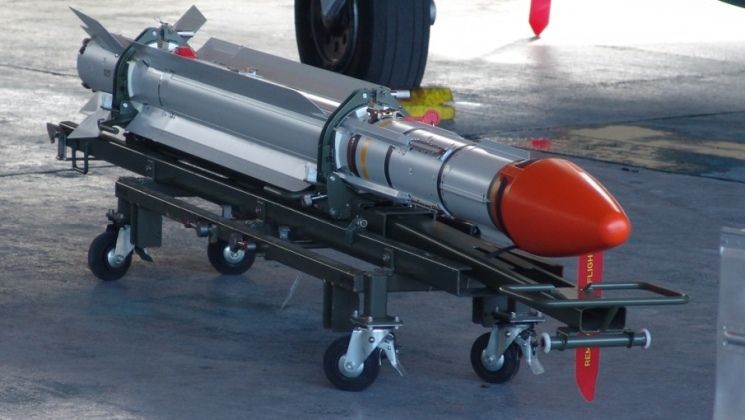
French MICA Air-to-Air Missile
The French Ministry of Defence has announced the first successful supersonic launch of the MICA NG air-to-air missile from a Rafale fighter, marking a significant milestone in efforts to keep the ageing mid-1990s missile design viable into the 21st century. The MICA NG is available in two primary variants, including one with infrared thermal imaging passive guidance and one with active radar guidance. Both are equipped with a new dual pulse motor, resulting in improved manoeuvrability and combining beyond-visual-range and close-range combat capabilities. Compared to prior variants of the MICA, the new variant has an approximately 40 percent longer range allowing it to engage targets up to 100 kilometres away.
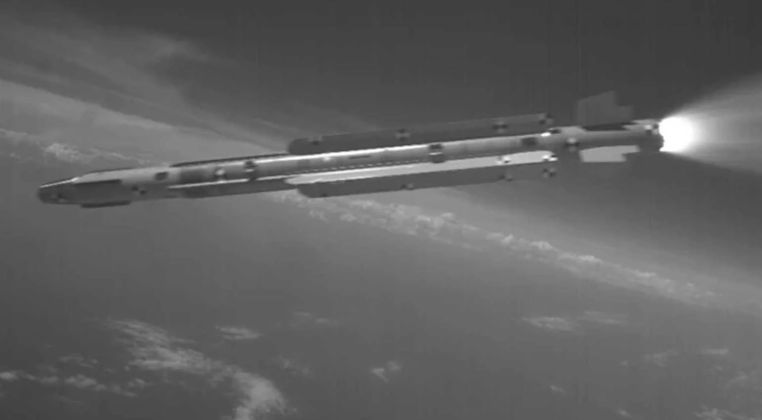
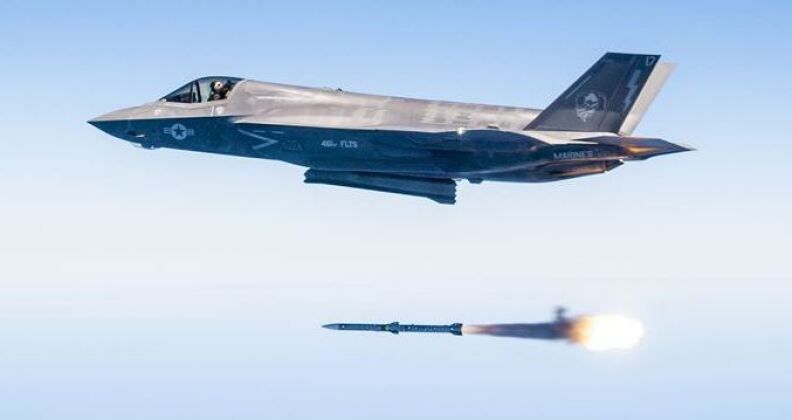
The original MICA from the 2000s quickly fell behind the most advanced air-to-air missiles developed in the United States, China, and later Russia, with a major limitation being its reliance on a conventional solid-fuel rocket that burns out relatively quickly after launch. Although the missile can travel significant distances, it loses energy during the latter part of its flight, reducing its effectiveness against manoeuvring targets at long range. By contrast, newer missiles such as Meteor, U.S. AIM-120D and Chinese PL-15 and PL-16 were designed with much greater emphasis on long-range engagements. The Meteor’s ramjet propulsion, in particular, allows it to sustain high speed throughout much of its flight, giving it a much larger no-escape zone than the original MICA.
The MICA’s seeker technology has also aged significantly, with China and Japan having introduced the first active electronically scanned array seekers, followed by the United States with the AIM-260 missile. The MICA’s older seeker had limited resistance to electronic countermeasures, poorer target discrimination, and a very restricted detection capability. Likewise, advances in infrared imaging technology meant that newer missiles could better distinguish real targets from decoys and operate more effectively in complex environments in ways the MICA could not. Where the American AIM-120 and Russian R-77 that entered service at around the same time as the MICA have been modernised very significantly over time, the MICA internal volume for fuel, propulsion systems and electronics was limited which has made upgrades more challenging.
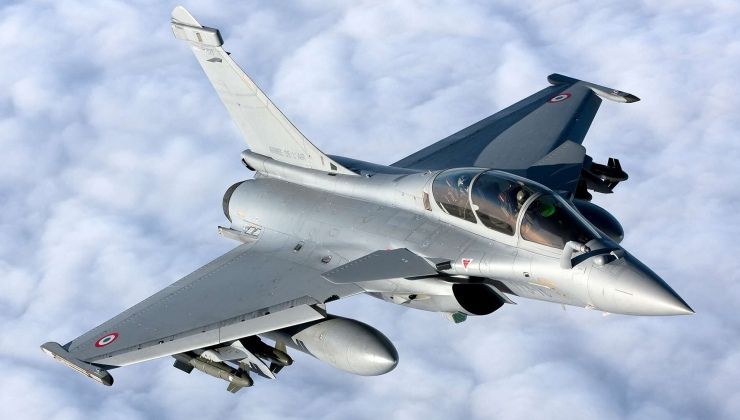
The MICA NG is intended to address many of the original design’s main deficiencies, primarily by introducing a new dual-pulse rocket motor that preserves energy better during the terminal phase, an AESA radar seeker with improved electronic countermeasure, and a next-generation imaging infrared seeker with greater sensitivity and processing power. While it still does not match Meteor’s unique long-range ramjet performance, it significantly narrows the technological gap with modern missiles types. The MICA NG is expected to enter service around 2030 to equip Rafale F4 and Rafale F5 fighters, providing a complementary capability to the Meteor as a much lighter and less costly weapon. While France is not expected to ever develop a world leading air-to-air missile design independently, due to the limitations of its technological base, the new variant of the MICA is far from obsolete. The program ensures that the country can continue independent beyond visual range air-to-air missile production without an immediate need to introduce a clean sheet new design into service.
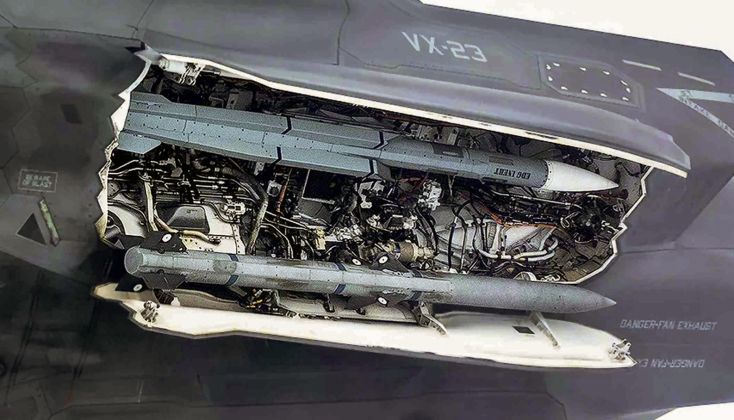
Like many European states, France has faced a dilemma between supporting local industry to produce less capable fighters, or making sacrifices to procure much more capable F-35 fighters from the Untied States. While United Kingdom has selected the latter option, ending Eurofighter procurements and investing heavily in the F-35 program, while Germany has hedged between the two and expanded orders for both the F-35 and the Eurofighter, France’s unwillingness to consider F-35 procurements has resulted in it fielding a much less advanced fighter fleet. In contrast to the United Kingdom, French budget documents in October revealed that orders were planned for the procurement of 61 new Rafales. With the French Air Force not expected to field post-fourth generation fighters until the 2050s, decades behind China, the U.S., and even Russia, it is expected that the development of new weaponry, subsystems and unmanned wingman aircraft to support the Rafale will continue to receive significant funding to reduce the extent of the type’s disadvantages.
