
France Announces Landmark Deal to Supply 16 Rafale Fighters to Ukraine: Can They Transform the Air Campaign?
Military Watch Magazine Editorial Staff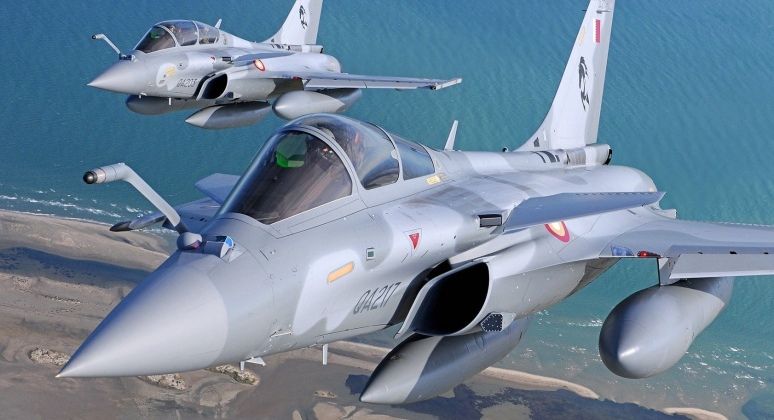
Rafale Fighters
French government sources have confirmed that Ukraine will receive its first 16 Rafale multirole fighters, with deliveries expected to begin between 2028 and 2029, marking the first concrete implementation of the defence partnership announced in 2025. French President Emmanuel Macron announced that pilot and ground crew training would begin in the coming months to prepare Ukraine for introducing an entirely new combat aircraft into service, while also providing the first specific delivery timeline for the program. The agreement follows a bilateral defence declaration signed by France and Ukraine in November 2025, which outlined a framework for the Ukrainian Air Force to acquire up to 100 Rafale F4 fighters by 2035. The delivery of the first tranche of 16 aircraft would thus represent a major landmark towards establishing Ukraine as by far the largest foreign operator of the fighter type.
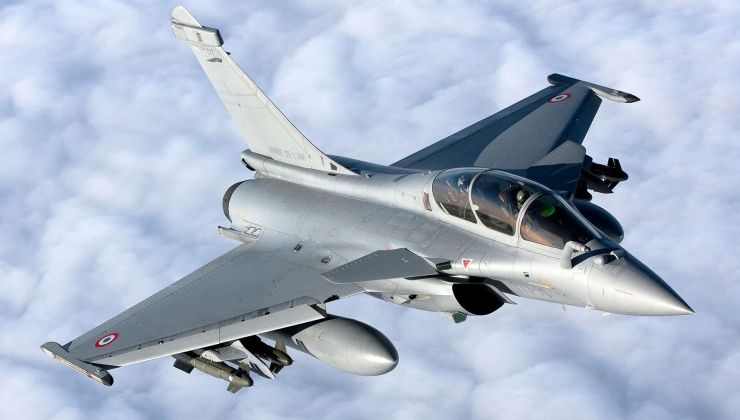
The acquisition represents a significant industrial and training commitment, as introducing an entirely new fighter type requires years of preparation, including pilot conversion, maintenance training, logistics development and the establishment of spare parts inventories and support infrastructure. The extended preparation period will also allow France to integrate Ukrainian personnel into existing Rafale training programmes while gradually building the expertise required to sustain operations independently. With the Ukrainian Air Force already operating the older French Mirage 2000 fighter, however, which has significant commonalities with the Rafale in terms of maintenance infrastructure and weaponry, the transition may be smoother than for other clients.
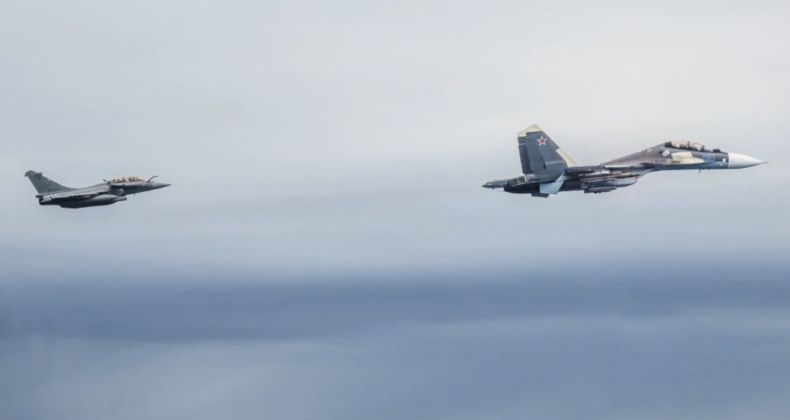
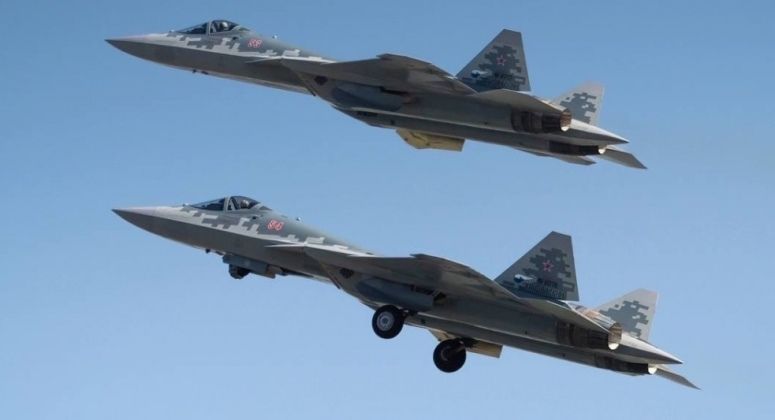
The Rafale is expected to face significant limitations against Russia's latest combat aircraft, the Su-57 fifth generation fighter, which combines low observable characteristics with a substantially larger airframe capable of carrying a much more powerful radar, greater fuel load, and heavier weapons payload. Even Russia's earlier Su-35S and Su-30SM fighters integrate radars several times as large as that of the Rafale, while enjoying major advantages in combat radius, endurance, payload capacity, air-to-air engagement range, and flight performance. Despite the continued acceleration in the rate of growth of the Su-57 fleet, the Rafale will still pose a somewhat greater challenge for the Russian Aerospace Forces than Ukraine’s current largely obsolete F-16, MiG-29, Mirage 2000 and Su-27 fighters.
Despite French ambitions to export the Rafale widely across Europe, the aircraft’s repeatedly demonstrated inability to compete on the same level with advanced fifth generation fighters prevented this from materialising. The Rafale has lost every tender in which it has competed against the F-35, with the program having as a result relied heavily on sales to countries which for political reasons cannot consider the F-35, such as Indonesia, Qatar and most recently Ukraine. The Rafale’s combat potential has long been questioned, and in its first high intensity combat test in May 2025 between one and four of the aircraft flown by the Indian Air Force were shot down during engagements with Pakistan Air Force’s Chinese-supplied J-10C fighters. While the J-10C is more sophisticated than Russian fourth generation fighters, it is itself significantly more constrained in its capabilities than the Su-57.
