
Foxhound Down; The MiG-31’s Role in Russia’s Defence
Military Watch Magazine Editorial Staff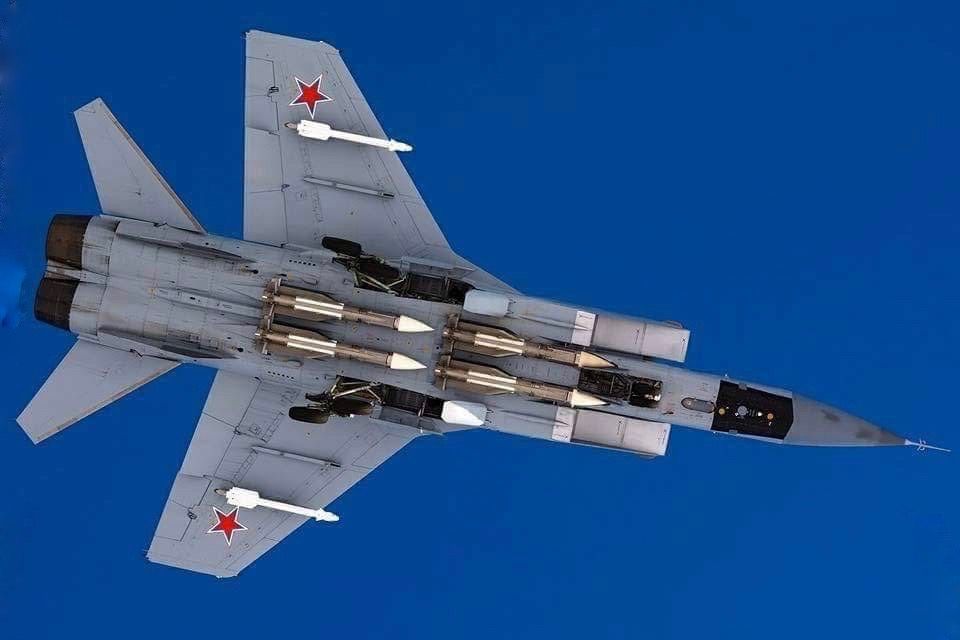
Russian MiG-31 Interceptor with R-33 Missiles
Russia’s Defence Ministry has reported the loss of a single MiG-31 Foxhound twin seat interceptor in the country’s Nizhny Novogrod region, with the aircraft crashing shortly after midday on September 19th. The accident is likely to have occurred due to a technical flaw, with the incident occurring just two days after a Russian surveillance aircraft was shot down over Syria. The Ministry report stated regarding the loss: “On September 19th at about 03.30 p.m. Moscow time (12:30 GMT) a MiG-31 fighter jet of the Aviation Staff Training Center crashed during a planned training flight at one of the military airfields in the Nizhny Novgorod region; both pilots successfully ejected… The flight was carried out without ammunition; the plane fell in a deserted place; there is no destruction on the ground. According to preliminary data, the cause of the accident was a technical malfunction.”
The MiG-31 remains one of Russia’s most capable combat aircraft, and the country's most specialised platform for an air to air combat role. The aircraft first entered service in 1981 as the Soviet Union’s first fourth generation jet, with over 500 being built and the design being extensively modernised over its lifetime. While more prolific new fighter designs such as the Su-57 and Su-35 have taken the spotlight in Russian military aviation in recent years, the MiG-31 ultimately remains the most critical to the country’s defence alongside the less costly Su-27 air superiority jet. The interceptor retains the longest air to air engagement ranges in the world, deploying the 400km range R-37 and 300km R-33 - the latter which is capable of hitting even highly manoeuvrable targets such as fighter jets at extreme ranges.
The fastest modern combat aircraft in the world, the Foxhound’s speed is surpassed only by that of its predecessor, the MiG-25 Foxbat, from which it is heavily derived, as well as non combat platforms such as the American SR-71 reconnaissance jet. The interceptor’s operational altitude, at almost 21km, also allows it to target low orbit satellites when sporting the right modifications - while improving its survivability considerably against the majority of Western fighters such as the F-16 and Dassault Rafale which are restricted to flying at little over 15km. It is not clear as of yet whether the aircraft lost served under the Air Force or the Air Defence Force - with both services operating the Foxhound in large numbers alongside the Kazakh Air Force - which inherited over two dozen from the Soviet Union upon its disintegration. Russia has recently found a number of new roles for the MiG-31’s airframe, including hunting of enemy support aircraft such as AWACS and tankers using the R-37 missile, hunting carriers and destroyers using the Kh-47M2 hypersonic missile, and nuclear delivery using this same missile with a hypersonic warhead. Whether Russia will resume production of the MiG-31 in modernised variants given its importance to the country’s defence, its unique capabilities and the potential demand from export clients, in much the same way as manufacture of the Tu-160 strategic bomber was recently resumed after over a decade at considerable expense, remains to be seen.
