
Former Indian Air Chef Dhanoa Claims S-400s and Rafales Will Facilitate Attacks on Pakistani Aircraft Inside Their Own Airspace
Military Watch Magazine Editorial Staff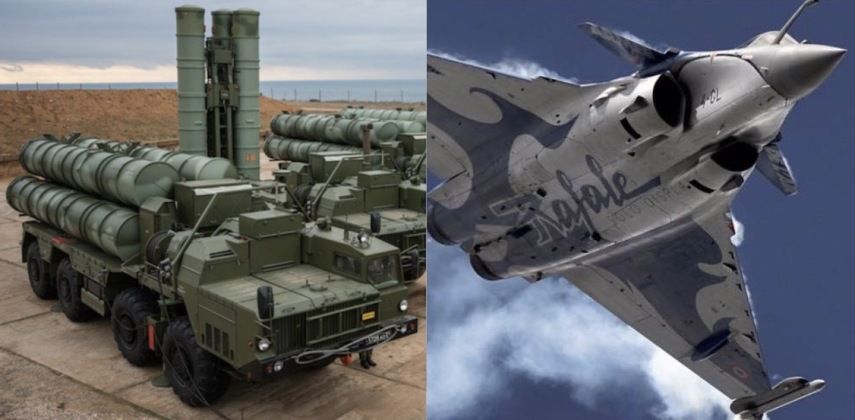
S-400 (left) and Rafale Fighter
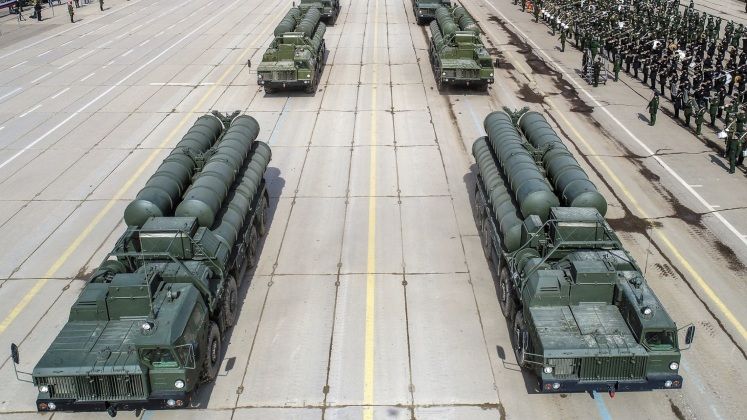
Following the delivery of the first five Rafale medium weight fighters from France, and moves by Russia to accelerate the delivery of the S-400 long range air defence system of which five were ordered in October 2018, the Indian Air Force’s former Chief of Air Staff Air Chief Marshal B S Dhanoa has elaborated on the uses to which these new systems could be put. Dhanoa said that the two new systems were intended to provide Indian forces with a greater technological edge over neighbouring Pakistan, which was a priority after clashes with the Pakistani Air Force in February 2019. The former marshal indicated that both assets had the engagement range needed to take the offensive in the event of an air engagement and neutralise Pakistani aircraft such as its F-16 fighters within the country’s airspace itself - for which they would presumably use long range missiles such as the Meteor (150-250km), for the Rafale, and 40N6 (250km) for the S-400. Pakistan’s PL-12 and AIM-120C air to air missiles currently in service are both restricted to ranges of around 100km.
Dhanoa further advocated expansion of the Rafale fleet, despite significant controversy surrounding the original purchase of 36 jets which cost around $240 million each, a major corruption scandal and ongoing questions regarding cost effectiveness. He referred to the Rafale as a deterrent which would allow Indian forces to strike targets on Pakistani territory without eliciting a response, suggesting a fleet of "72-80 aircraft.” It would set the Air Force back approximately $8.6 billion to $10.6 billion more to reach such numbers. While the Rafale provides an edge over the existing elite of the Pakistani Air Force, including the JF-17 Block II and F-16C Fighting Falcon, both designs which are much older and lighter, it notably remains soundly outmatched by new and much heavier Chinese aircraft such as the J-20 and J-16 which have much greater weights and endurances, far superior general flight performances and integrate a number of more advanced technologies from radar absorbent coatings and AESA radar guided air to air missiles. Dhanoa himself expressed reservations regarding the ability of either the Rafale or even the S-400 to counter Chinese forces to the north, stating: "Against China there are big Himalayan mountains in between us which create serious line of sight issues. You can put a missile with a range of 300-400 kms on the ground in Tibet or in India. But it will only work within the line of sight.” The S-400, which was designed to engage advanced heavyweight stealth aircraft such as the F-22 Raptor, is likely to stand a much better chance.
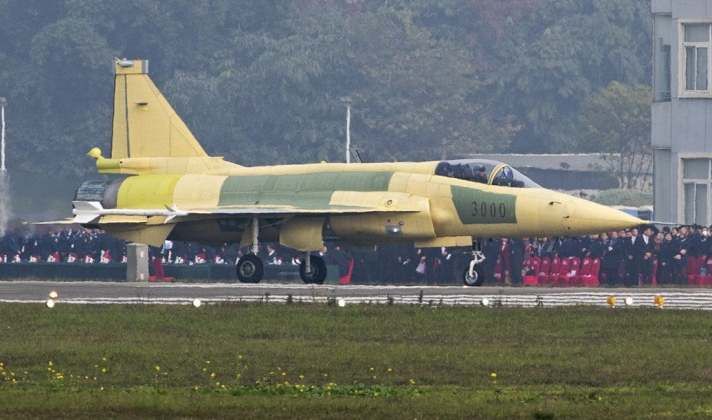
Pakistan is reportedly considering a number of options to respond to the deployment of the S-400 and Rafale, which is likely to be followed by Indian acquisitions of more advanced missiles for its Su-30MKI heavyweight fighters, the most capable jets in its inventory at present, and of newer aircraft such as the MiG-35 or Su-57 which are currently under consideration. Pakistan's upcoming JF-17 Block 3 can potentially even the odds technologically, and although very light it benefits from a radar cross section reducing profile, an advanced AESA radar, new avionics and electronic warfare systems, and access to Chinese PL-15 air to air missiles. The PL-15 has a 250-300km range and AESA radar guidance - the latter which the Rafale's Meteor reportedly lacks - providing an advantage at range. Other options under consideration include acquiring the J-10C ‘4++ generation’ fighter from China, which though still a lightweight is highly capable and extremely manoeuvrable, and acquiring China’s HQ-9B long range air defence system. Pakistan is also pursuing the Project AZM stealth fighter program with Chinese support, and while its ability to challenge the S-400’s advanced sensor suite is questionable it will most likely comfortably outmatch the Rafale and possibly even the Su-30 at long ranges.
