
China’s Next Generation J-10C Fighters Get Powerful New WS-10 Engines
Military Watch Magazine Editorial Staff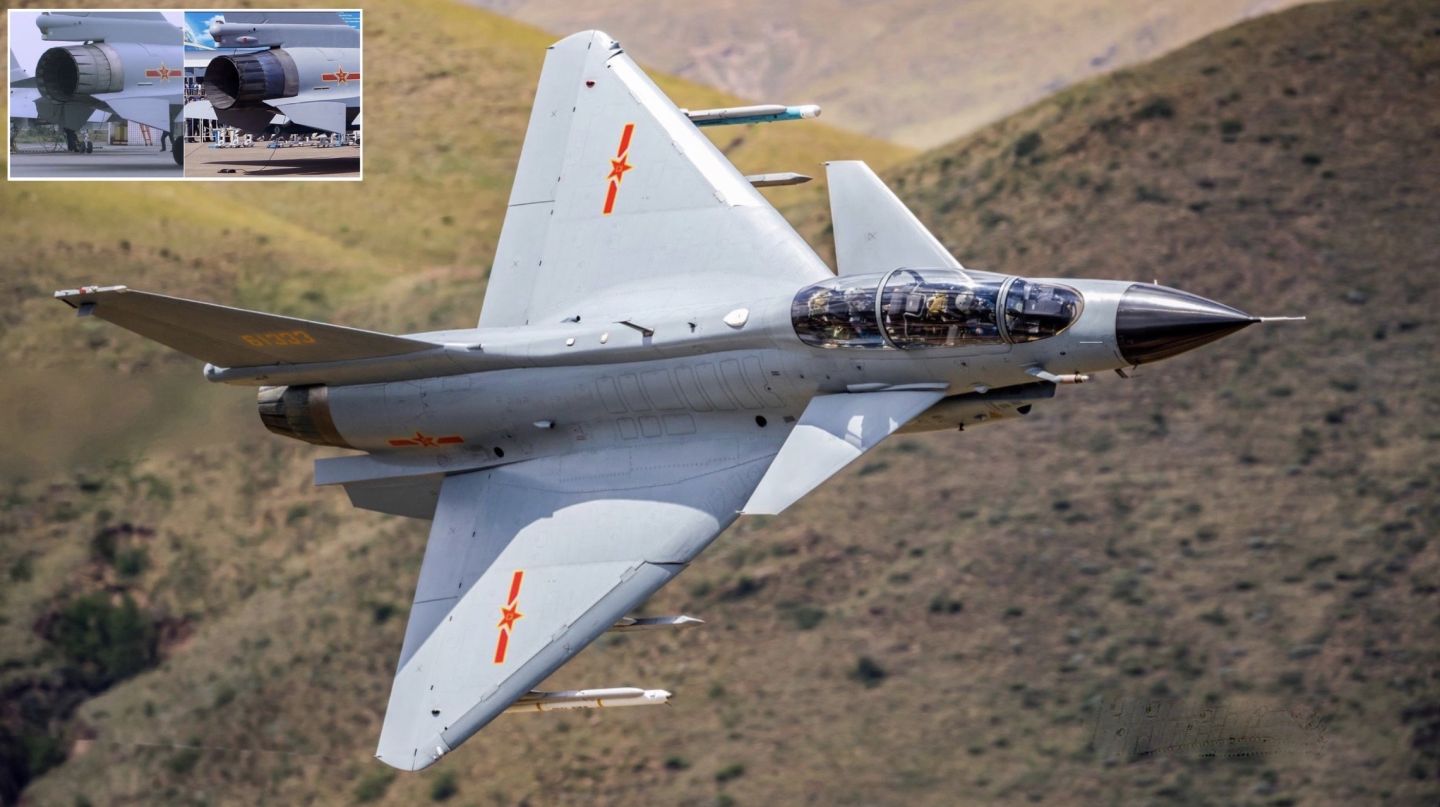
J-10 Single Engine Fighter (AL-31 and WS-10 Engines )
Newly released images of Chinese J-10C ‘4++ generation’ fighter jets have revealed that the latest batches received by the People’s Liberation Army (PLA) have been fitted with new WS-10B turbofan engines. The engines have replaced the less powerful and older Russian designed AL-31FN which previously powered the aircraft. The J-10 is a single engine lightweight design comparable to the American F-16C Fighting Falcon, although its latest variant boasts considerable performance advantages over foreign rivals including the ability to operate at higher speeds and altitudes, a powerful AESA radar, thrust vectoring engines for added manoeuvrability and PL-15 missiles for an extended range. The fighters also make use of stealth coatings to reduce their radar cross sections, and have been deployed by a number of elite units alongside the heavier and more specialised J-20 and J-16 platforms - the three of which all have highly complementary capabilities. The platform's high performance allows it to pose a threat to much heavier classes of aircraft such as the American F-15C Eagle - according to U.S. reports.
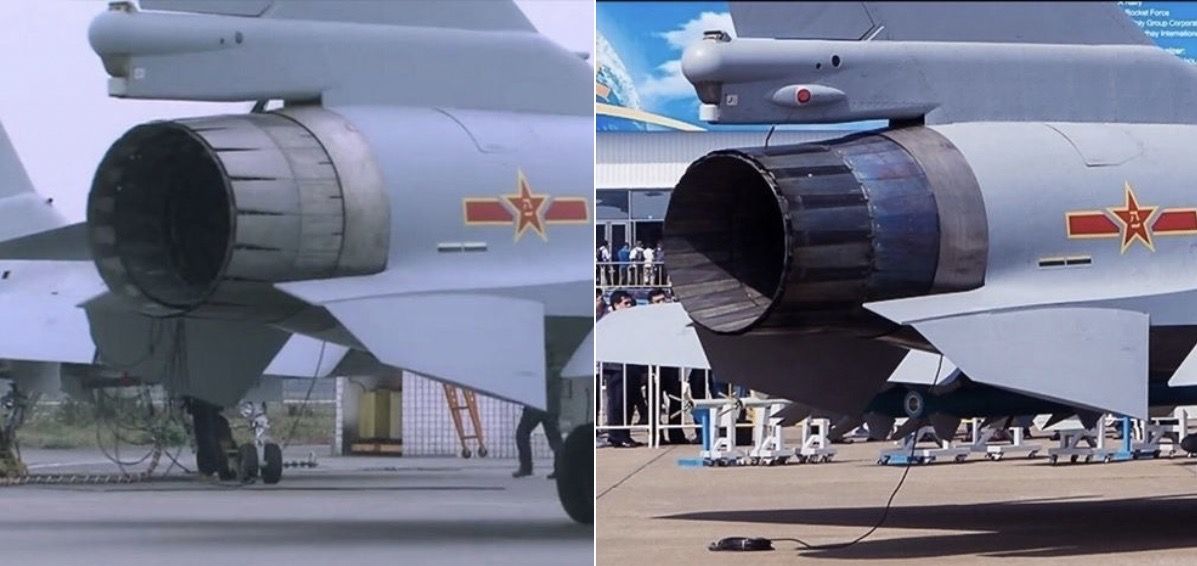
J-10C fighters with WS-10 engines made their debut in 2018 at the Zhuhai Airshow, shortly after their entry into frontline service, and made a strong impression with their advanced three dimensional thrust vectoring capabilities. The fighter remains the only on with a single engine ever to benefit from thrust vectoring engines, and the second in the world with three dimensional thrust vectoring after the Russian Su-35. While the U.S. developed thrust vectoring engines for its F-22 Raptor, its newer '4+ generation' F-16V, F-16E, F-21 and even its fifth generation F-35 single engine platforms have not benefitted from the application of such technologies. The fact that the F-35 is heavily oriented towards a strike role rather than air to air combat largely explains this - a different role to the more balanced J-10 which has been assigned an air superiority role in previous missions when operator alongside the J-20 and J-16. China has made considerable strides in engine technologies from a relatively poor technological base at the beginning of the century, and near the end of 2019 began fitting the J-20 with indigenous engines to replace more powerful AL-31 derivatives it has previously used - the AL-31FM2. Considerable progress has also been made developing the WS-15 engine for the J-20 fighter, which has proven during testing to be more powerful than the current record holder, the American F-35’s F135 engine. The WS-15 is expected to enter frontline service before 2025.
