
Falcons Over Hornets: How the U.S. Navy Plans to Replace its F-18s with Ex-Air Force F-16s
Military Watch Magazine Editorial Staff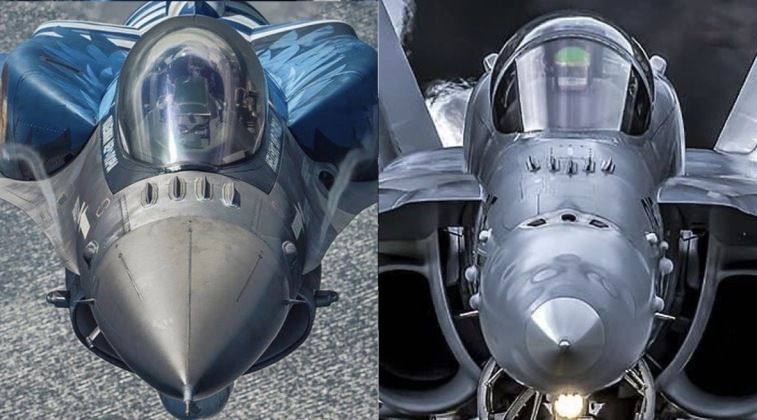
F-16 (left) and F-18 Lightweight Fighters
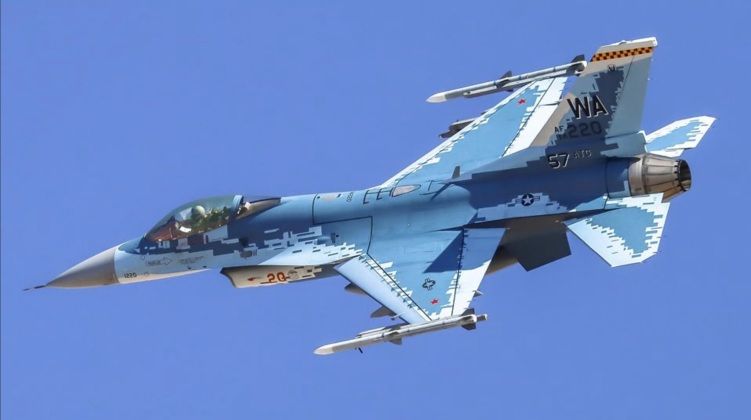
The U.S. Navy is set to replace its remaining F-18C/D Hornet fighter jets with F-16 Fighting Falcons acquired second hand from the Air Force, with the acquisition having formally been made a part of the Pentagon’s budget request for 2022. The Hornets were expected to all see retirement by the end of 2024, but this date has been brought forward to December 2022 as the service looks to reduce costs and accelerate the rate of modernisation. Approximately 55 Hornets are scheduled for retirement, with the jets operated primarily for adversary training to simulate the capabilities of enemy aircraft. The Navy already operates a small number of around 15 F-16s for this purpose, despite the Falcon being an Air Force jet which is not used by the Navy in a combat capacity. It also operates heavily enhanced F-5 jets - a third generation fighter design on which the fourth generation F-18 is based.
The F-16 and F-18 have long been seen as rival programs, with the latter being closely based on the YF-17 prototype which was offered to the Air Force as an alternative to the F-16. Although the YF-17 built on the tried and tested design of the F-5, and benefitted from a higher flight ceiling and engine redundancy, the F-16 was chosen for its lower operational costs, easier maintenance, greater manoeuvrability and a longer range - while also being much cheaper to build. Although an F-16 modified to land on aircraft carriers was offered to the Navy, the benefits of having twin engines, which allowed a fighter to return to land or to its carrier if one engine failed, led the Navy to choose the F-18. For aggressor training, however, the F-16 is seen to have obvious benefits as a lighter and simpler airframe.
The new F-16s acquired second hand by the Navy will notably be very early models - including 20 single-seat Block 32 F-16Cs and six two-seat Block 25 F-16Ds which will be upgraded before entering service. The F-16 has widely been regarded as obsolete, with many countries beginning to retire the jets or making preparations to phase them out of service outright, although upgraded versions of the aircraft are still in production to be marketed to lower level clients. The Air Force is moving to retire a large portion of its F-16s in the next few years, and some of the fighters have even been turned into drones for use as targets to test new types of anti aircraft missiles.
