
45 Years Since U.S. Air Force Selected the F-16 Over Rival Twin Engine F-17 Design - What Has Made the Fighting Falcon an Excellent Fighter Ever Since
Military Watch Magazine Editorial Staff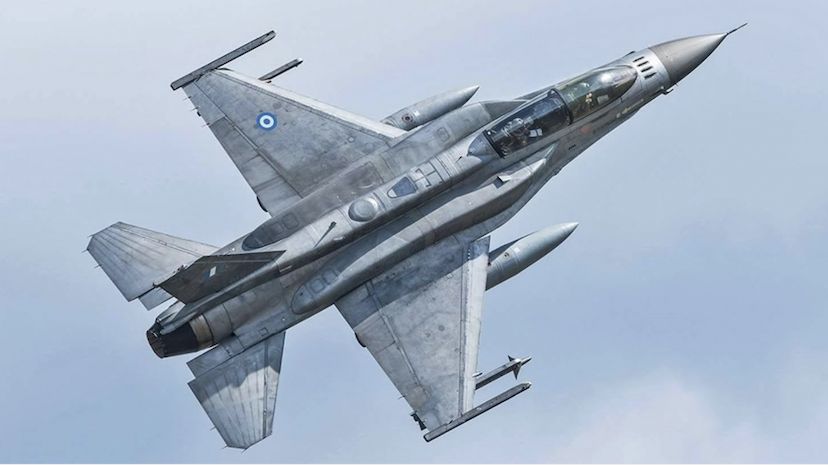
F-16 Fighting Falcon
January 13th, 2020, marks 45 years since the announcement by U.S. Air Force Secretary John L. McLucas that the General Dynamics YF-16, a prototype for the proposed F-16 fourth generation fighter, had been selected as the winner of the Lightweight Fighter technology evaluation program. The program was initiated as a result of the very high costs of the U.S. Military’s existing fourth generation designs, the F-14 Tomcat and F-15 Eagle, which were extremely heavy, required a great deal of maintenance and were too expensive both to maintain and to build to be acquired in large numbers. The program was intended to select a versatile jet which could perform ably on the battlefield - particularly in an air to air combat role which was critical in the Cold War period - but which would be easy to maintain and cheap to operate allowing it to be fielded in large numbers. The Northrop YF-17, the YF-16’s competitor, was a heavily enhanced derivative of the third generation F-5E Tiger II - itself based on the pre-Vietnam War era F-5A Freedom Fighter. The new twin engine aircraft had a longer fuselage relative to the F-5 to accommodate a larger radar, more powerful engines for greater manoeuvrability, and new armaments, composite materials, ejection seats, avionics, electronics among other features.
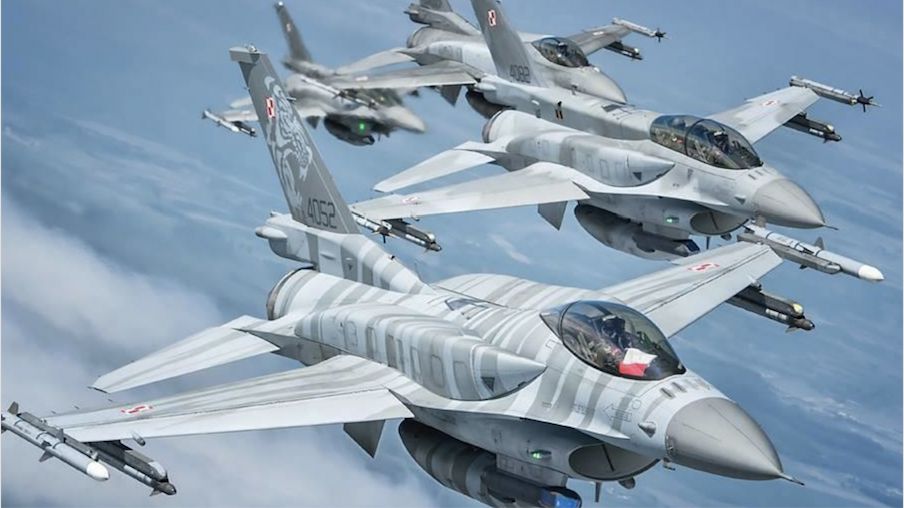
While the YF-17 built on a tried and tested design, and benefitted from a higher flight ceiling and from engine redundancy, the YJ-16 was ultimately deemed the more suitable design. The single engine fighter was considerably cheaper to operate, required less maintenance, and enjoyed many superior flight characteristics including greater manoeuvrability and a longer range. The YF-16 was also cheaper to build, meaning the pressure for the AIr Force's fighter fleet to contract would be further reduced while also expanding the number of U.S. allies which would be willing to buy the aircraft and the numbers they could be sold - all critical at a time of intense competition between major powers. The F-16 Fighting Falcon would come to be something of a gold standard for fourth generation aircraft, and will likely remain the most produced of its generation indefinitely with over 4,500 built. The aircraft entered service in 1978, three years after its selection, and is currently serving in 26 air forces. Its emphasis on air to air combat capabilities was critical due to the massive perceived threat posed by the Soviet Air Force, which vastly outnumbered its U.S. counterpart and deployed a number of high performance designs such as the MiG-25 and upcoming MiG-29. The Fighting Falcon would continue to be modernised, and would gradually gain an air to ground capability and more advanced air to air capabilities - with superior sensors, electronics and from the late 1990s its signature AIM-120 air to air missiles.
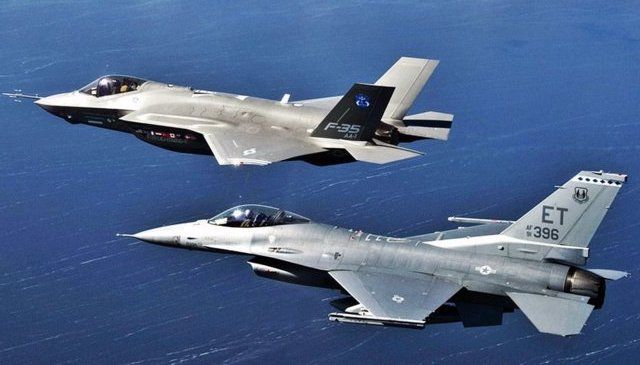
The F-16 was developed into a number of advanced ‘4+ generation’ designs including the F-16V, F-16E and F-2 - the last two of which were developed exclusively for the United Arab Emirates and Japan respectively. Orders continue to be placed for the aircraft, which remains in production today as the F-16V, with Taiwan recently ordering 66 F-16V jets under a contract valued at over $8 billion. The design is nevertheless increasingly considered obsolete, with the U.S., Israel, Singapore and Egypt increasingly seeking to phase it out of frontline duties as more capable jets of a similar weight range enter service. The U.S. Air Force’s fifth generation replacement for the F-16, the F-35A, entered service in 2015 but is still far from fully operational. A comparison of the F-35's design with the F-16 reflects the shift in threat perception in the post-Cold War world, and the new platform is designed primarily for an air to ground rather than an air to air mission and is specifically tailored to engage advanced enemy air defence systems such as the Russian S-300. With the vast Soviet Air Force, the largest in the world at its time, now gone, and its primary successor state Russia fielding a fleet a fraction of the size, the primary task America's main frontline next generation jet appears to be engaging both ground based anti air systems and small numbers of highly advanced next generation fighters. This has been closely reflected in the orientation of America’s next generation fighter programs.
