
Republic of China Army to Receive Enhanced Variant of Ageing U.S. M60 Tank
Military Watch Magazine Editorial Staff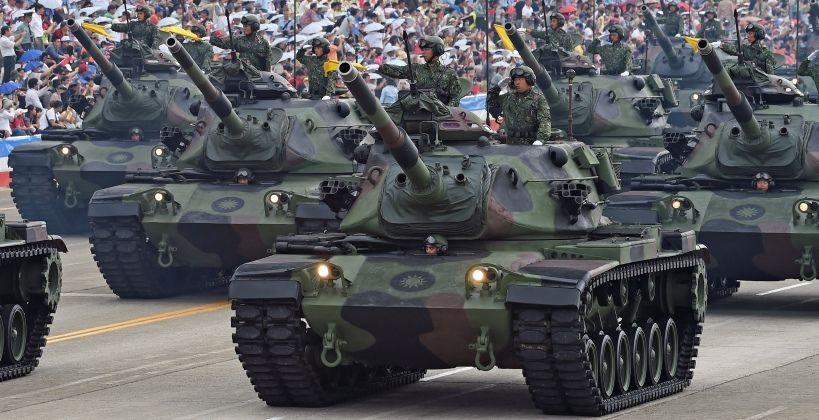
Republic of China Army M60A3 Tanks
The Taoyuan-based National Chung-Shan Institute of Science and Technology has developed a major upgrade package for the U.S.-supplied M60A3 main battle tank, the M60A3 TTS, which addresses a number of issues related to the vehicles’ growing obsolescence in the Republic of China Army. The upgrade package centres around the integration of a new turret, all-electric digital fire controls, and high-resolution observation and aiming systems. These are intended to significantly improve survivability, situational awareness, and firing accuracy, while shortening engagement times. The Republic of China Army is estimated to currently operate over 400 M60 tanks, which form the backbone of its fleet alongside a similar number of CM-11 tanks, a vehicle which uses the chassis of the M60, and 80 more modern M1A2 Abrams tanks.
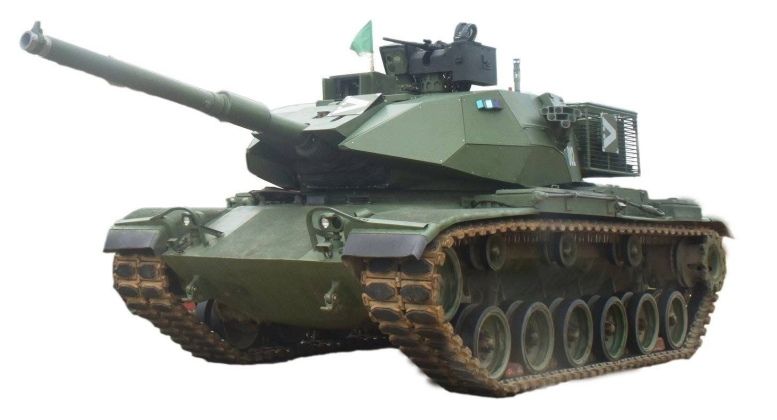
The M60 first entered service in 1960, and was already considered largely obsolete by that time the first were delivered to the Republic of China Army, with the U.S. Army rapidly phasing them out of service, and retiring the last tanks from combat units in 1991. The Republic of China Army first acquired the M60 in 1998, after an agreement announced in August the previous year saw 480 surplus U.S. Army M60A3s transferred for approximately $1 million each. Obsolescence issues affecting the design have since continued worsen considerably. The tanks were evaluated as far inferior to peer level Soviet armour during the Cold War, including during the Iran-Iraq War where they lost overwhelmingly to the T-62 and T-72, and previously during the Yom Kippur War when only the superior training of Israeli crews allowed them to engage Egyptian Army T-62s. Their ability to engage modern armour or anti-tank weaponry today remains negligible.
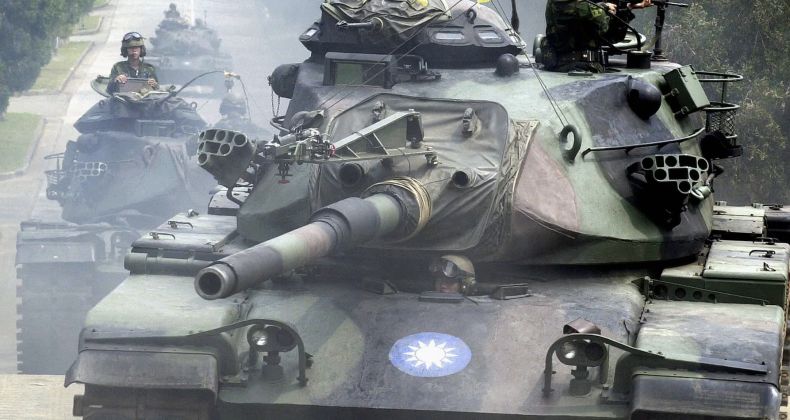
A number of countries have sought to modernise M60 tanks in service to keep them viable, most notably Turkey and Iran which have struggled to afford procurements of modern tank types. The integration of modern fire control systems and a turret with improved armour protection has been assessed to make the vehicles more viable for lower intensity combat scenarios. Nevertheless, the tank’s inherently very weak base armour seriously limits its viability for high intensity combat even with less capable state actors, let alone with the Chinese People’s Liberation Army, with which the Republic of China Armed Forces remain in a state of war, and which fields some of the world’s most capable anti-tank weaponry. The extent to which the Republic of China Defence Ministry will invest in the new M60A3 TTS upgrade package remains in question, as does whether it will eventually further expand orders for M1 Abrams tanks or other types of armoured vehicles to begin to phase the M60 out of service.
