
Did a Ukrainian F-16 Really Shoot Down a Russian Su-35 Fighter? U.S. General’s Claims Raise Questions
Military Watch Magazine Editorial Staff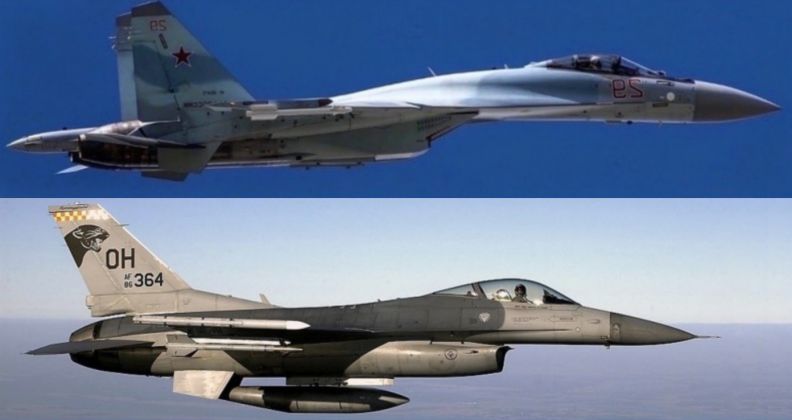
Su-35 (top) and F-16 Fighters
U.S. Chairman of the Joint Chiefs of Staff General Dan Caine has informed the U.S. Senate Appropriations Committee that the Ukrainian F-16 fleet achieved its first confirmed air-to-air victory against manned aircraft by shooting down a Russian fighter. While Caine did not specify the kind of aircraft that was targeted, his statement was widely interpreted by Western sources to indicate that the loss of a Russian Aerospace Forces Su-35 on July 8 was the result of such a shootdown. The incident has raised significant questions regarding the capabilities of Ukraine’s F-16s, and whether a shootdown of a Su-35 was likely. While the July 8 shootdown was previously attributed to a Patriot air defence system, it is notable that air-to-air shootdowns carry significantly greater public relations value.
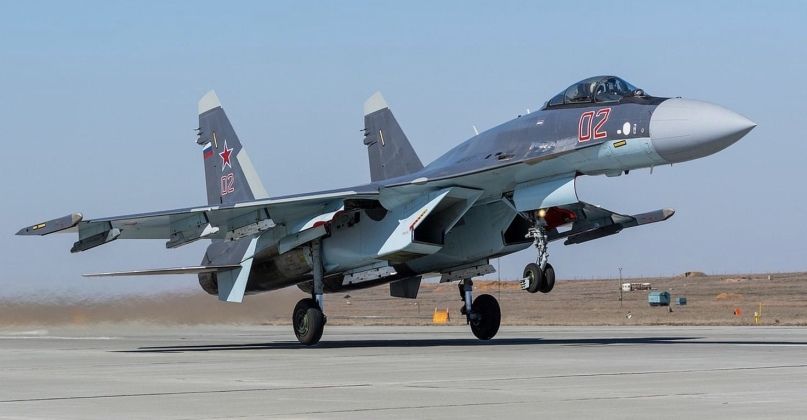
Although the modern F-16 Block 70/72 fighters are relatively capable ‘4+ generation’ aircraft, and many older F-16s have been brought up to similar standards under the F-16V upgrade program, Ukrainian Air Force F-16s are ageing Cold War era variants that rely on radars long since considered obsolete. Their radars are not only decades out of date, but due to the small sizes of the low cost fighters, they are also around one quarter the sizes of the radars carried by Russian fighters such as the Su-35 and Su-30, and far less powerful. This leaves their radars highly vulnerable to jamming, and thus limits their effectiveness for beyond visual range combat.
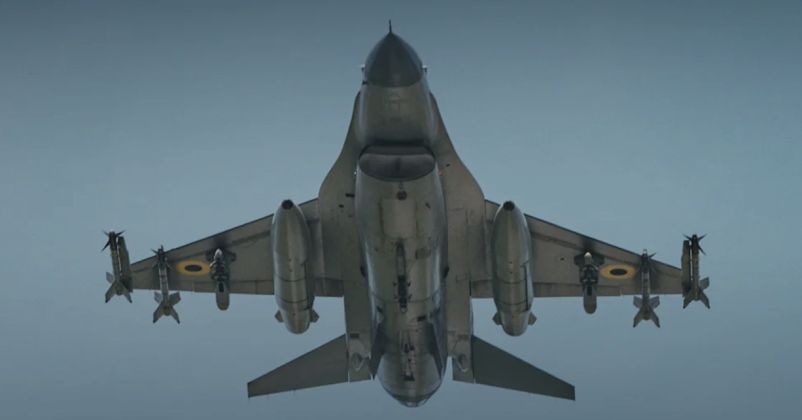
While the shootdown of a Su-35 by Ukrainian F-16s is not impossible, it remains unlikely for multiple reasons. The first is that Ukrainian F-16s do not have access to Link 16 data links, which further limits their situational awareness, and prevents them from using targeting data from other assets, such as Patriot air defence systems, to engage targets. Data links would otherwise provide a means of circumventing the limitations of the fighters’ very constrained radars. Ukrainian officials have themselves repeatedly stated that their F-16s are far outmatched by frontline Russian fighter types like the Su-35, which is to be expected considering the age of the Cold War era fighters and the lack of significant modernisation.
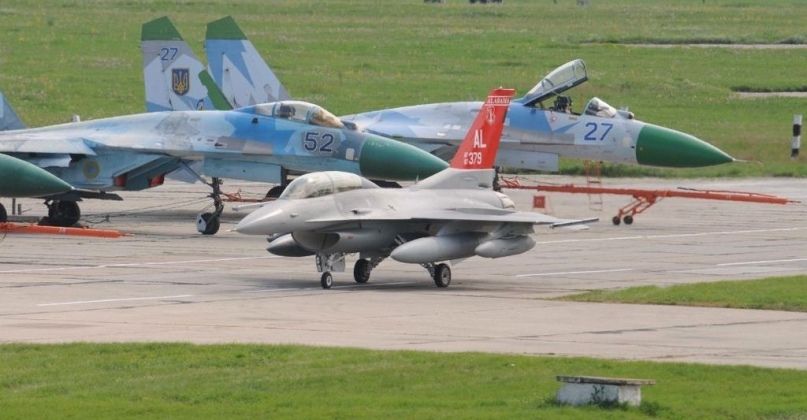
Ukraine has not achieved any significant air-to-air victories in its more than four year air campaign, with the exception of the highly effective use of drones to shoot down Russian helicopters. This was despite the Ukrainian Air Force fielding Su-27 air superiority fighters, which are by almost all accounts significantly more capable than the ageing F-16s the service did receive, but quickly took heavy losses in the opening stages of the conflict. While Chairman Caine’s statement could refer to an air-to-air kill against another type of Russian aircraft, interpreting the incident as a kill against a Su-35 is broadly in line with efforts by a number of Western media outlets to maximise public relations benefits for Ukraine, as well as for Western equipment, and thus credit Ukrainian F-16s with shooting down Russia’s most capable fighter type. Although the Su-35 is far from a cutting edge fighter, particularly when compared to U.S. and Chinese fifth generation fighters such as the F-35 and J-20, the discrepancy in performance compared to 45 year old F-16 variants remains outstandingly large.
