
Deterring the West: Russia Bolsters Iranian Air Defences With New Missiles for S-300 Systems - Reports
Military Watch Magazine Editorial Staff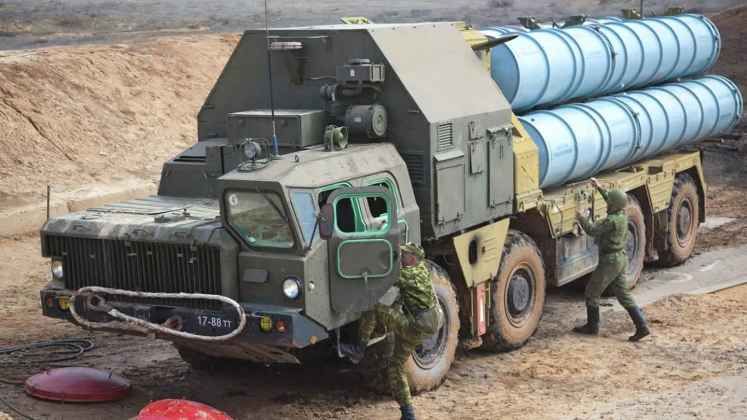
S-300PMU-2 Surface to Air Missile Battery
Following the delivery of multiple S-300PMU-2 surface to air missile battalions from Russia from 2017, Iran has relied heavily on these systems for defence against potential threats from the United States and its NATO and regional allies and has deployed them to protect likely targets for Western attacks. The S-300 systems delivered to Iran were notably not of the standard PMU-2 variant, but were a customised modification based on this platform with unknown specifications. Although it has been in service in Russia's armed forces since 1997, the S-300PMU-2 is still considered one of the world’s most advanced multirole air defence systems and is capable of engaging up to 32 targets simultaneously while providing a very high degree of situational awareness. A number of recent reports, primarily from Middle Eastern media outlets, indicate that Iran has received deliveries of new surface to air missiles from Russia for its S-300 systems, possibly purchased as part of a followup order to enhance them, which could potentially extend the range of the batteries already deployed.
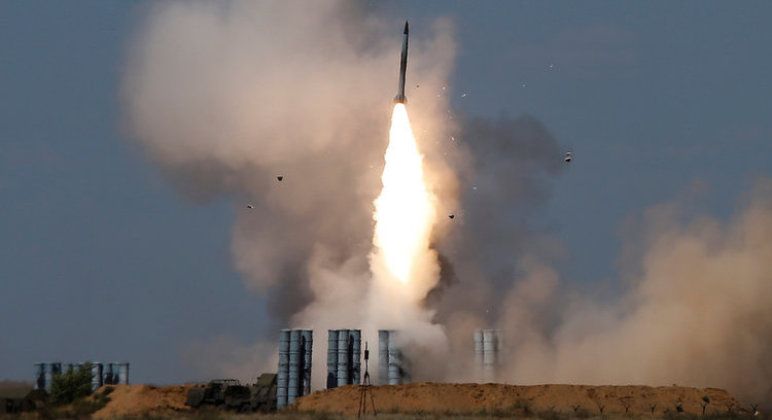
The S-300PMU2 has a maximum engagement range of 250km, but only if equipped with the 48N6DM/48N6E3 missile which not all export clients are provided with. The older 48N6E2 missile has been more widely exported, and has a range of 200km and a speed of around Mach 8 - significantly slower compared to the 48N6DM/48N6E3’s Mach 14 speed. While it was unconfirmed if Iran did receive the 48N6DM/48N6E3 with its initial batches of S-300s, it is possible that it is beginning to receive these now or that it is expanding its arsenal of the more advanced missiles in anticipation of potential threats. Iran is notably facing an imminent threat of war, with tensions with its longstanding regional adversary Israel in particular fast rising. Israel notably sees the need for quick action against Iran as imperative, as not only has the county removed many of the restrictions on its nuclear program in response to growing American economic pressure, but a UN arms embargo on the country is also set to expire in October 2020 which will allow the country to purchase a wide range of advanced weapons systems. A number of recent explosions in Iran and incidents at nuclear facilities have been widely speculated to be results of Israeli sabotage, and as tensions continue to rise a bolstering of Iranian air defences by Russia can provide a very welcome improvement to the country's security. Iran has shown interest in acquiring both more advanced Russian air defence systems such as the S-400, as well as fighter aircraft such as the MiG-35 and Su-30SM, with at least some orders expected to be announced shortly after the arms embargo is lifted.
