
Deliveries of F-35 Centre Fuselages Reach 1500 as Fleet Expansion Accelerates: Export Demand Key to Sustaining High Production
Military Watch Magazine Editorial Staff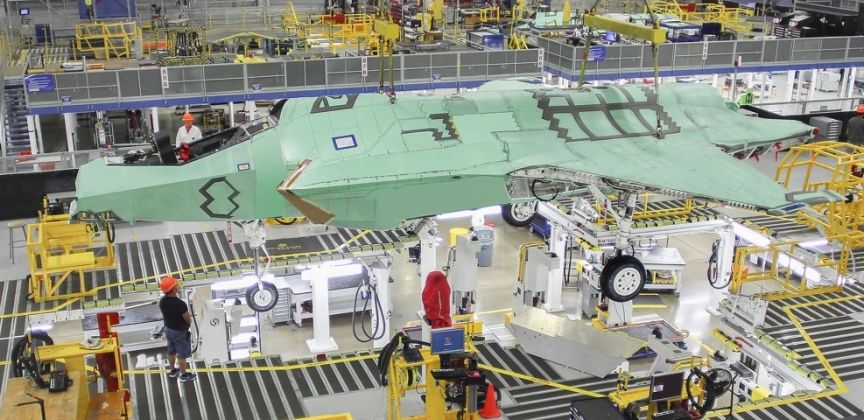
F-35 in Production at Fort Worth, Texas
Leading U.S. aerospace and defence firm Northrop Grumman has confirmed the delivery of the 1,500th centre fuselage for the F-35 fifth generation fighter from its Integrated Assembly Line in Palmdale, California. This was reportedly achieved as a result of major improvements to the application of more advanced factory automation and advanced manufacturing technologies. The firm’s Integrated Assembly Line now produces one centre fuselage every 30 hours, allows seamless production across all three variants - the F-35A developed for the U.S. Air Force, F-35B developed for the Marine Corps, and F-35C developed for the Navy. The firm further confirmed that augmented reality and virtual reality tools had successfully reduced centre fuselage assembly time by 35 percent, while cutting the technical learning curve by 20 percent.
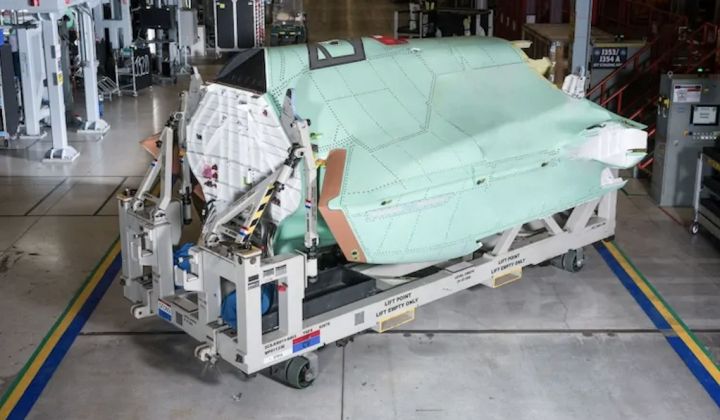
Alongside fuselage production, Northrop Grumman is responsible for the production of the F-35’s AN/APG-81 and AN/APG-85 active electronically scanned array radars and the aircraft’s the integrated communication, navigation and identification system, while also manufarutinrg its wings and skins. Alongside its work on the B-21 bomber, contributions to production as part of the world’s largest fighter program are a primary source of revenue. The firm’s successes in accelerating production of the aircraft’s centre fuselage has occurred at a time when foreign demand for the F-35 has continued to grow rapidly, with the ongoing Russian-Ukrainian War, and the particularly rapid expansion of the Chinese J-20 fifth generation fighter fleet, being primary factors driving this.
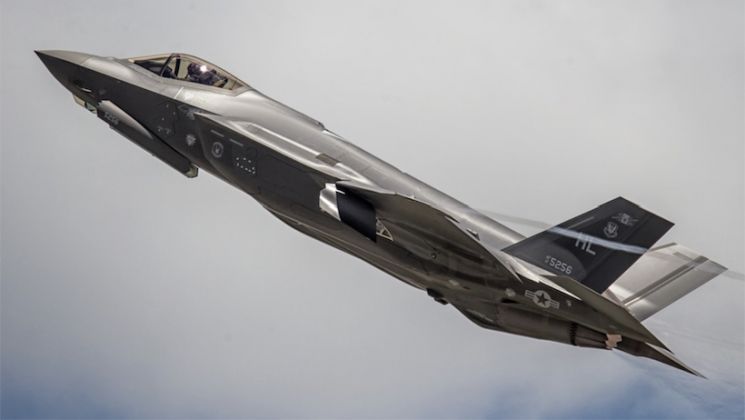
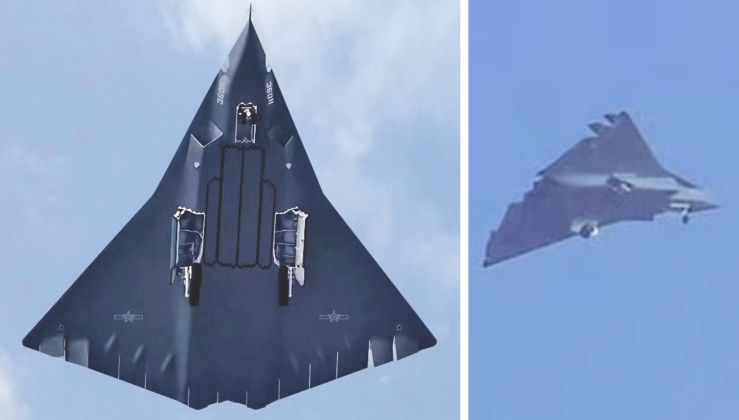
Despite growing foreign demand, the U.S. Air Force’s own orders for the F-35 has fallen significantly, with China’s unveiling of its first sixth generation fighters in flight demonstrator stages in December 2024 having been expected from the outset to lower demand for the aircraft as its capabilities are poised to fall behind. In December 2025 it was confirmed that the Pentagon had significantly reduced planned F-35 procurements for Fiscal Year 2026 to just 47 aircraft, which represented a 45 percent reduction from the 86 aircraft acquired in Fiscal Year 2024. Orders include just 24 of the F-35A variant for the Air Force, or less than half of prior procurement numbers, was a primary factor in this, with the allocation of funding to develop the F-47 sixth generation fighter thought to be a primary factor.
Primary issues with the fighter have included excessive maintenance needs, which were revealed in December 2025 to have driven availability rates in the U.S. Armed Forces to just 50 percent, while efforts to modernise the aircraft to the Block 4 standard have faced increasingly serious delays pushing the date back into the 2030s. A leading factor driving demand for the F-35 in spite of these issues has been the lack of other NATO-compatible fifth generation fighters in production, which has ensured it has competed only against much less advanced fourth generation aircraft that totally comparable capabilities particularly in terms of stealth and electronic intelligence collection. With the F-47 not expected to be widely offered abroad, while European stealth fighter programs have largely floundered and remained technologically decades behind, the F-35 is expected to maintain its monopoly position, ensuring foreign demand is sufficient to sustain large scale production despite a fall in demand from the U.S. Air Force.
