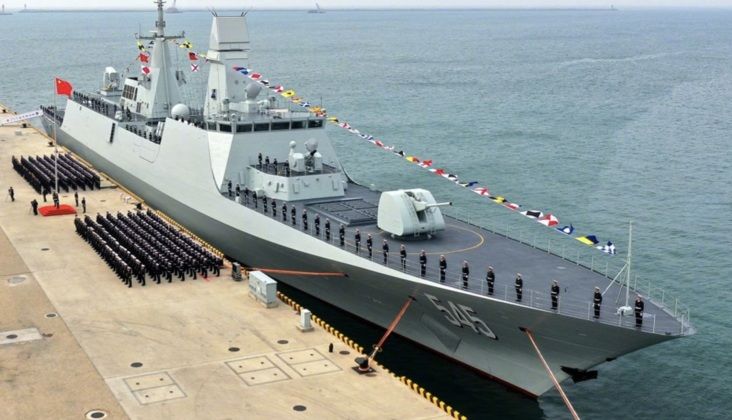
Chinese Type 052D Missile Destroyer Deployed to South Africa to Lead First ‘BRICS Naval Exercises’
Military Watch Magazine Editorial Staff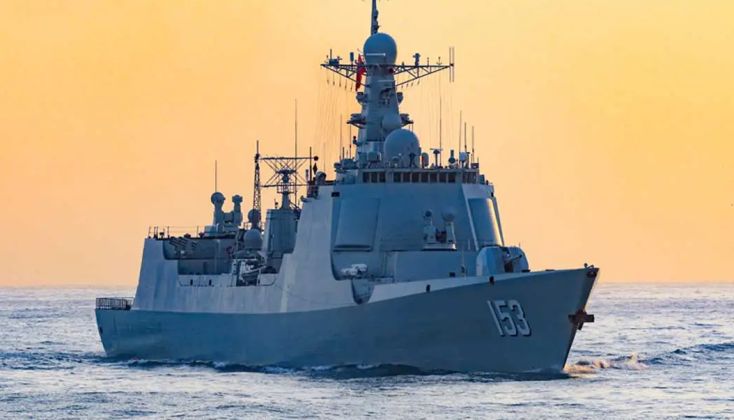
Type 052D Class Destroyer Tangshan
The Chinese People Liberation Army Navy has deployed the Type 052D class destroyer Tangshan to participate in the first joint naval exercises with Russia, Iran and South Africa. The Will For Peace 2026 exercises have been widely dubbed the first ‘BRICS military exercise,’ although it has no known connection to the economic grouping. Exercises are being hosted in South Africa, with the Chinese destroyer rendezvousing with the South African Navy Valiant class frigate Amatora in Simonstown, South Africa on January 8, as well as the Iranian Navy's naval base ship Makran, the multi-purpose ship Shahid Mahdawi, and the Nagdi-class light frigate Nagdi. The Tangshan was accompanied by a Type 903A class supply ship.
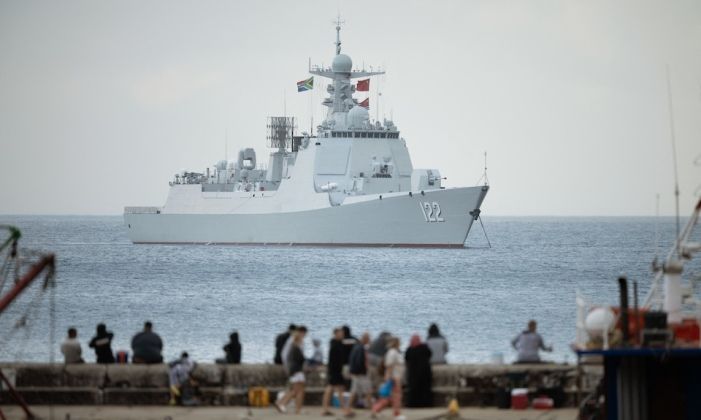
The Russian Navy’s contingent was the last to arrive in South Africa for the exercises, with the corvette RFS Stoikiy and fleet oiler Yelnya reaching their destination on January 9. Simon's Town hosts the South African Navy's largest base, and is located in the South Atlantic Ocean close to the Cape of Good Hope. The navies of Russia, Iran and South Africa all lack comparably capable destroyers to Type 052D class, with only the United States, South Korea and Japan fielding destroyers with similar or greater combat potentials. Russia has not laid down a new destroyer or cruiser sized ship for its Navy since the disintegration of the Soviet Union, while the capabilities of Iranian and South African ships remain highly limited. With the Type 052D representing the large majority of the combat capability in the exercises, the ship will almost certainly play a central and leading role.
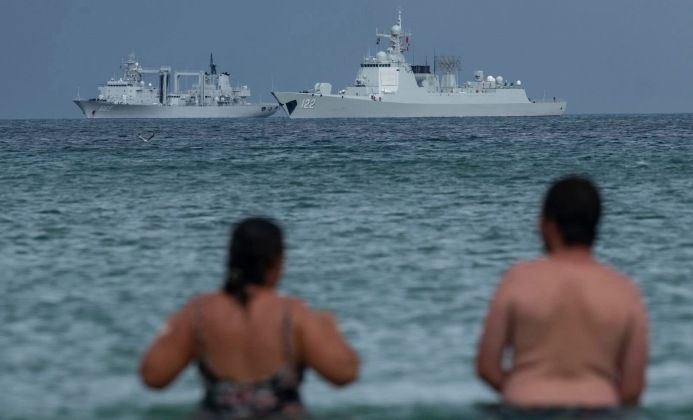
The South African Defence Ministry confirmed that this would take place on January 9-16, “with China serving as the lead nation," and will simulate "joint actions to ensure the safety of navigation and maritime economic activities." The focus on securing navigation comes at a time when the United States has from November surged operations targeting civilian shipping in international waters. This has included deploying forces to board and take over multiple ships transporting Venezuelan oil for export, commandeer of the tanker the Centuries owned by the China-based firm VSatau Tijana Oil Trading, and board a cargo ship to secure, removing and destroying Chinese civilian goods that were being shipped to Iran through the Indian Ocean. The U.S. Marine Corps 22nd Marine Expeditionary Unit has recently trained for such operations to target international shipping, which serves as one of several indications that they are likely to continue.