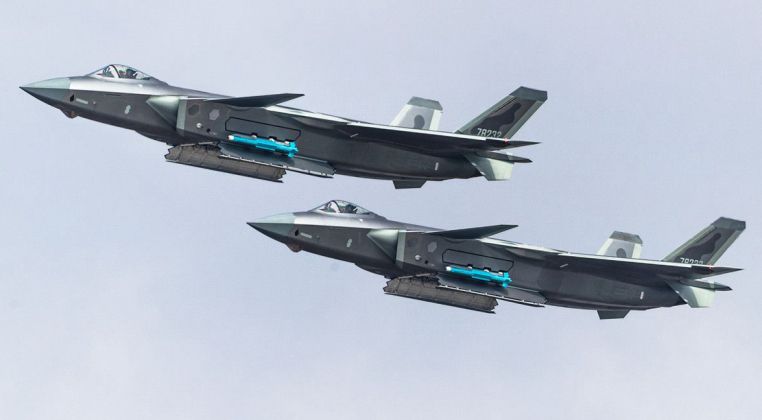
J-20 Fighters with PL-10 Missiles and Open Weapons Bays
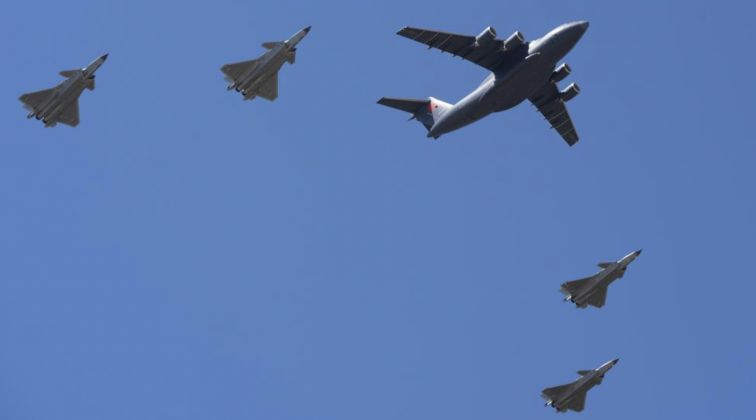
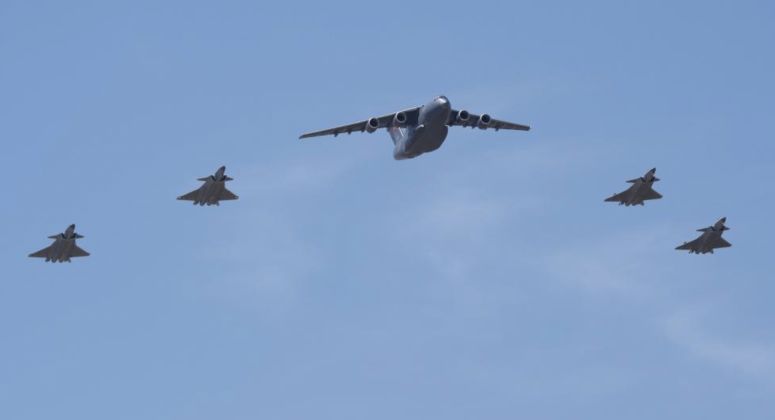
The Chinese People’s Liberation Army Air Force has deployed four J-20 fifth generation fighters to escort a Y-20B heavy transport aircraft carrying the remains of 12 Korean War fallen soldiers and 146 of their personal effects from South Korea. The Y-20B landed at Taoxian International Airport in Shenyang, capital of northeast China's Liaoning Province, on April 22, with a remembrance ceremony held at the airport being attended by more than 1,800 people, including representatives from the military, war veterans, and relatives of Chinese People’s Volunteer personnel. The J-20 has been relied for escort duties for remains returning from Korean since September 2022, with the J-11B fourth generation air superiority fighter, the J-20’s direct predecessor, having previously been assigned these duties. J-20 Fighters Escourt Y-20B with Remains of Korean War Martyrs
The J-20’s deployment for escort missions has provided further grounds for Chinese commentators to widely remark on the fighter program’s significance in the context of the historical memory of the Korean War. The conflict saw fighter aircraft, namely MiG-15s procured from the Soviet Union, play a central role in deterring the United States from expanding the conflict to launch a full scale assault on Chinese territory, with even the relatively small number of fighters deployed forcing U.S. bombers to operate only at night, and causing unsustainable losses when operating near the Yalu River. The conflict is considered to have played a key role in shaping perceptions of the importance of strategic level air power, with the J-20 being a direct successor to the MiG-15 in serving as China’s most capable air superiority fighter.
J-20 Fighters Escourt Y-20B with Remains of Korean War Martyrs
The J-20’s capabilities have widely been assessed by Chinese analysts to play a key role in containing U.S. forces in East Asia, with the fighter being in a league of its own alongside the lighter J-35 and the U.S. Armed Forces F-35 in terms of the sophistication of its capabilities. This was considered particularly critical after the Obama administration launched the Pivot to Asia initiative and a massive buildup of U.S. forces in the region in the early 2010s, with the J-20 entering service in February 2017 over half a decade before when Western sources had projected. The fighter is a heavyweight twin engine design much better optimised for air-to-air combat than the F-35, which was developed primarily for strike and air defence suppression operations, with its radar strength, range, manoeuvrability, speed, and weapons payload all being far superior. In February new footage of J-20A fighters under the Southern Theatre Command showed ten of the aircraft with new radar domes that analysts observed likely indicated a radar upgrade, at a time when the U.S. Armed Forces and defence sector continued to struggle to integrate the new AN/APG-85 radar onto the F-35.
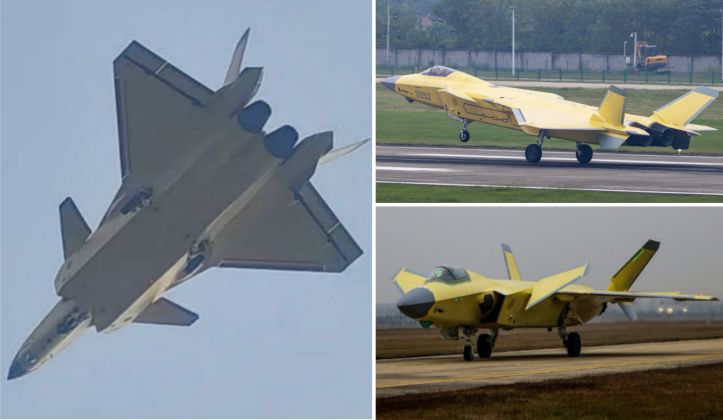
J-20A Fighter with WS-15 Engines
The J-20 has benefited from a particularly high rate of incremental modernisation to ensure a continued advantage over rival fighter types. Footage released by the primary developer of the J-20, the Chengdu Aircraft Industry Group, in January for the first time shown several of the new and heavily enhanced J-20A variants undergoing test flights. The J-20A benefits from a revised airframe design, with the most conspicuous difference being its redesigned rear canopy which reduces aerodynamic drag, enhances its efficiency in supersonic flight, and is likely to further improve stealth capabilities. Its most notable improvement is the integration of the WS-15 next generation engine, with the first footage of a serial production fighter with the new powerplant having been published in late December 2025.