China Unveils Hypersonic Terminal Stage of the World’s Longest Ranged ‘Carrier Killer’ Missile in New Exercises
Military Watch Magazine Editorial Staff
DF-26 Launch (left) and DF-26D Terminal Stage
Chinese state media has for the first time unveiled images of the terminal stage of its DF-26D intermediate range ballistic missile, after the missile was first unveiled in October 2025 to modernise the People’s Liberation Army’s land attack and anti-shipping capabilities against targets in the mid-Pacific and beyond. Reports from Chinese sources have indicated that newer variants of the DF-26 are capable of enhanced high-speed terminal manoeuvres due to the integration of more sophisticated re-entry vehicle designs, with the newly unveiled design of the DF-26D’s terminal stage closely corroborating with this. These characteristics have contributed to the missile’s frequent description as hypersonic, with the reentry vehicle in the DF-26D variant’s terminal stage thought to be either highly manoeuvrable or to be a hypersonic glide vehicle.

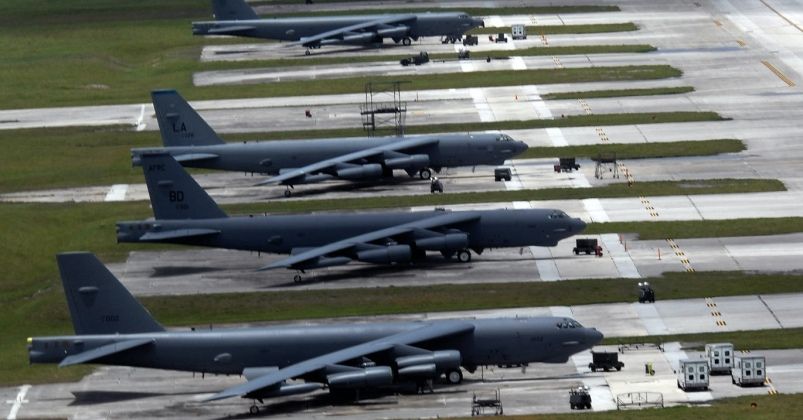
Hypersonic glide vehicles were first combat tested by Russia using the Oreshnik intermediate range ballistic missile, and by the Iranian Islamic Revolutionary Guard Corps to strike targets in Israel from March 2026 using the Fattah-2 medium range ballistic missile. The inability of extremely dense U.S.-Israeli anti-missile network to intercept the Fattah-2 has raised affirmed longstanding assessments that no means of intercepting hypersonic glide vehicles currently exists. Even before the integration of the latest reentry vehicle, the DF-26 was considered to be in a league of its own as by far the most capable intermediate range ballistic missile type in the world. First entering service in 2016, the missile’s 4,500 kilometre range and carriage of a large 1,500-1,800 kilogram warheads caused significant concerns in the Western world, and placed key U.S. Air Force, Navy and Marine targets on Guam and beyond within range. It was revealed in 2018 that DF-26 missiles are capable of targeting moving warships at sea. While the DF-26 has continued to be modernised during its time in service, the advances made on the new DF-26D variant remain unknown.
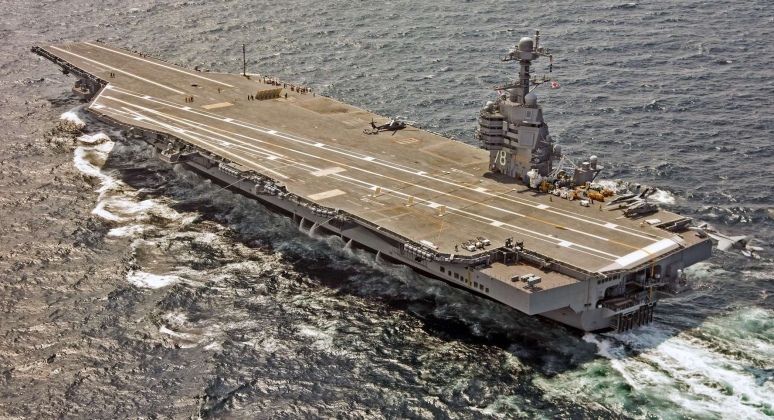
Advances in Chinese anti-ship missile capabilities have led Western analysts to widely warn of a serious threat to surface ships across much of the Pacific, with the Pentagon having in late 2025 provided new insight into how the Chinese People’s Liberation Army could utilise its missile, anti-space and cyber assets to sink even the newest and most capable U.S. Navy carrier groups. The leaked Overmatch Brief concluded based on simulations of multiple engagement scenarios that Chinese forces could employ a wide range of means to achieve this, with a primary conclusion reached being that Chinese forces could, under a wide range of scenarios, successfully sink the Navy’s newest Gerald Ford class supercarriers and their strike groups. One of the most outstanding conclusions was the particularly wide range of complementary assets Chinese forces were able to employ to achieve this, of which the DF-26 remains among the most significant.