
China’s Latest Satellite Engine Sets Global Record: High Performance Allows For Larger, Faster and More Manoeuvrable Spacecraft
Military Watch Magazine Editorial Staff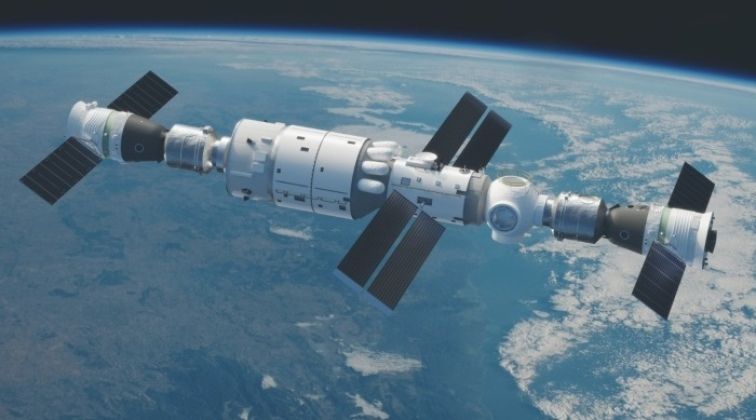
China`s Tiangong Space Station
China has achieved a significant milestone in electric propulsion for satellites by successfully demonstrating a new 750-newton Hall-effect thruster, which completed a record-breaking orbital transfer mission and surpassed the performance of all comparable preceding systems. The engine powered Communications Technology Experiment Satellite 26A from its initial transfer orbit to geostationary orbit through five orbit-raising manoeuvres, firing for a cumulative 11,617 seconds (approximately 3.2 hours) during its maiden mission. The engine was developed after Chinese researchers were unable to obtain required technologies from abroad because of Western Bloc states’ export restrictions. It is intended primarily for large communications satellites operating in geostationary orbit.
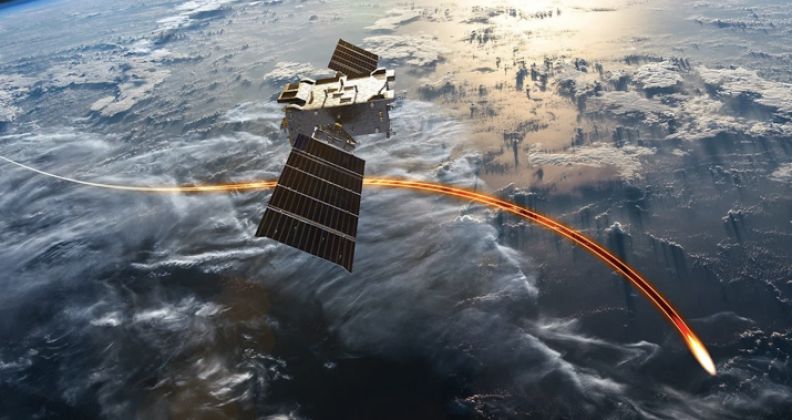
The military implications of a significant Chinese lead in developing Hall-effect thrusters extends well beyond communications satellites. Although these thrusters are primarily used for station keeping and orbit raising, higher-thrust electric propulsion expands what military spacecraft can do throughout their operational lives. One of the most important implications is faster deployment of military satellites. Conventional Hall-effect thrusters often require weeks or even months to raise a satellite from a transfer orbit into its final operational orbit because of their relatively low thrust. A substantially more powerful engine shortens this process, allowing reconnaissance, early warning, communications, and navigation satellites to become operational much sooner following launch. More powerful electric propulsion also enables the development of larger and heavier military satellites, and provides greater orbital manoeuvrability.
The development of heat- and oxidation-resistant protective coating were primary factors allowing the new engine to run continuously for extended periods of over 14 hours, far surpassing the program’s targets. At 750 newtons, the engine's unusually high thrust allows satellites to complete orbit-raising manoeuvres more quickly after launch, reducing the time required to reach operational orbit while still retaining the fuel-efficiency advantages of electric propulsion. Electric propulsion has become increasingly important because it consumes far less propellant than conventional chemical engines, allowing satellites either to carry larger payloads or remain operational for longer service lives.
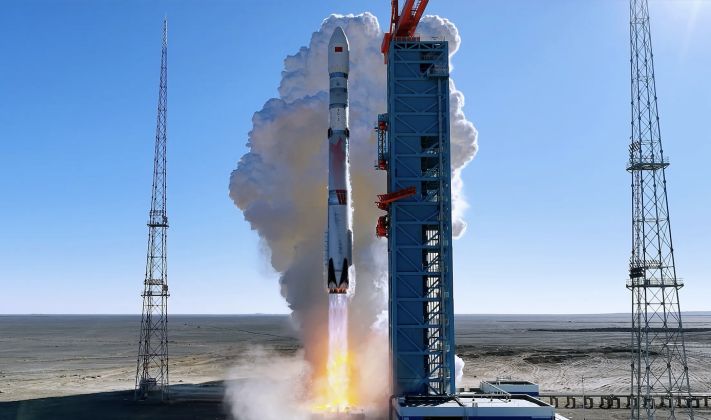
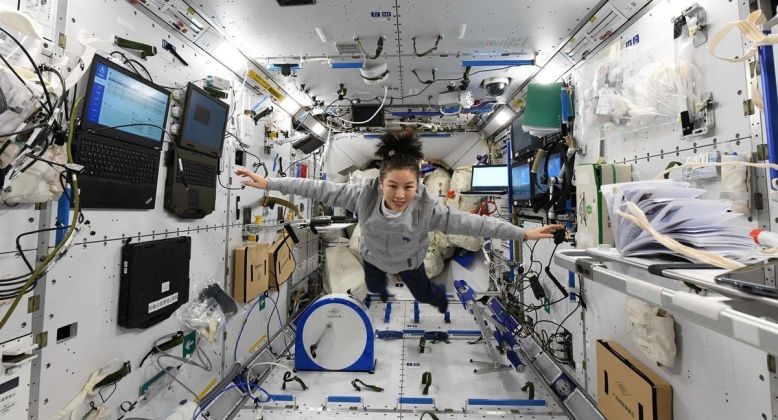
China has invested heavily in developing indigenous satellite and space rocket technologies across propulsion, launch vehicles, and spacecraft manufacturing, and emerged in a league of its own alongside the U.S. as one of the two global leaders in the field. The successful demonstration of a domestically developed high-thrust Hall-effect engine is one of multiple recent technical and strategic breakthroughs in the country’s rise as a space power. China launched its first reusable methane-fuelled rocket in December, ZhuQue-3, closely following the first ever emergency space launch on November 25 which sent the Shenzhou-22 spacecraft to the Tiangong space station. Other notable achievements have ranged from the creation of the world’s first Quantium satellite network from the late 2010s, which has continued to be expanded rapidly, to the launch of the world's largest and most powerful solid-fuel carrier rocket the Gravity 1 in October 2025.
