
Chinese Spacecraft Returns to Earth After Country’s First Ever Emergency Space Launch
Military Watch Magazine Editorial Staff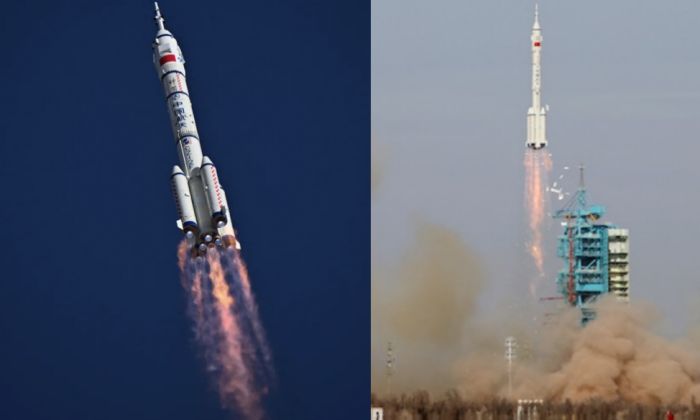
Long March-2F Rocket Carrying the Shenzhou-20 (left) and Shenzhou-22 Spacecraft Into Orbit
China’s space program conducted its first ever emergency space launch on November 25, sending the Shenzhou-22 spacecraft to the permanently inhabited Tiangong space station using a Long March-2F rocket. The launch was conducted from the Jiuquan Satellite Launch Centre in northwest China, and responded to the a suspected debris strike on the viewport of the Shenzhou-20, preventing three astronauts from returning to Earth aboard it. The launch of the Shenzhou-22 provided a new return vehicle for the orbiting crew, limiting the period in which they were left without a flightworthy spacecraft to just 11 days. The ability to make an emergency launch of a new spacecraft on short notice highlights that the Chinese space program remains well prepared for unexpected contingencies, and is able to respond rapidly to unplanned incidents.
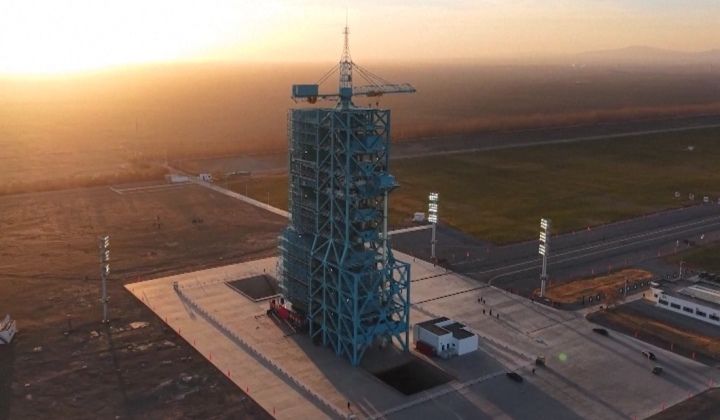
Shenzhou-22 delivered medical supplies and spare parts to the Tiangong space station, as well as equipment to repair the window crack on Shenzhou-20. A third spacecraft, the Shenzhou-21, was used to return the crew to Earth after being docked for just two weeks, while the Shenzhou-20 is now scheduled to make an uncrewed return to Earth to avoid potential risks. The Shenzhou-22 will thus remain docked at the Tiangong station until April 2026, in place of the Shenzhou-21 that returned early. The Tiangong station is considered the most modern and advanced to have been brought into service, with its facilities comparing highly favourably with the rival International Space Station developed primarily by the United States and Russia.
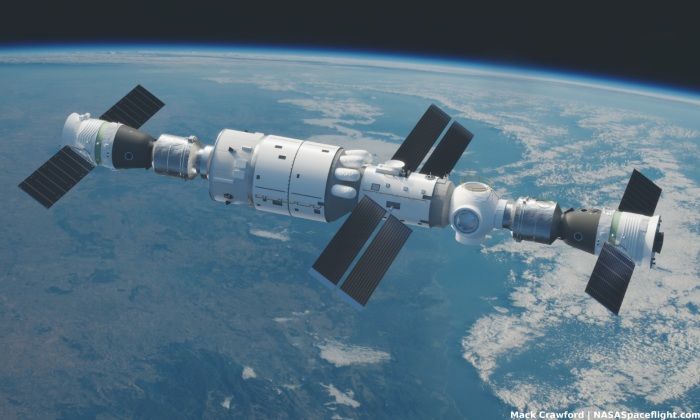
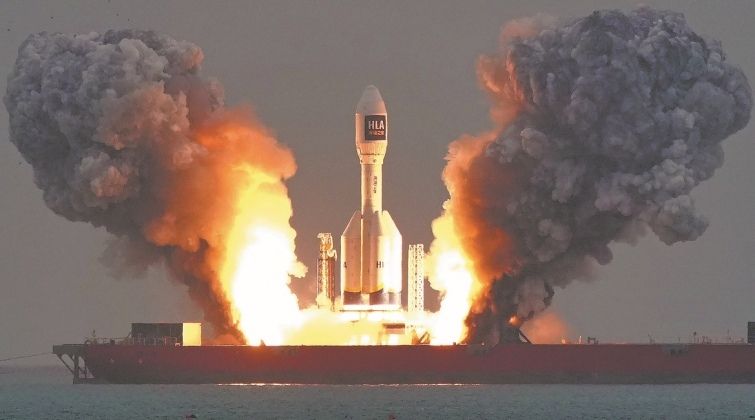
Shenzhou missions have from 2021 sent trios of astronauts to Tiangong for consecutive six-month stays. Although China was not a world leader in its space technologies during the Cold War, the Chinese space program has continued to lead the world with a number of landmark achievements, ranging from the creation of the world’s first Quantium satellite network from the late 2010s, to the launch of the world's largest and most powerful solid-fuel carrier rocket the Gravity 1 in October 2025. The growing importance of space technologies in modern warfare has given China’s emerging lead in the field growing military implications, with the country expected to continue to lead the world including in the development of both manned and unmanned space planes.
This importance of space in modern warfare has recently been demonstrated in the Russian-Ukrainain War, where support from NATO members’ vast collective satellite network has played a particularly central role in supporting the ongoing Ukrainian and Western Bloc war effort against Russia. This included preventing Russian forces from making more rapid advances in the opening stages of full scale hostilities by disrupting Ukrainain command and control, as access to Starlink and other satellite networks ensured fully effective communications between command and frontline forces across the country. China has led the world in seeking to develop countermeasures against the Starlink network, which has been considered a major security threat by potential Western adversaries. The militarisation of space is expected to become increasingly conspicuous as the United States is expected to become the first country to deploy missiles in orbit, as part of efforts to develop the world’s first space-based anti-missile system under the Golden Dome missile defence program.
