
China Launches First Reusable Space Rocket Promising Low Cost Deliveries to Orbit
Military Watch Magazine Editorial Staff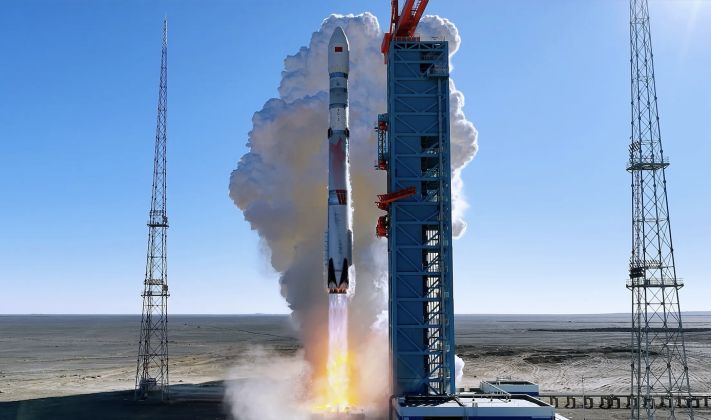
Launch of ZhuQue-3 Reusable Rocket
The private Beijing-based aerospace firm LandSpace has launched the country’s first reusable methane-fuelled rocket, the ZhuQue-3, into orbit, marking a major landmark in the country’s space program. The 66 metre tall booster lifted off from near Jiuquan Satellite Launch Centre, with the rocket using nine methane engines in its first stage and a single vacuum engine in its second. Methane engines burn cleaner than traditional kerosene-fuelled boosters, and can endure deep-throttle manoeuvres needed for precision landings, allowing them to be used on reusable rockets which significantly reduces the costs of placing payloads in orbit. The ZhuQue-3 rocket design was developed using stainless-steel tank structures and other weight-saving features to reduce costs and production time, with the intention of facilitating rapid manufacturing and frequent launches, giving it the potential to significnatly accelerate the Chinese space program.
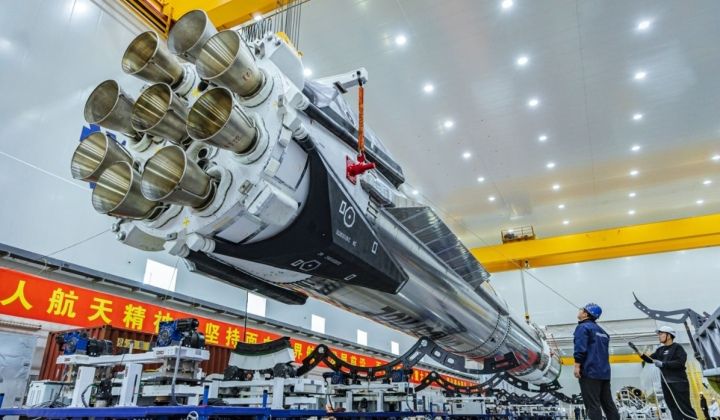
During the flight of the ZhuQue-3 several technologies were for the first time demonstrated in orbit and validated by engineers, including coordinated control of a nine-engine cluster, multiple engine restarts in space, advanced fuel-management techniques during weightless coasting, and deep-throttle operations. The mission tested the rocket’s new high-precision navigation and guidance systems, which are vital to steer reusable booster rockets through their difficult return phase from orbit. This is vital to making the rocket design reusable. Although most aspects of the test flight succeeded, the attempt to achieve a complex landing of the first stage failed, as it experienced an anomaly during its descent burn and touched down too hard. The cause of this failure is currently under investigation.
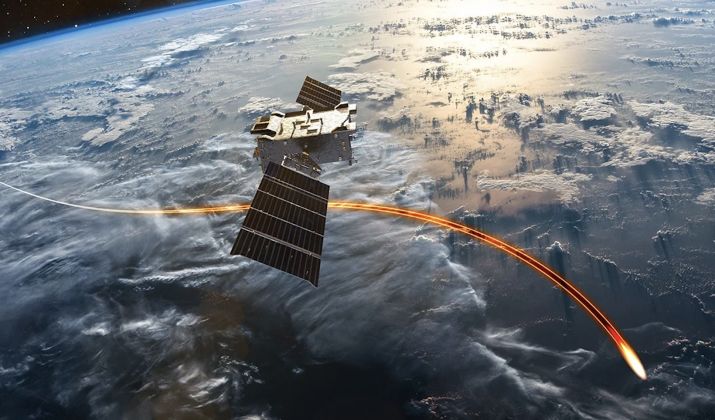
The development of low cost reusable rockets has significantly security implications, and could be a central contributor to allowing the Chinese People’s Liberation Army to place satellites in space at a fraction of prior costs. As the United States plans to deploy missiles in space for the first time under the Golden Dome program, the development of reusable rockets could play a key role in making a proportional Chinese response to this development more affordable. The importance of space assets in modern warfare has been repeatedly demonstrated in the Russian-Ukrainain War, where support from NATO members’ vast collective satellite network has played a particularly central role in the ongoing war effort against Russia. This has included provision of targeting data, strategic reconnaissance, communications, and the influencing of narratives among civilian populations.
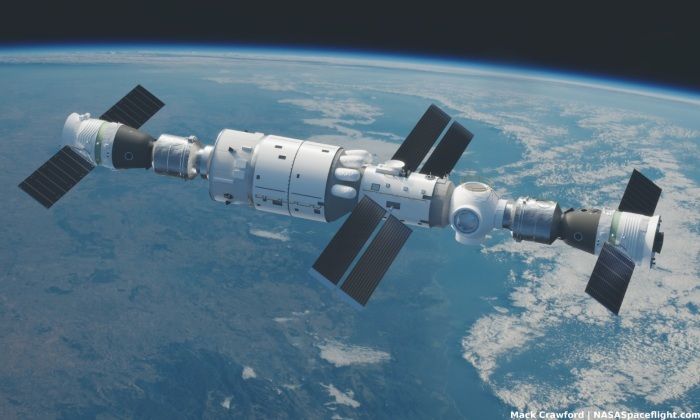
The launch of the ZhuQue-3 follows multiple milestones in the Chinese space program, including the first ever emergency space launch on November 25, sending the Shenzhou-22 spacecraft to the Tiangong space station from near the same Jiuquan Satellite Launch Centre. This was done in response to a suspected debris strike on viewport the preceding Shenzhou-20 that was docked at the station. The ability to make an emergency launch of a new spacecraft on short notice highlighted that the Chinese space program remains well prepared for unexpected contingencies, and can respond rapidly to unplanned incidents. Other notable achievements have ranged from the creation of the world’s first Quantium satellite network from the late 2010s, which has continued to be expanded rapidly, to the launch of the world's largest and most powerful solid-fuel carrier rocket the Gravity 1 in October 2025.
