China’s J-20 Air Superiority Fighter Seen in Rare ‘Beast Mode’ Configuration with 16 Air-to-Air Missiles
Military Watch Magazine Editorial Staff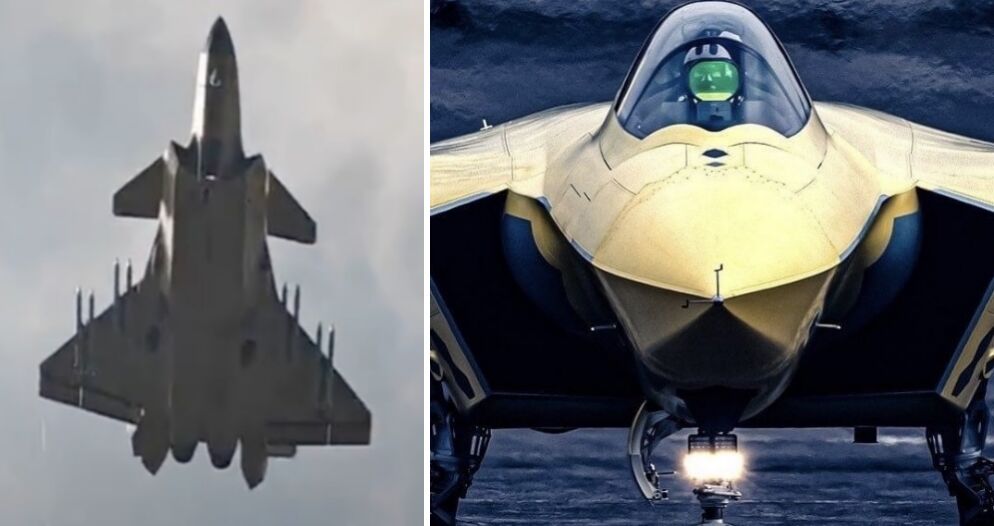
J-20 with Eight PL-15 Missiles Externally Mounted (left) and J-20
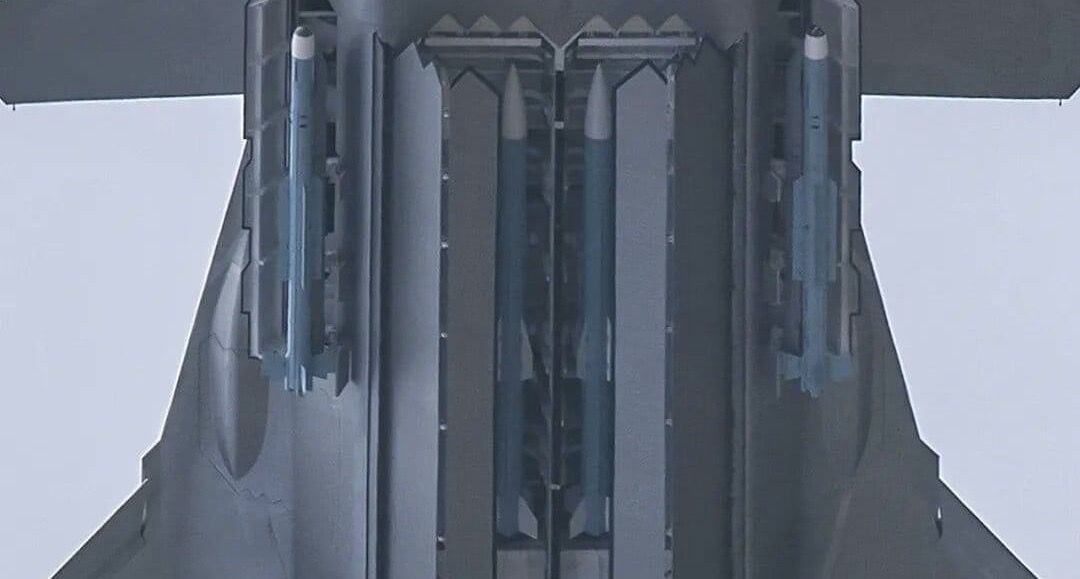
Footage released on November 4 has shown China’s most capable air superiority fighter the J-20 in a rare air-to-air combat configuration, with the aircraft integrating eight PL-15 air-to-air missiles on external underwing pylons. Referred to informally as ‘beast most’ in the Western world, such configurations allow fifth generation fighters to significantly expand their firepower, with externally carried weaponry supplementing that already inside fighters’ internal weapons bays. This seriously compromises the radar evading stealth profiles of the fighters, however, allowing them to be detected, tracked, and locked onto at much longer ranges. Fifth generation fighters accordingly usually integrate their entire missile arsenals in internal weapons bays, with the J-20’s bays able to accommodate eight missiles including six radar guided missiles in a main bay, and one smaller infrared guided missile in each of its two side bays.
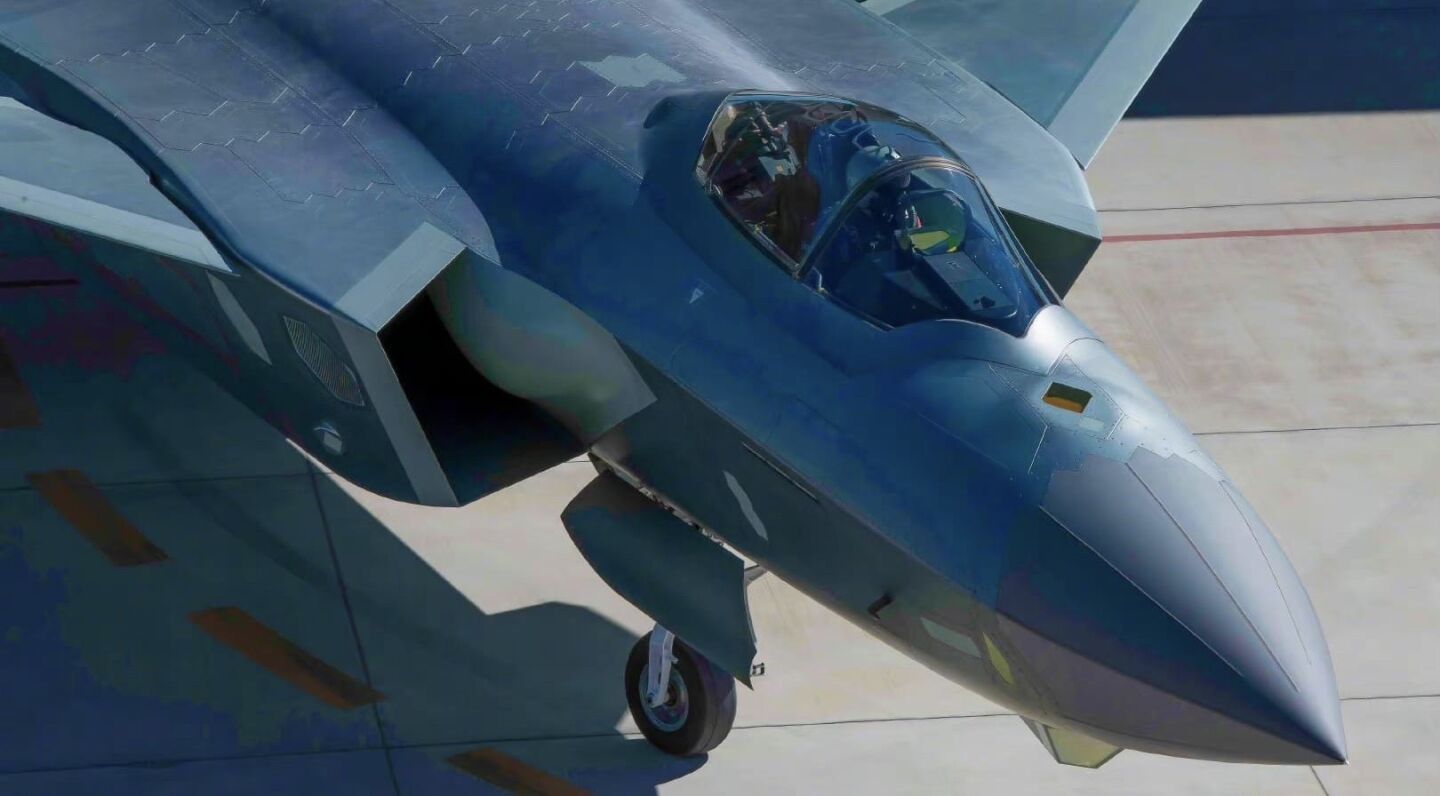
Footage first circulated in February 2025 showing a J-20 carrying what appeared to be eight PL-15 beyond-visual-range air-to-air missiles, mounted in pairs on four underwing pylons. A further video emerged in September 2025 showing another aircraft in a similar configuration, indicating that the arrangement was not necessarily limited to a single isolated test. The aircraft in the earlier footage appeared to have a yellowish primer finish associated with manufacturer testing, raising the possibility that the configuration was being evaluated by Chengdu Aircraft Corporation rather than demonstrated by an operational combat unit. This configuration could be particularly useful if engaging hostile targets with limited anti-aircraft capabilities of their own, such as hostile bombers or unmanned aircraft.
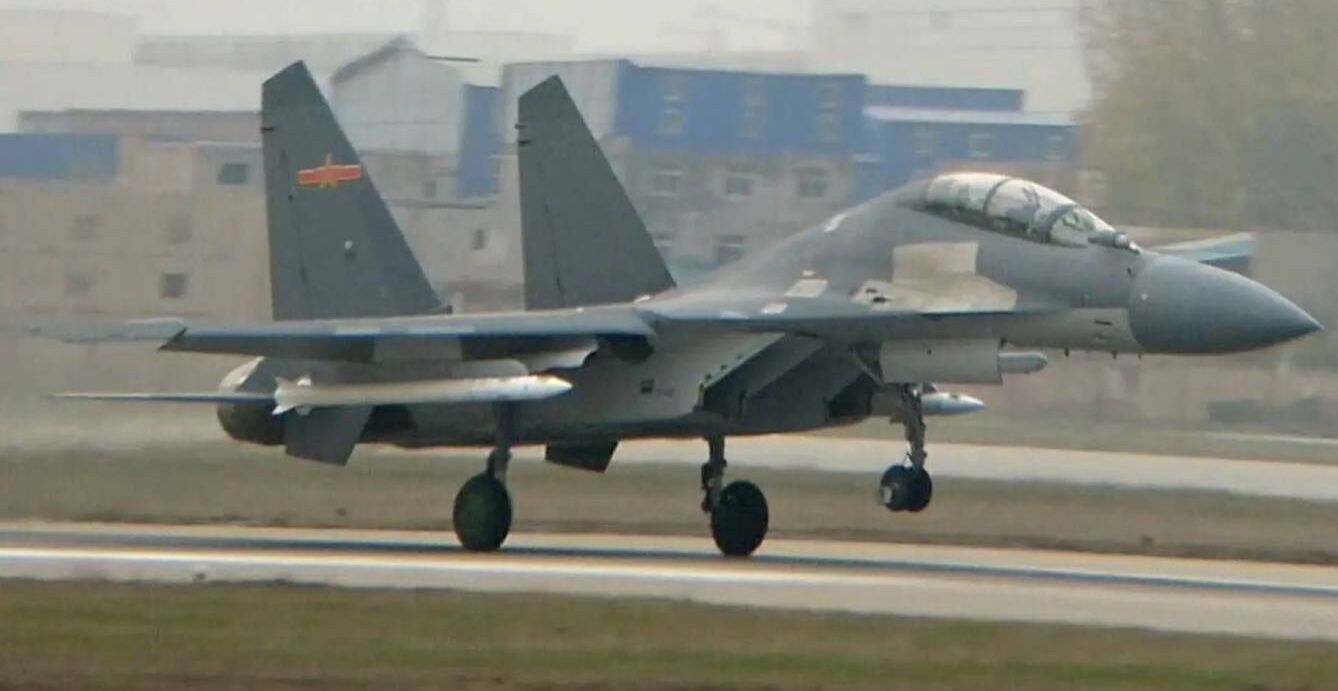
J-20 fighters currently rely on support from J-16s, which are slightly larger non-stealth aircraft able to carry much larger missile loads. Stealth-configured J-20s can operate closer to hostile airspace, using their sensors and networking capabilities to identify targets and transmit engagement information to other aircraft operating farther behind them, such as J-16s carrying longer ranged missiles and in greater quantities. J-20s in ‘beast mode’ configurations, however, can potentially obviate the need for J-16s in the fleet. The J-16 nevertheless has the advantage of a simpler lower maintenance design, and of integrating a significantly larger and more powerful radar, which is by many estimates the most powerful carried by any fighter type in the world.
Further developments in China's air-to-air missile inventory could make external carriage even more consequential. The PL-17, a substantially larger very-long-range missile, has been associated with efforts to threaten high-value support aircraft operating at considerable distances from the front line. Its dimensions are generally assessed to prevent it from being carried in the J-20's internal weapons bays, making external mounting a potential requirement. Although it is unclear whether the eight-missile configuration has been designed to accommodate the PL-17, the availability of external hardpoints gives the aircraft greater flexibility to employ weapons that cannot be integrated internally. The PL-16, another missile associated with the J-20's future armament, has a more compact design intended to increase the number of long-range missiles carried internally. Its lighter weight could allow for an increase in the number of missiles carried externally.