
China Developing the J-20 Stealth Airframe Into a Twin Seat Airborne Early Warning and Control Jet
Military Watch Magazine Editorial Staff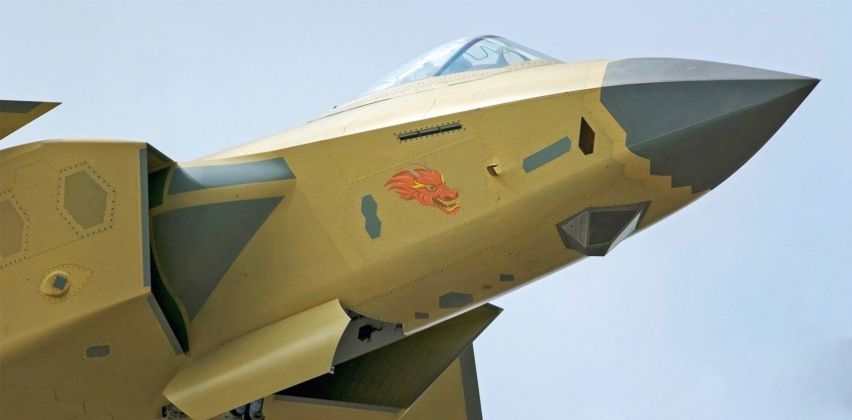
J-20 Fifth Generation Heavyweight Fighter
China’s Chengdu Aircraft Design Institute is reportedly developing a new twin seat combat jet based on the airframe of the J-20 stealth platform, with the aircraft intended as an airborne early warning aircraft and command and control centre. The J-20 is currently the only fifth generation fighter jet in service developed outside the United States, and is a heavyweight twin engine air superiority fighter which entered service in March 2017. The fighter is considered a direct analogue to the U.S. Air Force’s F-22 Raptor, but retains a number of significant advantages over its older American counterpart including integration of AESA radar guided missiles with much longer ranges, use of a distributed aperture system for greater situational awareness, and access to newer computer architecture and avionics including a helmet mounted display which the Raptor notably lacks. It has long been reported that the J-20’s airframe would be used to develop other kinds of aircraft, including possibly a twin seat strike fighter similar to the Russian Su-34, but reports of the role of the new derivative could open up significant other possibilities for China’s Air Force.
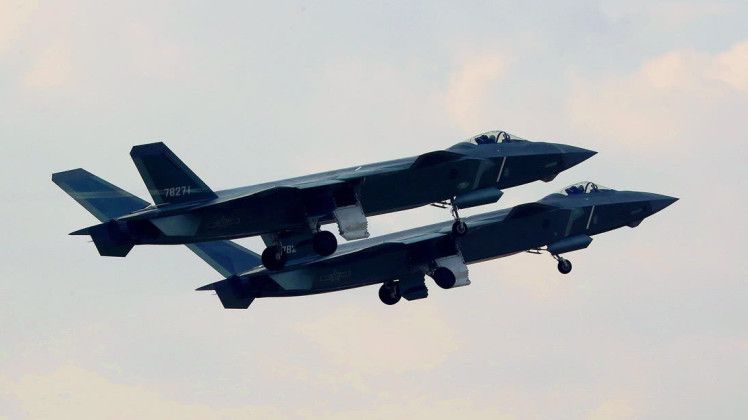
A new variant of the J-20, the J-20B notably entered production in 2020 and will have the same role as the original platform but boast superior capabilities. The new twin seat aircraft, however, is not being designed with combat as its primary role and will be equipped with only a defensive air to air armament. The J-20 already accommodates one of the most powerful radars of any fighter in the world, with China a world leader in AESA radar technologies and first integrating them on frontline fighter jets in 2013, and the J-20 itself is built to carry a very large radar. It is likely that the new variant will have an enlarged nose to accommodate an even larger radar, albeit at the expense of flight performance due to the added weight, to maximise its capabilities as an airborne early warning and control aircraft. Such aircraft will be used to provide information on threats such as incoming missiles and enemy combat jets - using sensors which are more powerful than those on normal fighters - and to help combat units such as fighter squadrons operate more efficiently and even, if needed, to guide their missiles towards their targets using its own radar.
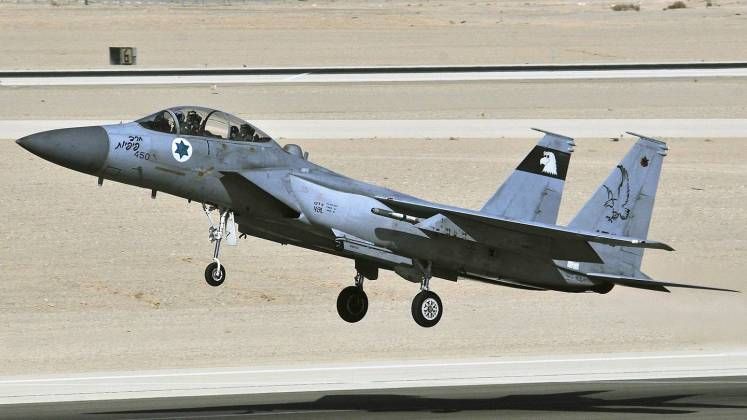
It is far from unheard of for heavyweight air superiority aircraft to be used for airborne early warning or even for command and control, with the high endurances and powerful sensors of these airframes making them well suited for such roles. Prominent examples include the Soviet MiG-31 Foxhound and American F-14A Tomcat platforms - the latter which was used for airborne early warning by the Iranian Air Force during the Iran-Iraq war and had a much more powerful radar than any other fighter in the Middle East. Israel has also modified its F-15D Eagle fighters into command and control aircraft to accompany its F-15I strike fighters, a program which was considered highly successful. These fourth generation designs all dated back to the 1970s and 1980s, and none of them had stealth capabilities or radars with remotely comparable power to that of the J-20 today. The upcoming Chinese fighter promises to be one of the most survivable airborne early warning and control aircraft in the world, although it remains uncertain whether it is the only derivative of the J-20 design currently planned, when it will enter service, and what types of units it is intended to operate alongside.
