
China’s ‘Ace Unit’ 1st Air Brigade Receives its Most Capable Stealth Fighters: J-20A Now Ready For East China Sea Operations
Military Watch Magazine Editorial Staff
1st Aviation Brigade Commander Senior Colonel Li Ling and J-20 Fighter
Following confirmation that the Chinese People’s Liberation Army Air Force 1st Air Brigade had been re-equipped with J-20A fifth generation fighters, significant questions have been raised regarding the implications of this enhancement to the elite unit’s combat capabilities. The brigade transitioned from baseline J-20 fighters to the heavily enhanced J-20A variant, with its older fighters being reallocated to lower priority units. Dubbed the Military Development Vanguard Air Group ‘Ace Unit,’ which originated from the first aviation combat force of the Air Force that served in the Korean War, the 1st Air Brigade has long been prioritised to receive the most capable fighters available, and had previously fielded J-11B and twin-seat J-11BS fighters before transitioning to the J-20 in 2021. This prioritisation reflects its elite status and strategically critical location.

Based at Anshan in Liaoning province, the location of the 1st Air Brigade has been assessed by a number of analysts to be aimed to be optimal for influencing the security situation in the Taiwan Strait. Local analyst Li Jie observed to this effect when J-20s were first delivered in 2021: “The J-20’s new deployment… is aimed at telling South Korea and Japan that China is strengthening its air defence along the coastal areas, warning them not to join Washington and intervene in the Taiwan issue.” “Their 2,000km-plus combat range… is more than enough to cover the mainland coastal provinces and Taiwan,” he added. Leading expert on the J-20 program Abraham Abrams noted that Anshan was in Liaoning province bordering North Korea, and that “the fighters could be ideally positioned to provide air cover to China’s treaty ally and to signal Washington should it again consider an attack [on North Korea] as it had in 2017.”

The 1st Air Brigade was the first unit under the Northern Theatre Command to field J-20s, and was the first new unit to be equipped with the fighters in two years, as production lines had transitioned from low-rate production with stopgap Russian AL-31FM2 engines, to a much higher production rate using indigenous WS-10C engines. The WS-10C’s entry into high rate serial production ended a previous bottleneck, allowing new units to subsequently receive the fighters at a much faster rate, while also providing a significantly improved performance over Russian engines. An assessment at the U.S. Air Force’s China Aerospace Studies Institute concluded that J-20 deliveries to the 1st Air Brigade in 2021 indicated “that the PLAAF [Air Force] is satisfied with, and confident in, the capabilities of the J-20, and that more combat units are likely to receive the J-20 in the future.”

Much as the transition from the J-11B/BS to the J-20 had very significant implications for the Northern Theatre Command’s aerial warfare capabilities, so too will the transition from operating the baseline variant of China’s most advanced fighter, to the heavily enhanced new variant, significantly improve the Air Force’s ability to operate in the East China Sea, the Taiwan Strait, and around the Korean Peninsula. The J-20A’s improved design is thought to be more aerodynamic and have a higher fuel capacity, which combined with the benefits of integrating WS-15 next generation engines provides a greatly improved range. This is particularly critical for more distant operations such as in the Taiwan Strait. The J-20A is estimated to have by far the widest combat radius of any fighter type of its generation, more than double those of the U.S. F-22 and F-35, which combined with its very high cruising speed allows the 1st Air Brigade to respond to contingencies across multiple potential hotspots.
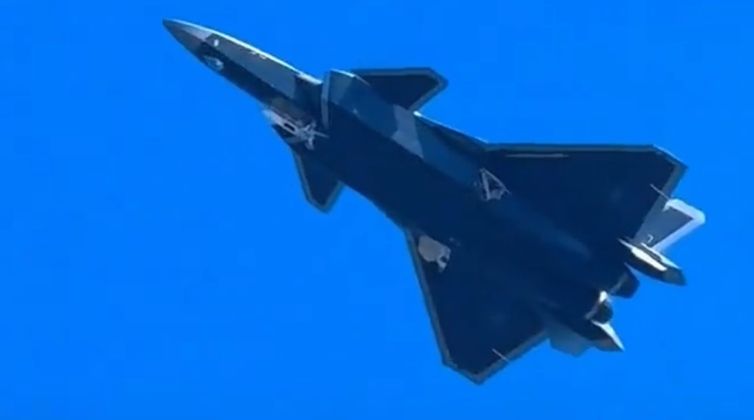
The 1st Air Brigade’s location places it on the frontlines against one of the fastest growing hostile fifth generation fighter fleets in the world, namely the F-35 fleets based in Japan. Japan has not only ordered over 100 F-35s for its own forces, but is also the only country that hosts separate permanent F-35 deployments by the U.S. Air Force, Navy and Marine Corps. Other Western Bloc states including Australia, Italy and the Netherlands have also prioritised deploying F-35s to the country. The 1st Air Brigade’s J-20s are considered likely to have been responsible for the first encounter between the fighter type and the F-35, which was confirmed in March 22 to have occurred over the East China Sea and made a strong impression on the U.S. Air Force leadership. The J-20, its lighter counterpart the J-35, and the F-35 are all considered in a league of their own in terms of sophistication, although the J-20 is much better optimised for air superiority missions with its radar power, flight performance, and endurance all being far superior.
