
Can the United Arab Emirates’ Heavily Customised F-16E Desert Falcon Fighters Retaliate Against Iran?
Military Watch Magazine Editorial Staff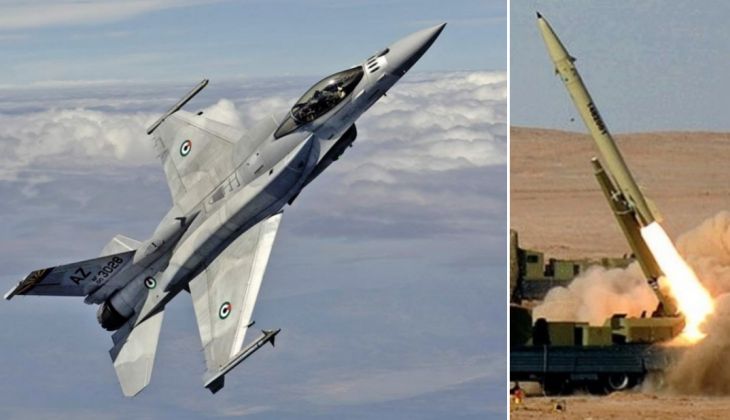
UAE Air Force F-16E and Iranian Fateh-110 Launch
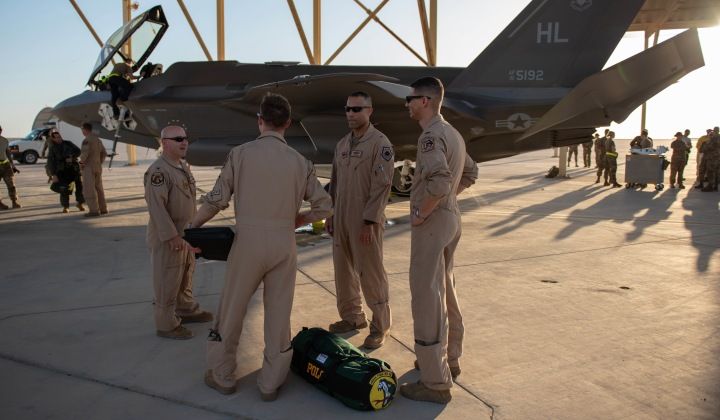
The United Arab Emirates Ministry of Defence has confirmed that the country was hit by “Iranian ballistic missiles,” causing damage and at least one death, although a number of the missiles were intercepted. The ministry called the attack “a dangerous escalation and a cowardly act,” and stated that the country “reserves its full right to respond to this escalation.” Iranian ballistic missiles strikes were launched against Al Dhafra Air Base, which hosts forward deployed U.S. Air Force assets, shortly after the United States and Israel launched attacks against the country targeting key leaderships figures and military facilities. Strikes have targeted bases across the Persian Gulf region hosting U.S. Air Force assets, including facilities in Saudi Arabia, Qatar, Kuwait and Bahrain, as well as Jordan further north.
The statement by the UAE Defence Ministry has fuelled speculation that the country may escalate its involvement in the U.S.-led military campaign against Iran, with the possibility of other Gulf states such as Saudi Arabia also contributing by flying fighter sorties remaining significant. The UAE Air Force’s primary offensive capability is provided by a fleet of 78 F-16E/F Block 60 Desert Falcon fighters, with the country being the sole operator of this unique and heavily customised F-16 variant. Delivered from 2004-2007, the fighters were among the first in the word to integrate active electronically scanned array radars, namely the Northrop Grumman AN/APG-80, giving them a comfortable advantage over Iranian fighter types, and over all Israeli fighter types other than the F-35A.
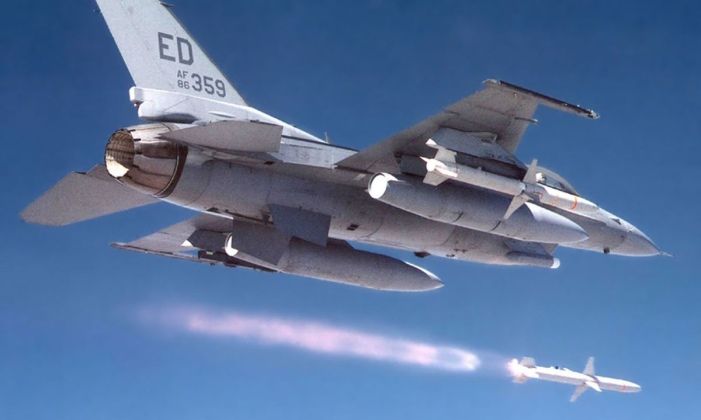
Compared to the mechanically scanned array radars integrated onto prior F-16 variants, the AN/APG-80 gives the F-16E/F significantly more advanced air-to-air and air-to-ground detection and targeting capabilities, including simultaneous track-while-scan operations, much lower vulnerability to jamming, and a much greater electronic warfare capability. The fighters also integrate the Falcon Edge electronic warfare suite, and the AN/ASQ-32 targeting system. If launching sorties against targets in Iran, the fighters could use targeting data from allied U.S. or Israeli assets, and launch AGM-84H SLAM-ER missiles to engage targets at beyond visual ranges. They can also employ AGM-88C HARM anti-radiation missiles to seek and destroy Iranian air defence systems. The UAE Air Force is expected to procure fifth generation fighter aircraft in the near future, with the South Korean KF-21, Russian Checkmate, and Chinese J-35, all considered leading potential options.
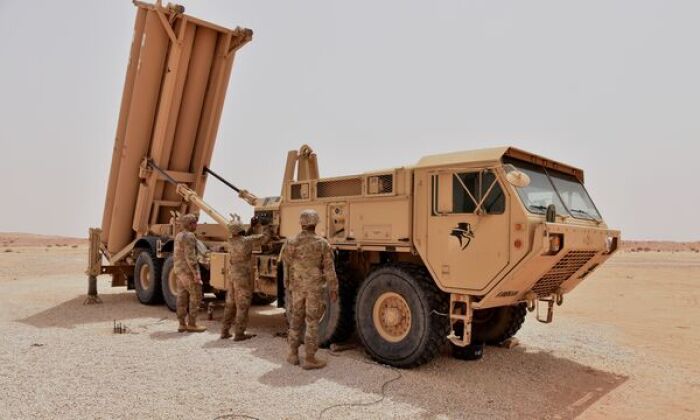
If striking Iranian targets, the UAE remains highly vulnerable to retaliation due to its proximity to Iran and the vast quantities of ballistic missiles, cruise missiles, and drones which the Iranian Islamic Revolutionary Guard Corps fields. This may deter the country from openly participating in hostilities beyond defending U.S. assets on its territory using its air defence systems. The UAE Air Force’s F-16s were particularly outstanding assets when procured in the 2000s, and by far the most sophisticated Western fighter types ever exported at the time, although today their performance has been overshadowed by other fighter types, such as the F-35s sold to Israel, the F-15SA/QA fighters sold to Saudi Arabia and Qatar, the Su-30MKA, Su-35 and Su-57 fighters fielded by Algeria, and the Su-35s ordered by Iran, which have yet to be delivered. While the UAE’s fleet is capable, its air defence capabilities against escalated Iranian strikes are very limited, which may deter it from taking to the offensive.
