
Buying Second Hand Eurofighters to Avoid American Sanctions: Indonesian Defence Minister to Visit Austria For Talks on Controversial Fighter Sale
Military Watch Magazine Editorial Staff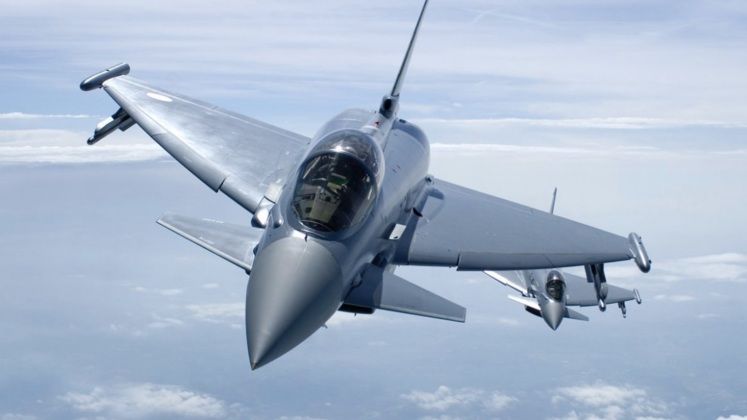
Eurofighter Typhoon Medium Fighters
Indonesian Defence Minister Prabowo Subianto is scheduled to visit Austria later in the month to discuss the possible purchase of second hand Eurofighter Typhoon fighter jets, after a four day visit to the United States from October 15th. "We are in the middle of procuring vital equipment to protect our national territory and citizens, thus following [up on] our proposal [pertaining to] the Austrian Eurofighter," Minister Prabowo stated regarding the purpose of the visit. Austria currently fields ageing Tranche 1 Eurofighters which it agreed to purchase in 2003. These fighters lack compatibility with modern missiles such as the Meteor, and use electronic warfare systems, avionics and sensors that are increasingly considered obsolete. The possible purchase of the costly European jets has been highly controversial for a number of reasons. The Eurofighter has one of the lowest availability rates in the world among its major operators, which combined with the fact that its maintenance infrastructure and technologies are not compatible with Indonesia’s existing fleet of American, Russian and South Korean fighters will make operating the Eurofighters difficult.
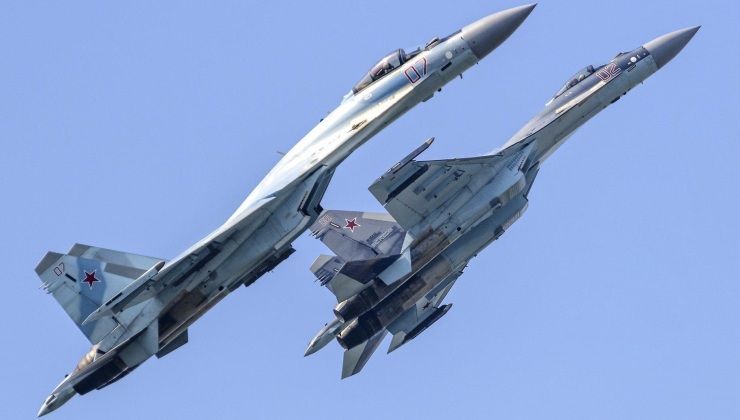
Indonesia perviously planned to acquire 11 Su-35 Flanker heavyweight fighters under an agreement concluded with Russia in February 2018. The United States subsequently threatened Indonesia with economic sanctions should it purchase the aircraft, in an attempt to win a greater market share for Western suppliers, and while Indonesian officials initially issued defiant statements assuring that they would not bend to pressure, the country has yet to move forward with purchasing the Su-35 for almost three years. Although the Su-35 deal has not been cancelled, with Russia offering not only to accept payment in shipments of raw materials, but also to customise the fighter to meet Indonesia’s precise needs, political pressure to acquire only Western aircraft could leave second hand Eurofighters as one of the cheapest options for two engine jets. Their performance remains far inferior to the Su-35, however, with a much lower endurance, lower speed, poorer manoeuvrability, smaller and weaker radar and lack of access to long range air to air missiles comparable to the Su-35’s hypersonic R-37M. Political considerations aside, this would make the Su-35 the most viable option, particularly as it is highly compatible with the Su-27 and Su-30 jets already in the Indonesian fleet meaning an easy transition for pilots and the ability to use many of the same weapons and maintenance facilities.
