
Bulgaria’s Multi-Layered Soviet Air Defence Network Not to Integrate New American F-16s
Military Watch Magazine Editorial Staff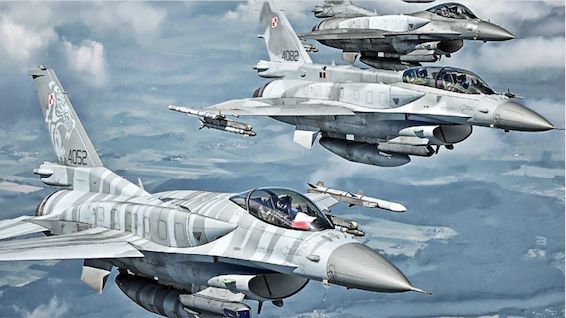
F-16 Fighting Falcons
A recent statement from Bulgaria’s Defence Minister Krasimir Karakachanov indicates that the country is likely to withdraw from negotiations to acquire Lockheed Martin F-16 Block 70 Fighting Falcons for modernisation of the country’s air fleet. While the asking price for the lightweight single engine jets is unknown, Bahrain previously signed a contract to acquire 16 of these aircraft at a price of $68.75 million per fighter. While the F-16 was initially prized for its low cost at well under half the current price, new variants of the fighter integrating state of the art radars and avionics are far more costly and come at a comparable price to that at which the U.S. Air Force’s acquires its new F-35A stealth fighters - $80 million. The F-16 contract, however, does include setting up of maintenance infrastructure and provision of armaments which the $80 million price tag for the F-35 does not include.
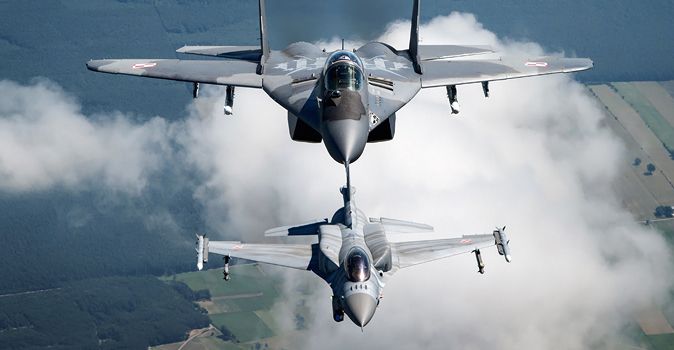
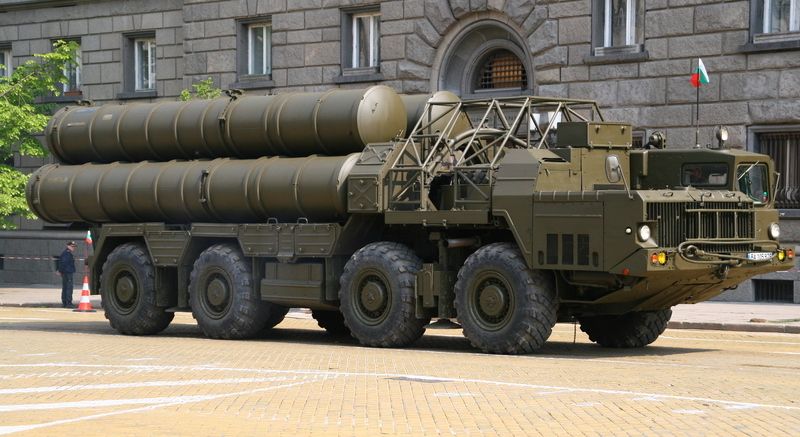
Bulgaria’s Air Force is currently comprised of just a single squadron of 12 MiG-29A and 4 MiG-29UB fighters, among the oldest variants of the medium weight twin engine fighter acquired at a low price from the Soviet Union during the country’s time in the Warsaw Pact. Some further MiG-21bis jets, the most capable Soviet variant of the design, are reportedly also stored in reserve. Unlike Baltic states such as Slovakia, which have cited retirement of the MiG-29 as a priority to ensure a comprehensive cutting of defence ties with Russia and the Soviet period, Bulgaria’s relations with Moscow have remained more positive than other NATO members, with Sofia sending MiG-29 jets to Russia for maintenance and life extension in 2017. Bulgaria is perhaps the only NATO member which operates a multi layered Soviet air defence network, which is comprised of S-300 and S-200 long range systems complemented by S-125 and S-75 short and medium ranged platforms. These complement the capabilities of the country's fighter fleet, and despite their age provide the country with a greater air defence capability than its neighbours. It is uncertain how effectively the F-16 could operate alongside this ground based missile network if acquired to replace the MiG-29.
The F-16 is an older design than the MiG-29 and comes from the same generation, with the Soviet platform faster, higher flying and enjoying a superior thrust/weight ratio for superior manoeuvrability. The sensors of the Soviet built MiG-29A however leave much to be desired relative to the latest AESA radar equipped Fighting Falcons, as do avionics, electronic warfare systems and armaments. Bulgaria has not modernised its MiG-29 fleet to integrate newer Russian air to air missiles such as the R-77 and R-27ER which provide analogues to the AIM-120C deployed by the F-16 Block 70. Bulgarian MiG-29s are currently equipped with R-27R air to air missiles - an analogue to the American AIM-7 Sparrow with a 70km range which lacks fire and forget capabilities or modern electronic warfare countermeasures. Thus while arguably superior at short range, the Soviet jets’ beyond visual range air to air capabilities leave much to be desired. Defence Minister Karakachanov indicated regarding the acquisition that an inflated price to maximise profits for U.S. defence manufacturers was being charged, stating: "When you are told that something costs five levs but in fact, it costs three levs, it's alright to ask the question: Fellas, there is no logic in that, where does the price come from?" He further noted that unnecessary additional costs were being imposed, and citing pilot training as an example stated: "One such example is language learning. The pilots we send have already taken language courses and been trained in the USA. Does it make sense for the country to pay again for language training, which will largely be something formal?" Whether Bulgaria will seek to strengthen its relations with Moscow with further defence cooperation, or whether as a NATO member it will seek a Western alternative to the F-16, remains to be seen.
