
NATO Member Bulgaria Contracts Russian Assistance to Maintain Fighter Jets
Military Watch Magazine Editorial Staff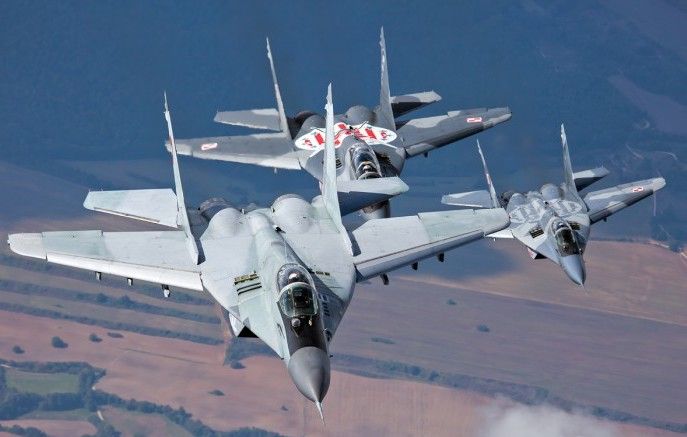
Bulgarian MiG-29 Fighters
Anton Balkchiev
While the termination of the Warsaw Pact and absorption of many of its former members into the U.S. led NATO alliance in the aftermath of the Cold War largely ended Russian military cooperation and arms sales to former Soviet aligned Eastern European states, a number of exceptions have notably prevailed. With the cost of acquiring modern Western arms well beyond the budgets of most Eastern European states, many continue to operate Soviet designed arms inherited from the Warsaw Pact. Even Poland, one of the most affluent countries and highest military spenders in the region, still sees well over two thirds of its arms dating back to its time as a Warsaw Pact member. These arms are operated alongside more recently procured Western platforms primarily sourced from the United States. Ukraine, a former Soviet member state and prospective NATO member, is currently undergoing a similar transition towards Western military equipment, though this is likely to be a long and drawn out process as a result of Kiev's deteriorating financial situation.
One high end weapons system sold to a number of Eastern European states shortly before the Soviet Union's collapse was the MiG-29 fourth generation light fighter. While the USSR notably never exported its MiG-31 and Su-27 elite heavy fourth generation platforms, the MiG-29 proliferated widely throughout Europe in just four years after its first commissioning in 1985, and was set to form the mainstay of the Warsaw Pact's aerial warfare capabilities to replace the older MiG-21 and MiG-23. The MiG-29 is today operated by NATO members Slovakia, Poland and Bulgaria - with Romania, the Czech Republic, Germany and Moldova formerly operating the fighter.
Despite the Western bloc's growing tensions with Russia, NATO's MiG-29 operators have continued to rely on Russian assistance to service and modernise their fleets. Most recently Bulgaria entered into a $51 million contract with Russian Aircraft Corporation MiG to modernise its fleet of 15 fighters. This contract was signed despite pressure to seek alternative sources for the upgrade, and a U.S. campaign to undermine Russian arms exports. Bulgaria deemed MiG the only supplier able to provide reliable support for its fleet, and rejected other bidders for the deal. Sofia has stressed the importance of keeping its Soviet era fourth generation aircraft operational, and may well consider a similar contract to modernise its advanced Russian built Su-25 attack fighters also in service.
