
British Army Deploys Challenger 2 Heavy Tanks to Russia’s Borders For War Drills: How Capable Are They?
Military Watch Magazine Editorial Staff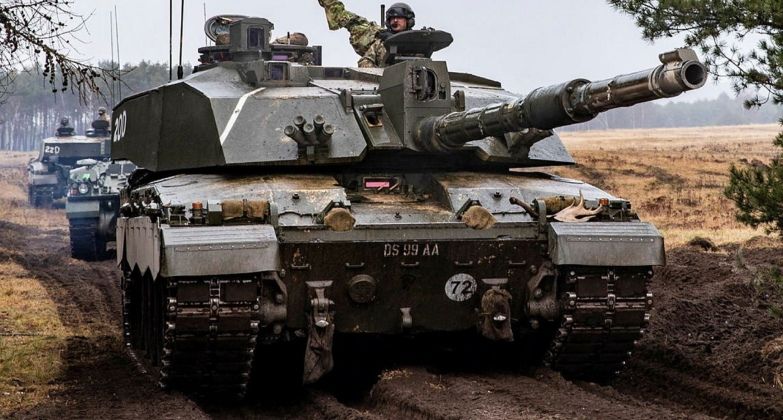
British Army Challenger 2 Main Battle Tanks
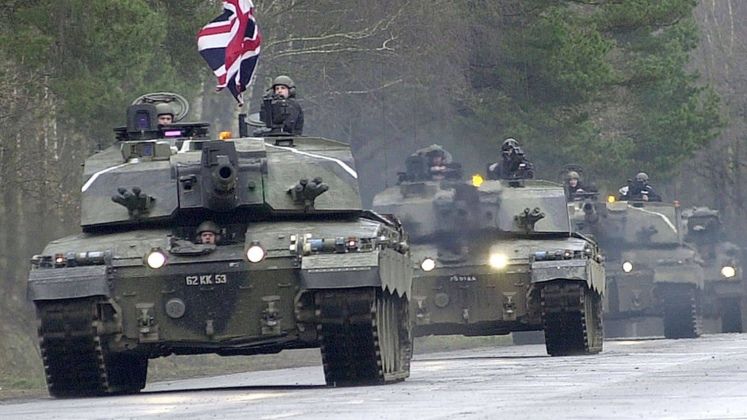
The British Army has deployed Challenger 2 main battles tanks for exercises in Estonia’s Voru county, a small territory that lies directly on Russia’s borders, with the tanks operating under the 2nd Battalion, The Royal Regiment of Scotland, and playing a central role in NATO’s Spring Storm war drills. These exercises have simulated a major conflict with Russian forces, with the tanks’ presence representing part of a broader expansion of NATO ground units around Russian territory. Voru is considered one of NATO’s most sensitive operational environments, and is expected to be a major hotspot for hostilities in the event of a full scale war between NATO and Russian forces. The territory is connected to transport routes that link Estonia with Latvia and the wider Baltic region, making it critical for allied reinforcement, while it is also close to the key Russian city and major military hub of Peskov.
The British Armed Forces have been extensively involved in hostilities on the ground in Ukraine, with their presence having been more widely acknowledged following the death of one serviceman, Lance Corporal George Hooley of the Parachute Regiment, in December 2025. Almost two years prior in January 2024, however, German Chancellor Olaf Scholtz confirmed that British special forces on the ground in Ukraine were providing vital support to facilitating launches of Storm Shadow cruise missiles against Russian targets. In May 2024 the head of the U.S. Special Operations Command General Bryan Fenton stated that the Pentagon had been learning about the ongoing war “mostly through the eyes of our UK special operations partners,” who he stated had been testing new approaches to modern warfare in on the ground in Ukraine.
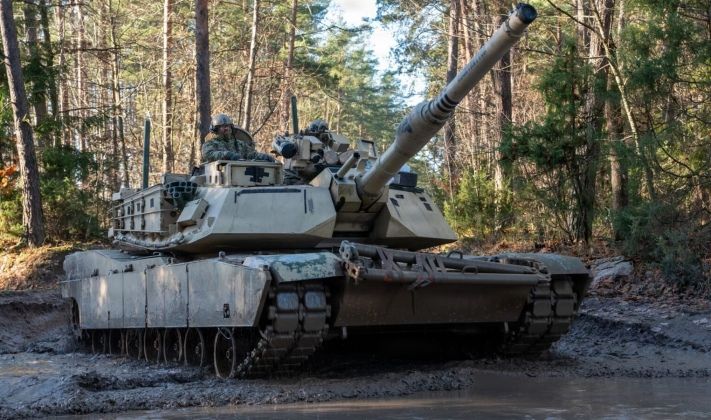
In December 2022 British Deputy Chief of Defence Staff Royal Marines Lieutenant General Robert Magowan revealed that the Marines had been carrying out high risk operations alongside Ukrainian government forces from April that year. Beyond the active conflict zone, Royal Marine special forces from the 42 and 47 Commando units were more recently in November 2025 deployed in to Estonia as part of a Special Operations Maritime Task Group to simulate covert boarding operations against enemy ships, coastal aids, and the seizure of oil rigs. In February 2026 U.S. Army and the British Army have deployed their respective M1A2 Abrams and Challenger 2 tanks to participate in Winter Camp exercises near Tapa in Estonia, located approximately 100 kilometres from the Russian border.
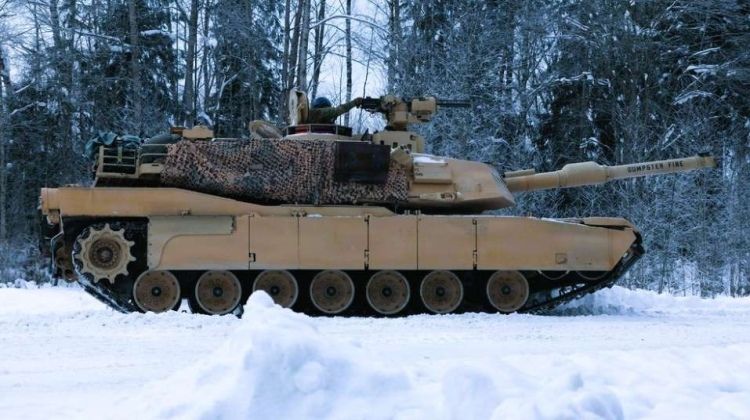
U.S. Army Abrams tanks have been involved in multiple exercises near Russian territory in recent months. In late November the tanks were deployed to the Bemowo Piskie Training Area in neighbouring Poland, and conducted intensive training. Less than ten days later Army Abrams tanks were deployed to participate in live-fire exercise in Lithuania. U.S. Army units have been more widely involved in exercises in the region, with HIMARS rocket artillery systems and AH-64 Apache attack helicopters having been among the assets most frequently deployed. Other NATO members, most notably Germany, have also very significantly expanded their ground forces’ presences near Russian territory, with the German Army in May 2025 having formed the 45th Armoured Brigade to be permanently stationed in Vilnius, Lithuania, just 150 kilometres from the Belarusian capital Minsk, and less than 800 kilometres from Moscow.
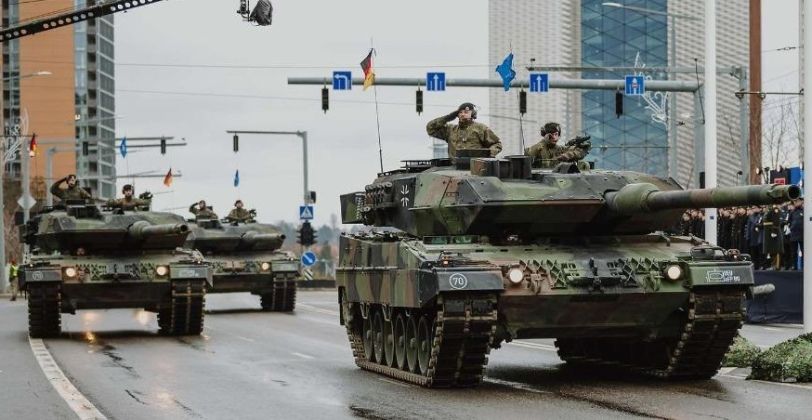
Deployments of British ground forces near Russia have been largely symbolic in their significance, with the capabilities of the British Army remaining very limited. Retired U.S. Army lieutenant general and former National Security Advisor at the White House H. R. McMaster in February 7 2025 observed that European armies lacked the necessary capacity to sustain large scale ground operations, noting when taking the United Kingdom as an example: “Look at the British Army right now. I mean, it makes me want to cry, almost.” A combination of European military limitations, U.S. reservations regarding overcommitment, and effective Russian deterrence, are considered primary factors preventing further escalation of NATO intervention in the Ukrainian theatre. This has been widely reiterated by officials.
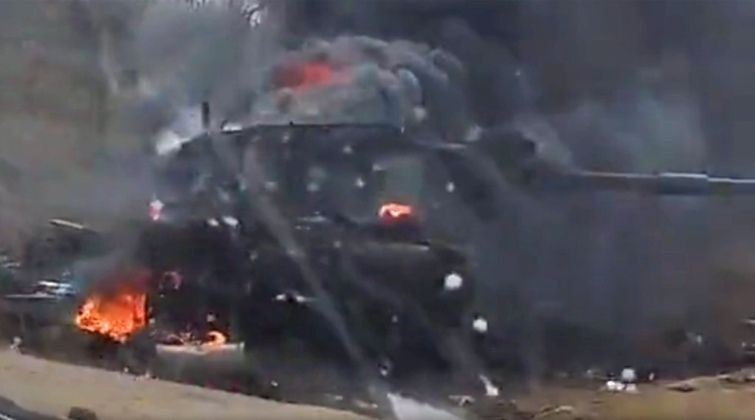
While the Challenger 2 is a major symbol of British military power, its ability to contribute to high intensity operations against Russian forces remains limited. Evaluations of the tank’s capabilities following its deployment for combat operations by Ukrainian Army units have been far from favourable, with its outstandingly poor power to weight ratio, ageing fire controls, and limited firepower having long been criticised. Plans to upgrade 150 of the tanks to the enhanced Challenger 3 standard have stalled, with the Ministry of Defence having confirmed in December manufacturing will not begin on a fixed timetable, instead proceeding only after performance trials are successfully completed. To reduce costs, the Challenger 3 integrates the same engine as the Challenger 2, which combined with its heavier weight makes it one of the least mobile tanks in the world.
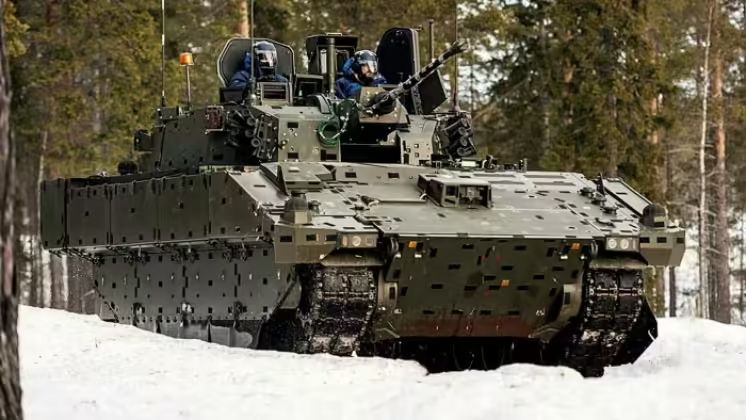
The British defence sector has faced serious difficulties with major new weapons programs since the end of the Cold War, with its new Ajax armoured fighting vehicle having suffered from over eight years of delays in entering service due to significant noise and vibration problems. In late November it saw its use suspended after unusual noises and vibrations in several vehicles caused over 30 casualties among personnel. In June 2023 a review of a troubled £5.5 billion ($7 billion) program concluded that there were “systemic, cultural and institutional problems” at the Ministry of Defence which had prevented development from proceeding smoothly. The issues faced during the Challenger 2 and Challenger 3 programs have thus been far from isolated.
